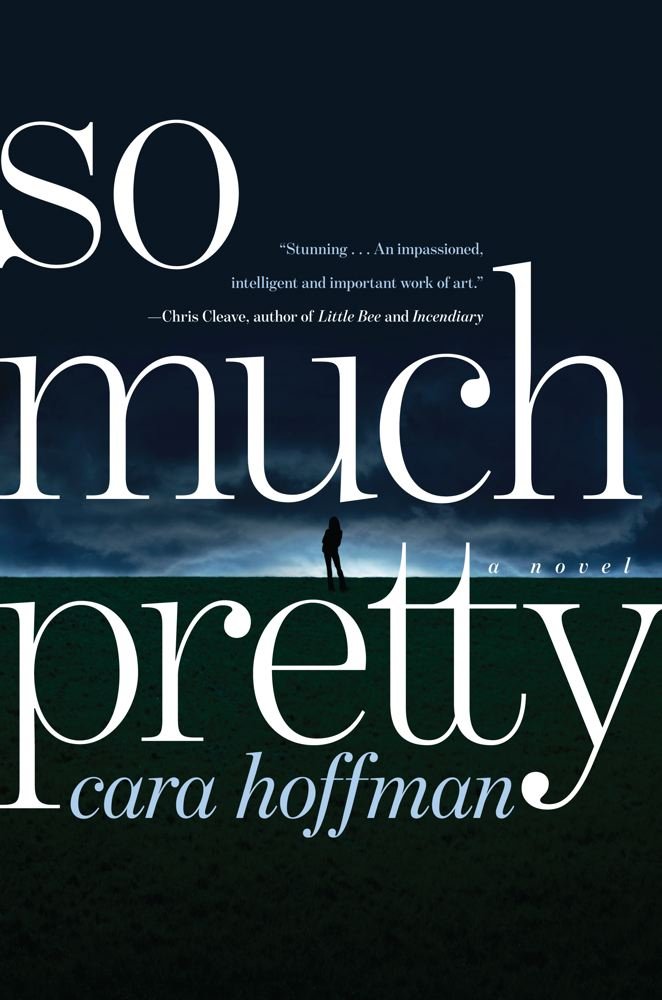



Soft cover; Near Fine; No Dust Jacket; ISBN: 9781451616750 This is an ADVANCE READER'S EDITION, UNCORRECTED PROOF. Originally intended for a book reviewer. Softcover in near fine condition. Slight shelf wear. Fiction. When she disappeared from her rural hometown, Wendy White was a sweet, family-oriented girl, a late bloomer who’d recently moved out on her own, with her first real boyfriend and a job waiting tables at the local tavern. It happens all the time—a woman goes missing, a family mourns, and the case remains unsolved. Stacy Flynn is a reporter looking for her big break. She moved east from Cleveland, a city known for its violent crime, but that’s the last thing she expected to cover in Haeden. This small, upstate New York town counts a dairy farm as its main employer and is home to families who’ve set down roots and never left—people who don’t take kindly to outsiders. Flynn is researching the environmental impact of the dairy, and the way money flows outward like the chemical runoff, eventually poisoning those who live at the edges of its reach. Five months after she disappeared, Wendy’s body is found in a ditch just off one of Haeden’s main roads. Suddenly, Flynn has a big story, but no one wants to talk to her. No one seems to think that Wendy’s killer could still be among them. A drifter, they say. Someone “not from here.” Fifteen-year-old Alice Piper is an imaginative student with a genius IQ and strong ideals. The precocious, confident girl has stood out in Haeden since the day her eccentric hippie parents moved there from New York City, seeking a better life for their only child. When Alice reads Flynn’s passionate article in the Haeden Free Press about violence against women—about the staggering number of women who are killed each day by people they know—she begins to connect the dots of Wendy’s disappearance and death, leading her to make a choice: join the rest in turning a blind eye, or risk getting involved. As Flynn and Alice separately observe the locals’ failure to acknowledge a murderer in their midst, Alice’s fate is forever entwined with Wendy’s when a second crime rocks the town to its core. Stylishly written, closely observed, and bracingly unexpected, So Much Pretty leads the reader into the treacherous psychology of denial, where the details of an event are already known, deeply and intuitively felt, but not yet admitted to, reconciled or revealed. Linda Fairstein and Cara Hoffman: Author One-on- One Linda Fairstein , New York Times bestselling author of the Alex Cooper crime novels—whose 2011 entry in the series is Silent Mercy —was chief of the Sex Crimes Unit of the district attorney's office in Manhattan for more than two decades and is America's foremost legal expert on sexual assault and domestic violence. Here, she interviews Cara Hoffman , author of So Much Pretty , a novel that centers on the disappearance of a young woman from a rural New York community. Fairstein: As I read So Much Pretty , which is a stunning debut novel, I was reminded of The Lovely Bones . What do you think it is about our society that is so fascinated by the victimization of young women? Hoffman: I think we are fascinated by the victimization of women, especially young women, because that kind of violence is revelatory of who we are; it’s common and all-pervasive but treated as though it is very rare and shocking. The fascination lies in the sense that a known secret is being revealed and that denial is being shattered by physical evidence, which is always frightening and exhilarating and titillating to people. I also think that there is a fascination with the victimization of women because some people obviously take pleasure in it. There’s an undeniably misogynistic core to our society—its days are numbered for sure—but it’s still there, and one of the ways it flexes, especially as it gets weaker, is to focus on images of women as naked, vulnerable, afraid and dead. Fairstein: In So Much Pretty , you make the point that we should "pay attention to the obvious." As a prosecutor, I saw hundreds of cases where women were assaulted or killed by men they knew. How did you go about writing a novel in which the whodunit aspect is actually less integral than the why? Hoffman: As a journalist I’ve always felt "why" was the question that mattered the most, that made clear all the extenuating circumstances and unearthed the subtext of the story. Knowing that a crime has been committed doesn’t get you anywhere. Knowing WHY might. And for that we have to focus on many details about the perpetrators and where they came from, what made them who they are. Those details were very much on my mind when I was writing So Much Pretty . Fairstein: You have also said that we are "inundated by violence and it becomes something that drives our aesthetics." Can you give readers some insight as to how you balance the task of writing about this subject with the feeling