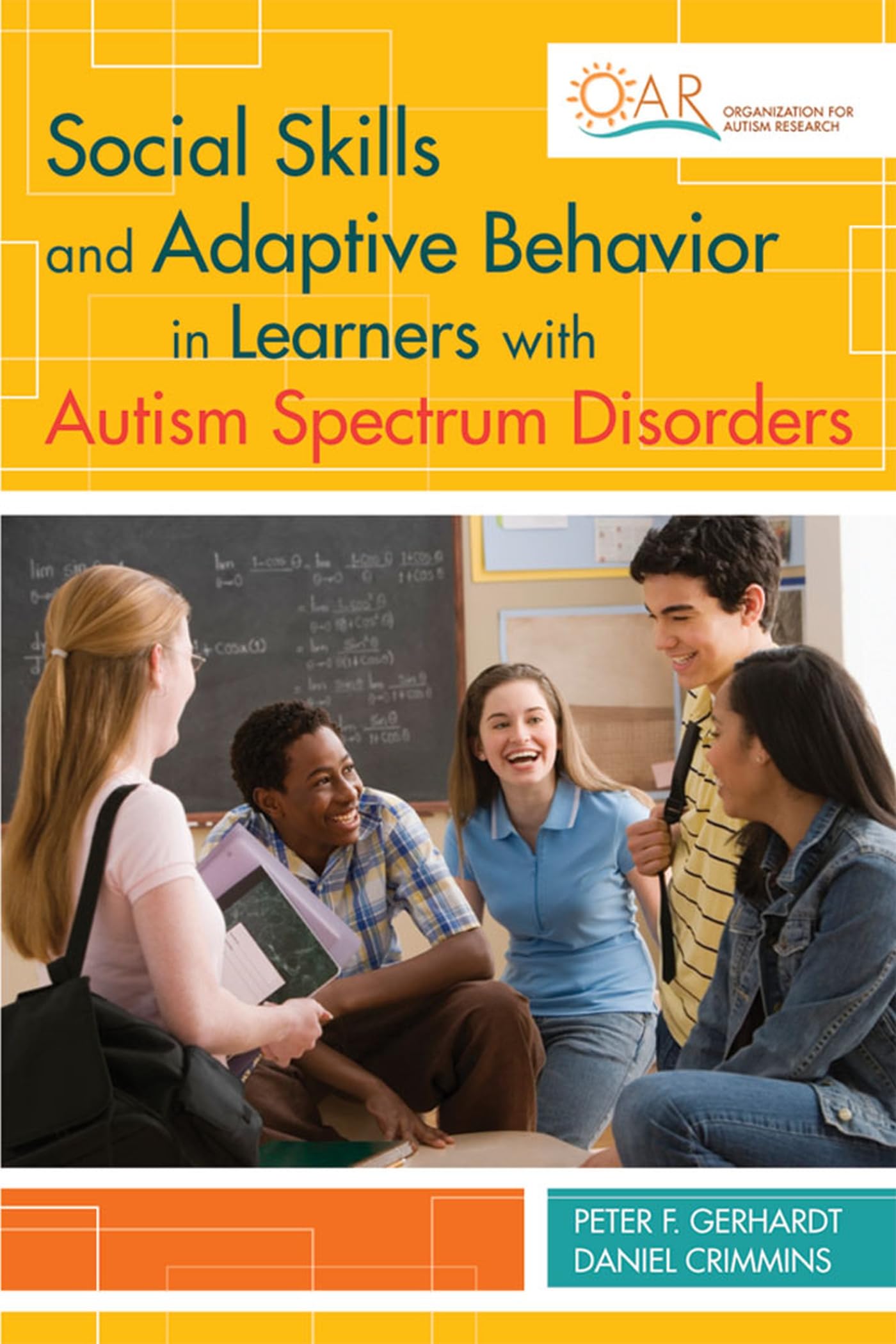
Social Skills and Adaptive Behavior in Learners with Autism Spectrum Disorders
$34.95
by Peter Gerhardt Ed.D



Promoting better social skills and behavior is a top priority for anyone who works with learners with autism—but which practices really improve outcomes? Find out in this cutting-edge volume, a reader-friendly synthesis of the latest findings from more than 20 of today's top researchers in the field. Coordinated by the highly respected Organization for Autism Research, this accessible book is an ideal text for future professionals and essential reading for administrators and consultants in educational settings. Readers will explore current evidence, best-practice recommendations, and future research directions for assessing social skills with evidence-based methods and tools - conducting interventions that really make a difference - promoting friendships and peer acceptance - increasing joint attention - implementing schoolwide positive behavior support - improving outcomes with Pivotal Response Treatment - strengthening children's self-help skills - providing effective support for families of children with autism - using appropriate pharmacologic interventions to manage symptoms associated with ASD Readers will also get first-hand insights from individuals on the autism spectrum and their family members and service providers, who provide balanced perspectives on today's research trends and practices. A cornerstone resource for current and future professionals working with learners of all ages, this book will help readers understand what really advances the social skills and behavior of students with autism—so they can use effective practices to improve the lives of children and families. With contributions from Shahla Ala'i-Rosales - Stephen R. Anderson - Joanne Gerenser - Connie Kasari - Kathleen Koenig - Suzanne Letso - Erik Mayville - Daniel Openden - Roy Sanders - Ilene Schwartz - Mary Jane Weiss - Thomas L. Zane - and more “Finally, a comprehensive literature review related to the social development of individuals with ASD. I wish I had this book on my shelf when I began my doctoral work.” -- Debra Leach, Ph.D. Peter Gerhardt, E.D. , is the director of education at the Upper School of the McCarton School and the founding chair of the Scientific Council for the Organization for Autism Research (OAR). He has more than 30 years of experience using the principles of applied behavior analysis in supporting adolescents and adults with autism spectrum disorders (ASDs) in educational, employment, residential, and community-based settings. Dr. Gerhardt is the author or the coauthor of articles and book chapters on the needs of adolescents and adults with ASDs and has presented nationally and internationally on this topic. He serves on the editorial board of Behavior Analysis in Practice and on numerous professional advisory boards. Dr. Gerhardt received his doctorate from Rutgers, the State University of New Jersey, Graduate School of Education. In addition to his position at the Westchester Institute for Human Development (a University Center for Excellence in Developmental Disabilities), Dr. Crimmins is a faculty member of the School of Public Health and the Department of Psychiatry, both at the New York Medical College. In 2002–2003, he was a Robert Wood Johnson Health Policy Fellow in Washington, D.C., where he worked in the office of Senator James M. Jeffords on health and education policy. Dr. Crimmins has a career interest in child development and disability with a particular interest in those issues that reflect the intersection of research, practice, and policy. He is coauthor of The Motivation Assessment Scale (Monaco & Associates, 1992) with V. Mark Durand and the Autism Program Quality Indicators (New York State Education Department, 2001) with V. Mark Durand, Karin Theurer-Kaufman, and Jessica Everett. Used Book in Good Condition