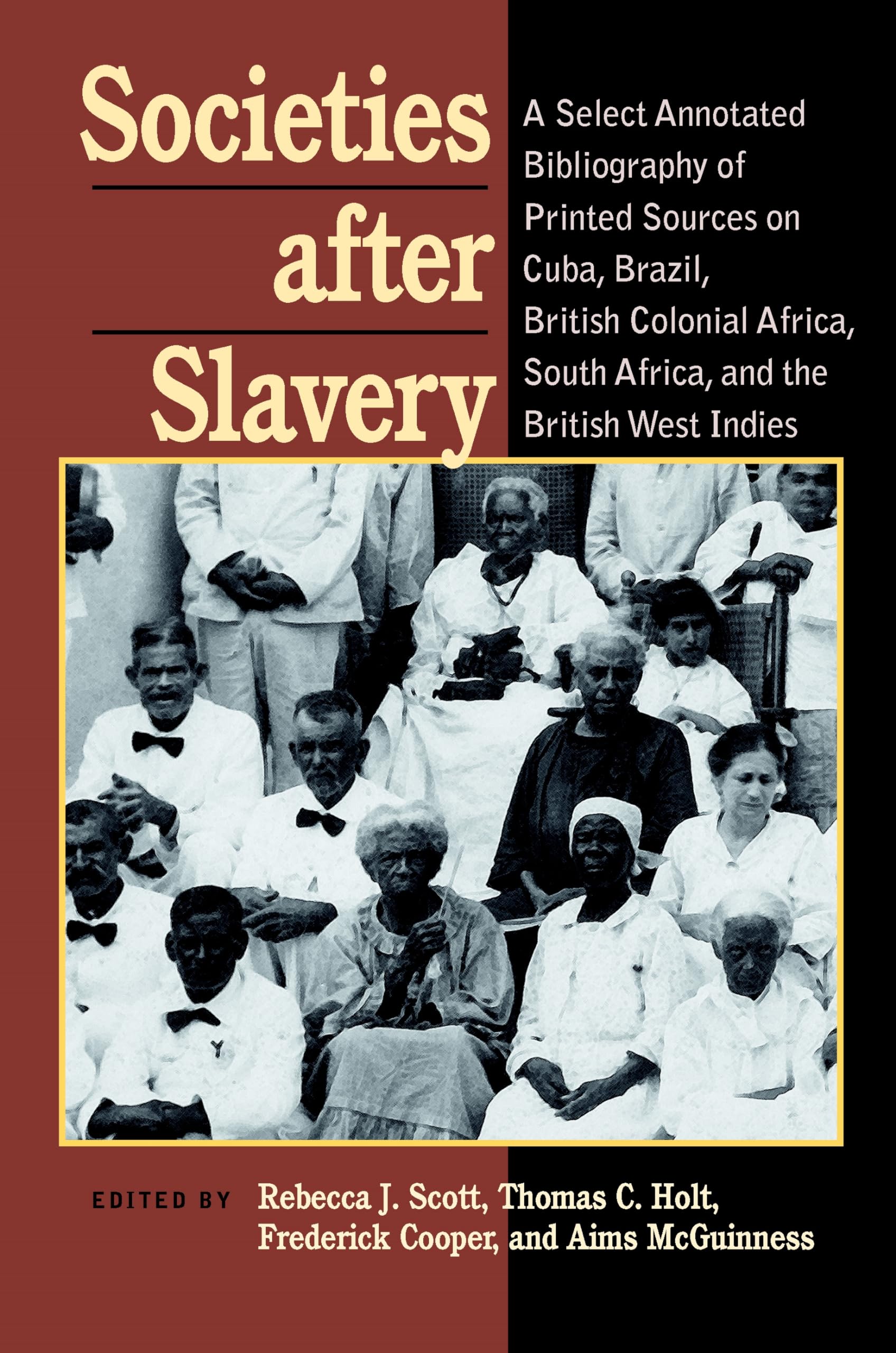
Societies After Slavery: A Select Annotated Bibliography of Printed Sources on Cuba, Brazil, British Colonial Africa, South Africa, and the British
$52.02
by Rebecca J. Scott



One of the massive transformations that took place in the nineteenth and early twentieth centuries was the movement of millions of people from the status of slaves to that of legally free men, women, and children. Societies after Slavery provides thousands of entries and rich scholarly annotations, making it the definitive resource for scholars and students engaged in research on postemancipation societies in the Americas and Africa. "The first [bibliography] dedicated to the often neglected postemancipation history of former slave-owning societies. . . . The editors present more than 1,600 entries in many languages, arranged geographically and subdivided by type of resource, most of them annotated. . . . Also delves into sources beyond the expected studies of former slaves and slave owners, e.g., the effects of urbanization and immigration during this transitional period." --Choice A major reference tool, providing thousands of entries and rich scholarly annotations, this book defines research on postemancipation societies in North America, South America, Latin America, and Africa. "For decades, the phenomenal attention historians have given to all aspects of New World slavery has not been matched by equivalent knowledge of the postemancipation worlds. Historians of North America especially need to learn more about the consequences of slave emancipation in Africa and Latin America. This bibliography will become a crucial and standard source for everyone interested in the global meaning of African slavery, the African diaspora, and their enduring legacy." -David Brion Davis, Sterling Professor Emeritus, Yale University, and Director of Yale's Gilder Lehrman Center for the Study of Slavery, Resistance, and Abolition "An important research tool for anyone interested in the social, economic, political, and ideological changes brought by the emancipation of slaves in the British West Indies, Spanish and Portuguese America, and Africa. The broadly inclusive coverage of both primary and secondary sources dealing with slave owners and non-owners, slaves and free persons of color including immigrant labor, the long time frame, the descriptive annotations, and the brief, insightful introductory essays make the bibliography invaluable for researchers at every level. Teachers who want to introduce their students to the subject and to original research in primary documents, those just beginning their investigations of a particular area, and specialists in one area seeking new insights by adding a comparative breadth to their research will all find this bibliography indispensable." -Harold Woodman, Purdue University Rebecca J. Scott is Charles Gibson Distinguished University Professor of History and Professor of Law at the University of Michigan. Used Book in Good Condition