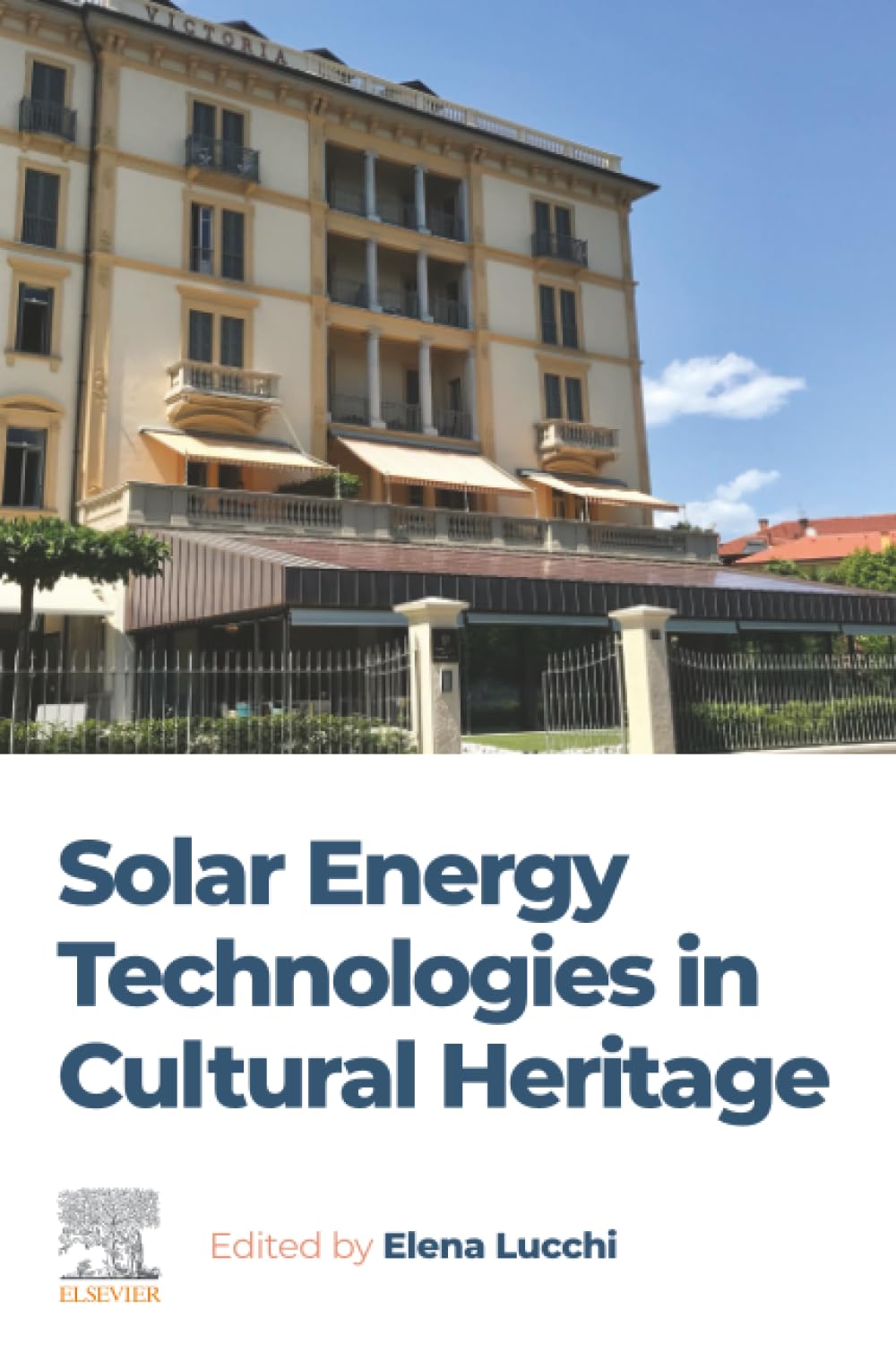



Solar Energy Technologies in Cultural Heritage offers a comprehensive overview of the solar renewable energy possibilities, developments, innovations, and challenges for cultural heritage applications. This book bridges the traditional boundary between research, professional practices, and policies, as well as between arts, architecture, engineering, and social science. Conservation of heritage buildings, especially in urban settings, has evolved from purely physical preservation to functional redevelopment and repurposing. This opens new opportunities for active solar energy systems in buildings, towns, and landscapes. This book presents international contributions on the integration of solar renewable energies within cultural heritage, providing detailed coverage of cultural, legislative, and social frameworks, design criteria, simulation tools, innovative materials, and technologies. This book is an essential resource for anyone interested in solar energy technologies for the built environment, including researchers, scientists, graduate students, engineers, designers, developers, and policymakers. Presents current knowledge and innovative technologies for the integration of photovoltaic and solar thermal systems in cultural heritage - Illustrates approaches and solutions for solving the complex cost–benefit balance between conservation and energy production - Includes contributions from major experts and scientists in the field, supported by real experience and practical examples A comprehensive guide to innovative approaches and practical solutions for solar energy technology in cultural heritage, taking an holistic approach Solar Energy Technologies in Cultural Heritage offers a comprehensive overview of the solar renewable energy possibilities, developments, innovations, and challenges for cultural heritage applications. This book bridges the traditional boundary between research, professional practices, and policies, as well as between arts, architecture, engineering, and social science. Conservation of heritage buildings, especially in urban settings, has evolved from purely physical preservation to functional redevelopment and repurposing. This opens new opportunities for active solar energy systems in buildings, towns, and landscapes. This book presents international contributions on the integration of solar renewable energies within cultural heritage, providing detailed coverage of cultural, legislative, and social frameworks, design criteria, simulation tools, innovative materials, and technologies. This book is an essential resource for anyone interested in solar energy technologies for the built environment, including researchers, scientists, graduate students, engineers, designers, developers, and policymakers. Elena Lucchi is a Researcher in building physics at the Department of Civil Engineering and Architecture (DICAr), University of Pavia, Italy, and Getty Conservation Guest Scholar 2024/2025. She is an Architect with a PhD in building physics from the Politecnico di Milano, complemented by a post-Master's degree in environmental education from the Università Cattolica. Her research addresses the connections between energy, environment, and architecture, with a focus on energy efficiency, climate mitigation strategies, and integration of renewable energies in historic buildings and protected landscapes.