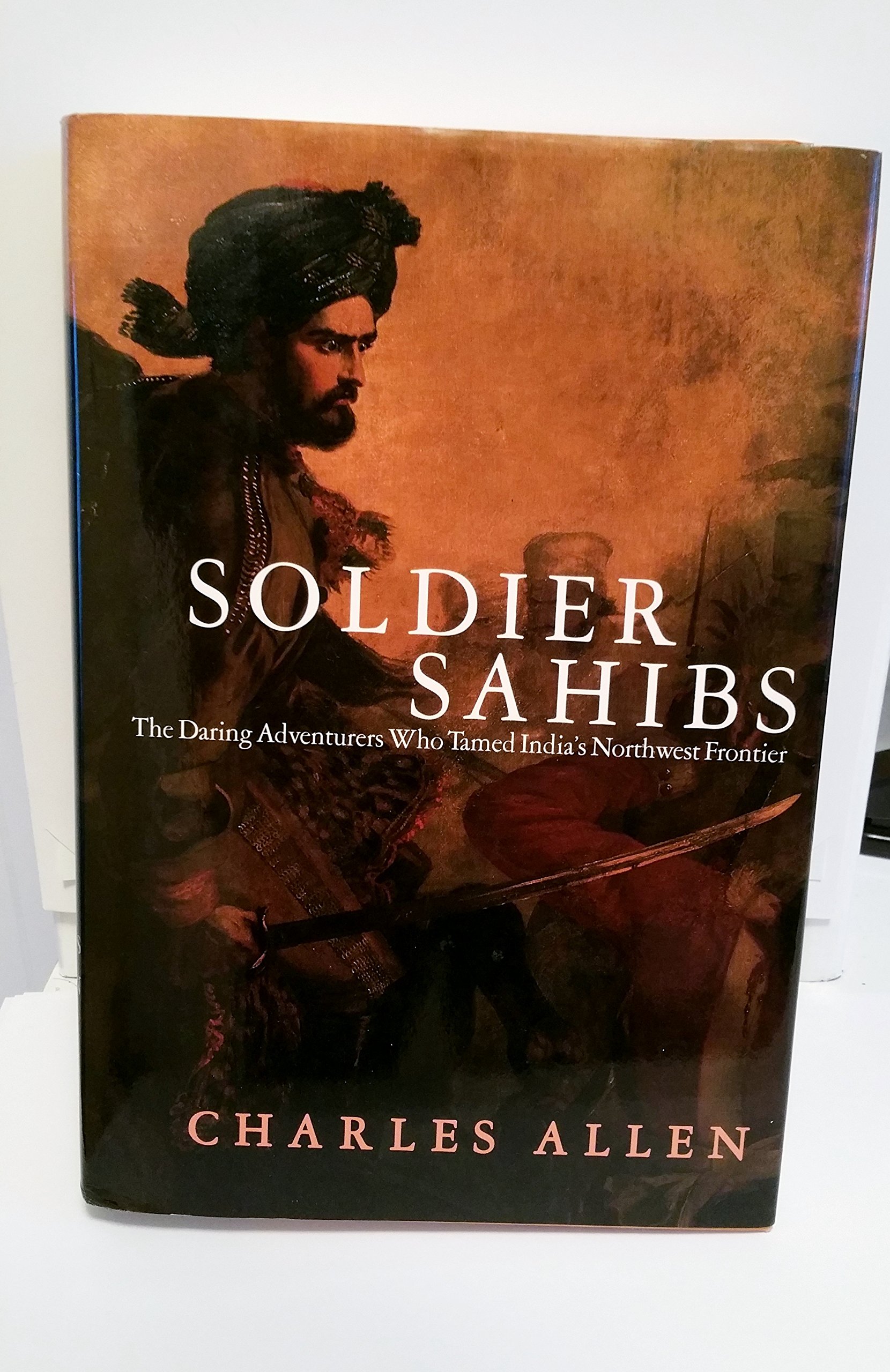
Soldier Sahibs: The Daring Adventurers Who Tamed India's Northwest Frontier
$27.99
by Charles Allen



Drawing extensively on diaries, letters and family mementos as well as his own frequent travels in the northwest region of India, the author offers an illuminating study of British colonial history and the prominent role played by his own ancestor, Brigadier General John Nicholson. From July 1839 to September 1857, British Indian history centered on events taking place in the Punjab on India's northwest frontier. Allen shapes his narrative of this pivotal period around the lives of a swashbuckling coterie of British civil and military leaders, including John and Henry Lawrence, John Nicholson, Neville Chamberlain, William Hodson, Reynell Taylor, and James Abbott. The theme coursing through these British leaders' lives is action first, thought later. Beginning with the First Afghan War and continuing through two Sikh wars to the retaking of Delhi during the Indian Mutiny, Allen follows the intertwined lives of these "heroes" as they blunder about Afghanistan, conquer, annex, and administer the Punjab, and subsequently break the Indian Mutiny at Delhi. Allen, a freelance writer living in London, eschews historical interpretation to telling a riveting good tale that is still essentially factually correct. The result will readily appeal to the general reader. John F. Riddick, Central Michigan Univ. Lib., Mt. Pleasant Copyright 2001 Reed Business Information, Inc. Intrigued by the extraordinary life and times of General John Nicholson, a distant forebear, Allen set out to chronicle the adventures of his illustrious ancestor in mid-nineteenth-century India. While researching his subject, he discovered that Nicholson's career and personal life were inextricably interwoven with those of a group of seven other "soldier sahibs." Entrusted with the task of extending the British East India Company's sphere to the mountainous Northwest Frontier Provinces (NWFP), Nicholson and the band of intrepid soldier-administrators laid the territorial and governmental foundations of the NWFP. From 1839 to 1857, the young British commanders, assisted by a loyal cadre of native officers and troops, guided the formidable Bengal Army during a series of violent campaigns waged between the borders of Pakistan and Afghanistan. This rousing tale of courage and derring-do is tempered by an objective contextual assessment of the racial and moral implications of colonialism. Margaret Flanagan Copyright © American Library Association. All rights reserved Used Book in Good Condition