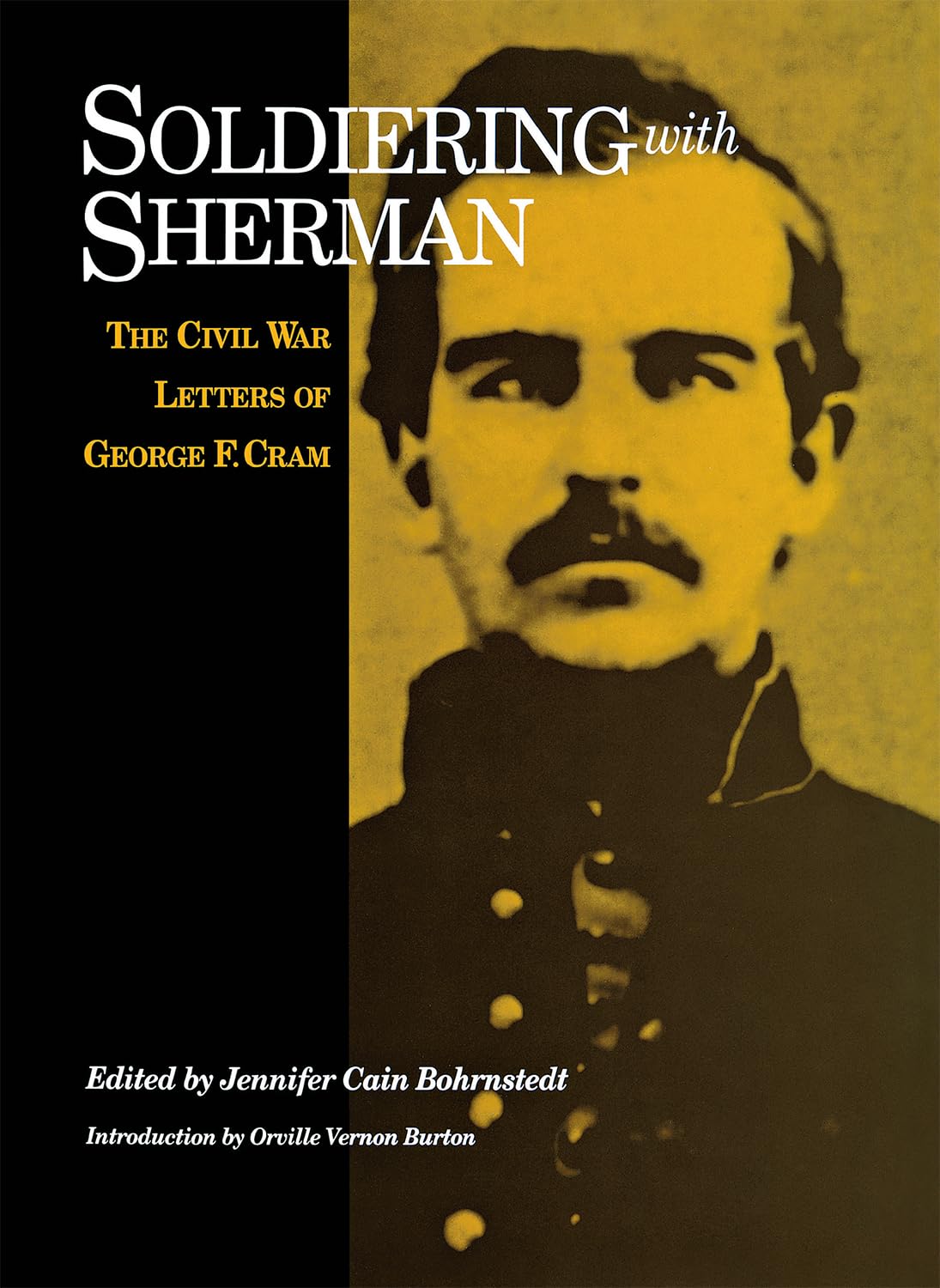



Rare among Civil War correspondence, the collection of Union Sergeant George F. Cram's letters reveals an educated young man's experiences as part of Sherman's army. Advancing through the Confederacy with the 105th Illinois Infantry Regiment, Cram engaged in a number of key conflicts, such as Resaca, Peachtree Creek, Kennesaw, and Sherman's "march to the sea." A highly literate college student who carried a copy of Shakespeare in his knapsack, Cram wrote candid letters that convey insights into the social dimensions of America's Civil War. With a piercing objectivity, optimism, and a dry sense of humor, Cram conscientiously reported the details of camp life. His vivid depictions of the campaigns throughout Alabama, Georgia, and the Carolinas contribute new insights into the battle scenes and key Union leaders. Cram and several of his compatriots adhered to a principled code of personal conduct (no smoking, swearing, drinking, or gambling), striving to maintain integrity and honor in the face of war's hardships and temptations. Influenced by the abolitionist values of his community and college, Cram's observations on the effects of slavery and on the poverty of many of the Southerners are especially illuminating. Civil War scholars and general readers alike will learn much from Cram's discoveries and observations—from his sympathy for poor whites to his grudging respect for the Confederates—that reveal the character of a young man maturing at war. "An important read for anyone interested in the Civil War."―Journal of Illinois History "A rewarding and informative book.... Bohrnstedt has done a good job of introducing Cram to us as a complete, well-rounded human being, so we can more fully understand and appreciate his letters and his insight into his experience of war."―Civil War News "A must-read."―Chicago Magazine This fine collection provides an Illinois soldier's view of the western campaigns of the war from 1862-65. Cram was a twenty-one-year-old college student when he enlisted in Company F of the 105th Illinois Infantry in the summer of 1862. Over the next three years he fought his way across the breadth of the Confederacy. His letters provide keen observations of the Battles of Resaca, Kennesaw Mountain, Peach Tree Creek, among others, and offer his views of key figures of the era, including Generals Thomas, Hooker, Rosecrans, Howard and Sherman. This is a book about the Civil War. But the universal themes by which Cram's life is guided appeal to our sensibilities beyond that of narrowly understanding the Civil War. Understanding humanity, the value of relationships,a dn all the ingredients by which they are bound together--trust, truth, determination and honor--is also what Cram shared. The lives of Cram and those friends, family, and comrades closest to him were examined extensively in order to understand the magnitude of impact on the many lives of one Illinois community resulting from the unforgotten days of "Soldering with Sherman." Jennifer Cain Bohrnstedt is a trustee of the California History Center Foundation, a member of the Peninsula Civil War Round Table, and an independent Civil War scholar. Orville Vernon Burton, who provided the Introduction, is Professor of History at the University of Illinois. In our breastworks May 27th, 1864 Dear Mother, I hardly know how to write there is so much of intense interest to communicate, but will begin back to May 14th and describe at random what has occurred since. At that date (Saturday) our brigade formed the 1st line of battle on the right center. The rebels in our front held a most formidable position and it was not deemed advisable by Hooker to charge them, though Genl. Ward was crazy all day to do so; so nothing but skirmishing took place during the day by us, though in our left the 14th corps were heavily engaged toward night. We slept on our arms during the night and the next morning (Sunday) started rapidly to the left where the rebels were ascertained to be massing their might. Our division was all drawn up in line on the extreme left ready for work at 12 midnight and in a few moments we learned from our commander the duty before us which was to charge the enemy's work. We had formed just beneath a hill whose protecting sides covered us from the sight of the enemy and as our regts. were being massed, an almost deathlike silence pervaded the ranks. Every man knew that in a few moments death would be at work among us and all seemed to fully realize the fact, but they all stood up like men and seemed to vie with each other in real courage. At 12 we fixed bayonets and dashed over the hill. A perfect shower of shot, shell and grape met us thinning our ranks sadly, (Tirtlot fell on the first shot) but without the least check we flew down the hill, crossed the road at the front, climbed over some breastworks the rebels had left and began the run of the hill where they were posted. The 105th was the last regt., but the two in front of