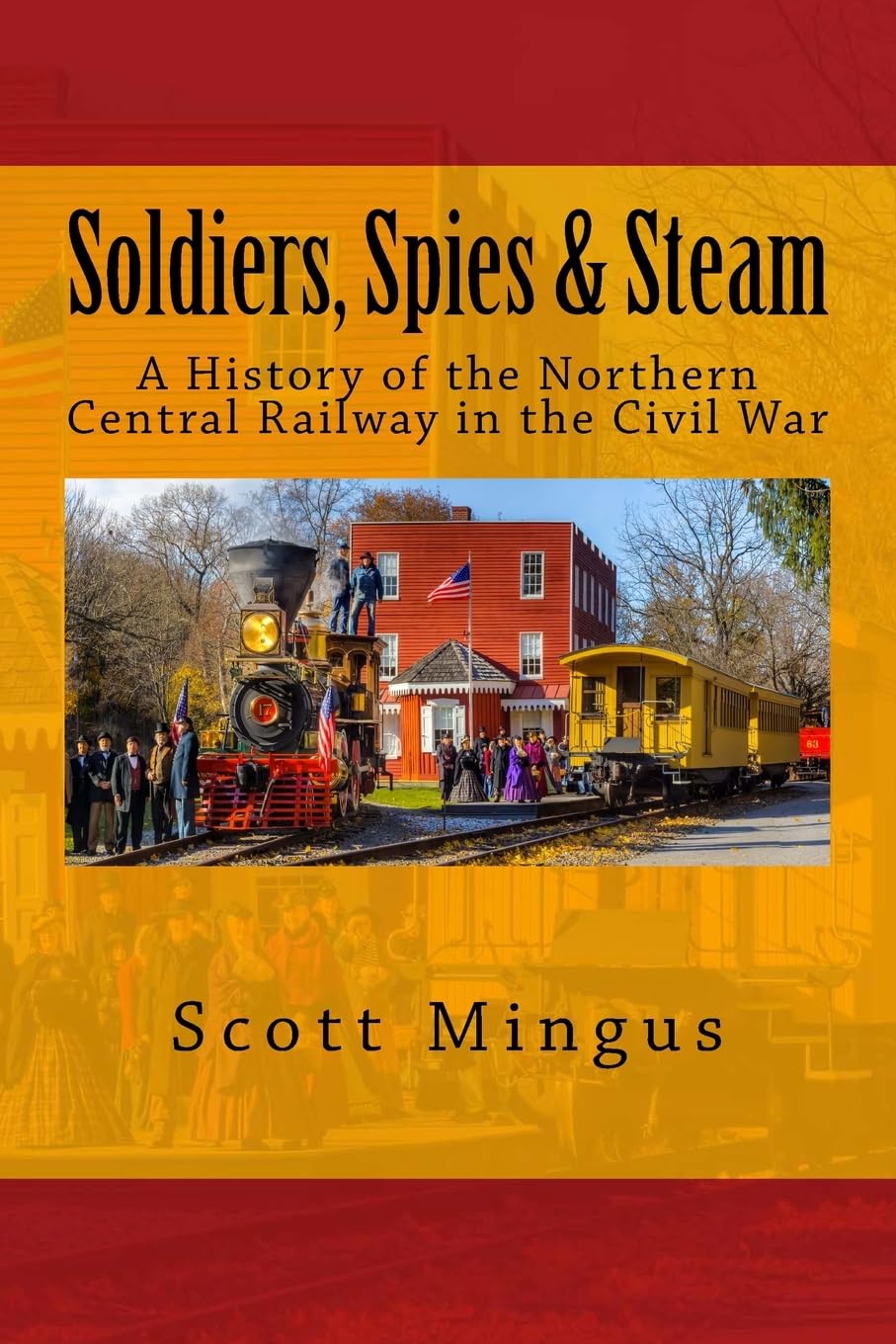
Soldiers, Spies & Steam: A History of the Northern Central Railway in the Civil War
$10.51
by Scott Mingus



The first book to examine the role of the Northern Central Railway during the Civil War, this work discusses the origins of the NCRW, its route structure, destructive Confederate raids at the start of the war, and the troops who rode the rails. President Lincoln used the Northern Central to travel to and from Gettysburg for the dedication of the National Cemetery; his brief remarks are immortalized as the Gettysburg Address. His funeral train would also pass over the same route. Accidents, spies, sabotage, political intrigue, and the expansion of the railroad as a military and economic necessity form the backbone of the book. Of special interest is a detailed examination of a series of controversial photographs taken at Hanover Junction, Pennsylvania, which may or may not show Abraham Lincoln on his way to deliver the Gettysburg Address. Scott Mingus is a scientist and executive in the paper industry, and holds patents in self-adhesive postage stamps and bar code labels. The Ohio native graduated from the paper science and engineering program at Miami University. He was part of the research team that developed the first commercially successful self-adhesive U.S. postage stamps. The York, Pa., resident has written fifteen Civil War books. His biography of Confederate General William "Extra Billy" Smith won the 2013 Nathan Bedford Forrest Southern History Award as well as the Dr. James I Robertson, Jr. Literary Prize, and was nominated for the Virginia Literary Award for Non-Fiction. He also wrote several articles for Gettysburg Magazine. Scott maintains a blog on the Civil War history of York County (www.yorkblog.com/cannonball). He received the 2013 Heritage Profile Award from the York County Heritage Trust for his contributions to local Civil War history. He also has written six scenario books on miniature wargaming and was elected to the hobby's prestigious Legion of Honor. His great-great-grandfather was a 15-year-old drummer boy in the 51st Ohio Infantry, and other family members fought in the Army of the Potomac at Antietam and Gettysburg.