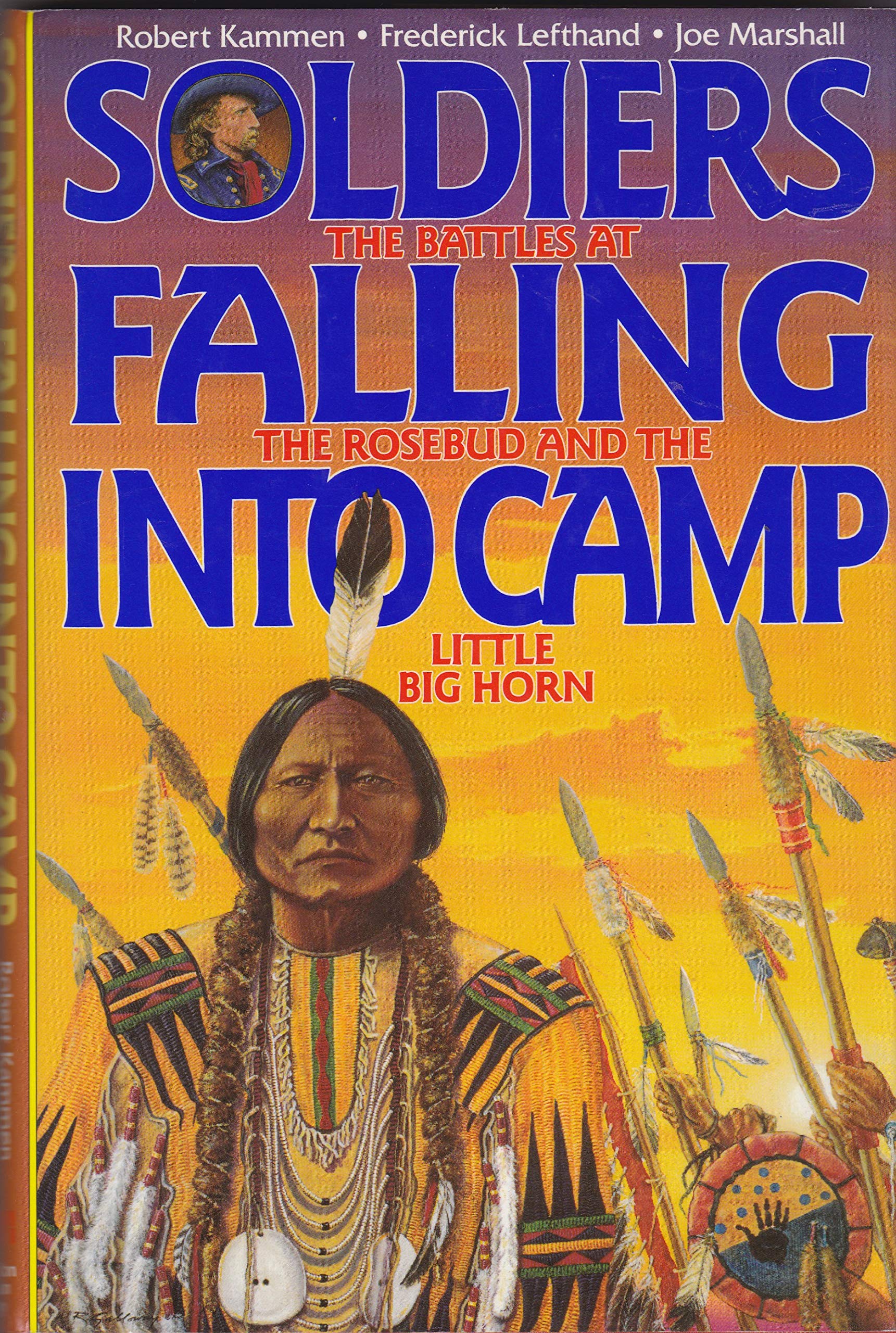
Soldiers Falling into Camp: The Battles at the Rosebud and the Little Big Horn
$20.78
by Robert Kammen



SOLDIERS FALLING INTO CAMP presents still another perspective on the crucial battles at the Rosebud and the Little Big Horn. Robert Kammen, Joe Marshall, and Frederick Lefthand have written a more fully rounded history of those battles, melding oral accounts handed down by the Sioux and Crow participants with well researched U.S. Cavalry records. This is a thrilling story, even today, and these writers have breathed new life into a great mystery. SOLDIERS must stand as the definitive story of Custer's defeat. Finally, we can see how the battles developed from the Native American point of view. This book should be read first by anyone interested in learning what really happened to Custer's dream of glory. Published to coincide with Custer Battlefield National Monument's renaming as Little Big Horn National Monument, this book incorporates Native American ideas about the famous battle as they have been retained in the historical memory of the area's residents. Kammen, a prolific author of fast-paced Western fiction set in Montana and Wyoming ( Montana Rimfire, Zebra, 1991), collaborates with two Native Americans: Joe Marshall, who provided a traditional Sioux perspective, and Fredrick Lefthand, who gives the Crow viewpoint. However, among the many works on Custer and the Little Big Horn, there are better books acknowledging the Native American perspective, most notably Joseph Kossuth Dixon's The Vanishing Race (1913) and Robert Utley's excellent Cavalier in Buckskin (Univ. of Oklahoma, 1988). Kammen's style is better suited to Western fiction. Not recommended. --Margaret W. Norton, Fenwick H.S. Lib., Oak Park, Ill. Copyright 1992 Reed Business Information, Inc. Used Book in Good Condition