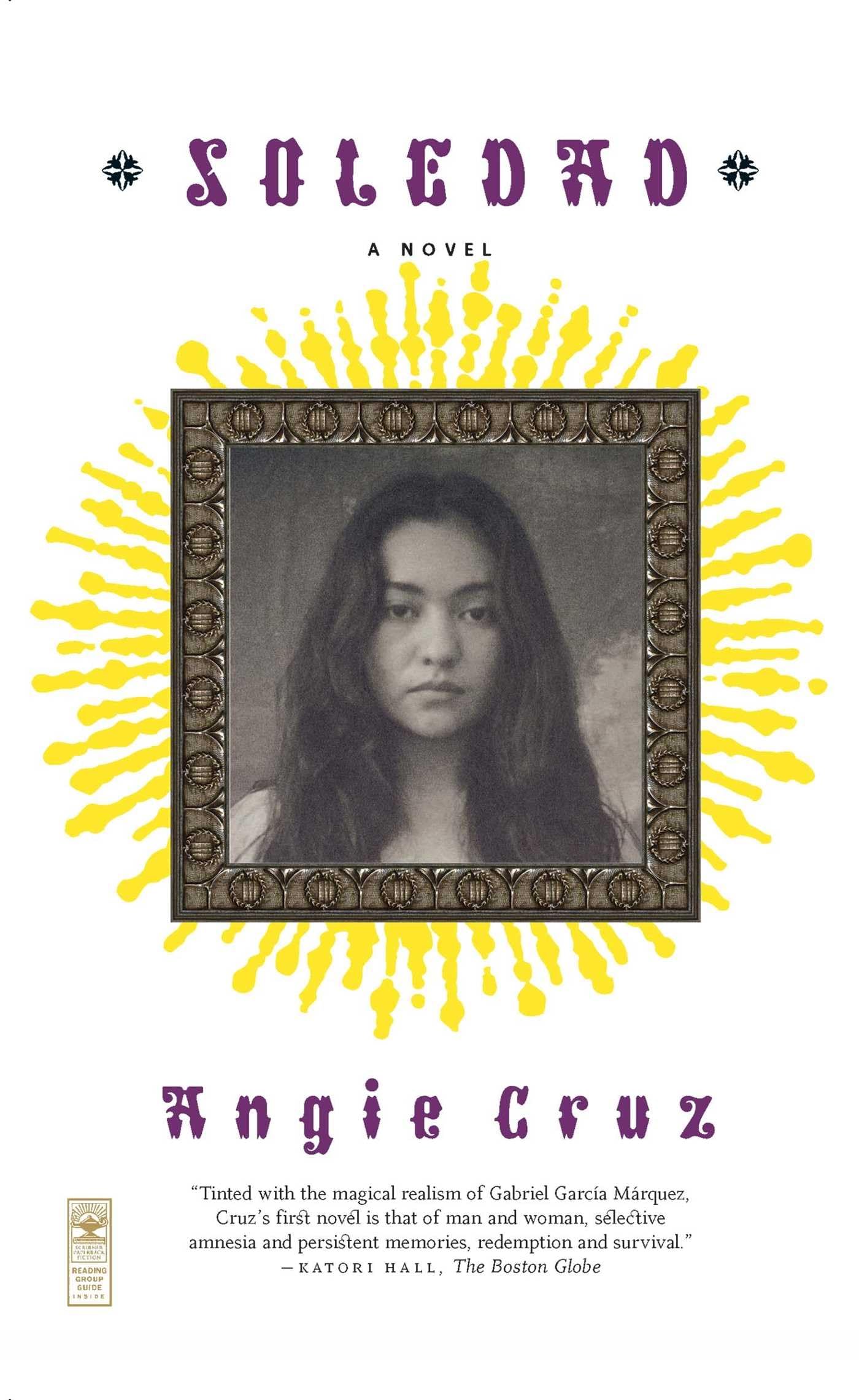



Award-winning author Angie Cruz takes readers on a journey as one young woman must confront not only her own past of growing up in Washington Heights, but also her mother's. At eighteen, Soledad couldn't get away fast enough from her contentious family with their endless tragedies and petty fights. Two years later, she's an art student at Cooper Union with a gallery job and a hip East Village walk-up. But when Tía Gorda calls with the news that Soledad's mother has lapsed into an emotional coma, she insists that Soledad's return is the only cure. Fighting the memories of open hydrants, leering men, and slick-skinned teen girls with raunchy mouths and snapping gum, Soledad moves home to West 164th Street. As she tries to tame her cousin Flaca's raucous behavior and to resist falling for Richie—a soulful, intense man from the neighborhood—she also faces the greatest challenge of her life: confronting the ghosts from her mother's past and salvaging their damaged relationship. Evocative and wise, Soledad is a wondrous story of culture and chaos, family and integrity, myth and mysticism, from a Latina literary light. Katori Hall The Boston Globe Tinted with the magical realism of Gabriel García Márquez, Cruz's first novel is that of man and woman, selective amnesia and persistent memories, redemption and survival. Dodie Bellamy San Francisco Chronicle A vivid, breathing cityscape teeming with raw beauty, danger, and magic. Mark Rozzo Los Angeles Times Nobody's ever really given us such a revealing look at New York's Dominican population before...Cruz, in this determinedly real yet often magical novel, offers canny insights into family life. Angie Cruz was born and raised in the Washington Heights section of New York City. She is a graduate of SUNY Binghamton and received her MFA from New York University. Her fiction and activist work have earned her the New York Foundation of the Arts Fellowship, the Barbara Deming Memorial Fund Award, and the Bronx Writers' Center Van Lier Literary Fellowship. She is the author of Soledad , Dominicana , and Let It Rain Coffee . She currently resides in New York City. Visit the author at AngieCruz.com. Chapter 1 It's always like that: just when I think I don't give a shit about what my family thinks, they find a way to drag me back home. A few weeks ago I receive this urgent phone call from my aunt Gorda. You have to come home, Soledad, your mother is not doing so good. Gorda expects a fight from me. She tells people that I was born con la pata caliente, feet burning to be anywhere but here. I say, it's more like those Travel and Leisure magazines my mother borrowed from the offices she cleaned that did it. When most kids wanted to go to Disney World, I begged to go to Venice so I could ride one of those gondolas. Even my earliest pastel drawings were of pagodas, the Leaning Tower of Pisa, and Machu Picchu. In some ways the travel and leisure fantasy continues because without trying I led my family to believe that I left 164th Street to live in the school dorms, which I kind of described to be more like high-rises, with a view of the East River and really great showers. For two years, they've had no idea. Every time I step inside my East Village walk-up on the corner of 6th and A, I feel guilty. Everything about it, the smell of piss, the halls as wide as my hips, the lightbulb in the lobby that flashes on and off like a cheap disco light, reminds me of my deception. But if they knew the truth (and how much I am paying for it), they'd declare me insane and send my uncle Victor to tie me up on the hood of his Camaro and bring me back home, kicking and screaming. So although I dread it, I switch from the L train to the A and head uptown. I've learned not to make eye contact on the train. I try to avoid looking at the old lady who is an emaciated version of my grandmother, Doña Sosa, without teeth. Like my grandmother, the old lady wears heavy pressed powder three shades lighter than her skin tone. Just looking at her makeup gives me allergies. I squeeze my bags between my legs, slip the silver necklace with a dangling peace sign inside my dress and double-wrap the strap of my knapsack around my hand. Out of all the things to wear uptown, I wear a tie-dye cotton skirt and strappy sandals. I should've at least worn sneakers. For a minute I delude myself into thinking that my family is sitting around my grandmother's kitchen eagerly awaiting my arrival. When the A train screeches its way up to 59th Street, I feel the little hairs on the back of my neck jump up like antennas. The tourists, the white folks, the kind of people who are too scared to go uptown, get off the train, leaving me behind. Once the train takes off from 59th Street there's no stopping it. Next stop is Harlem and then Spanish Harlem and then finally Washington Heights. When I first moved downtown and people where I work asked me where I was from, I used to say the Upper West Side, vagu