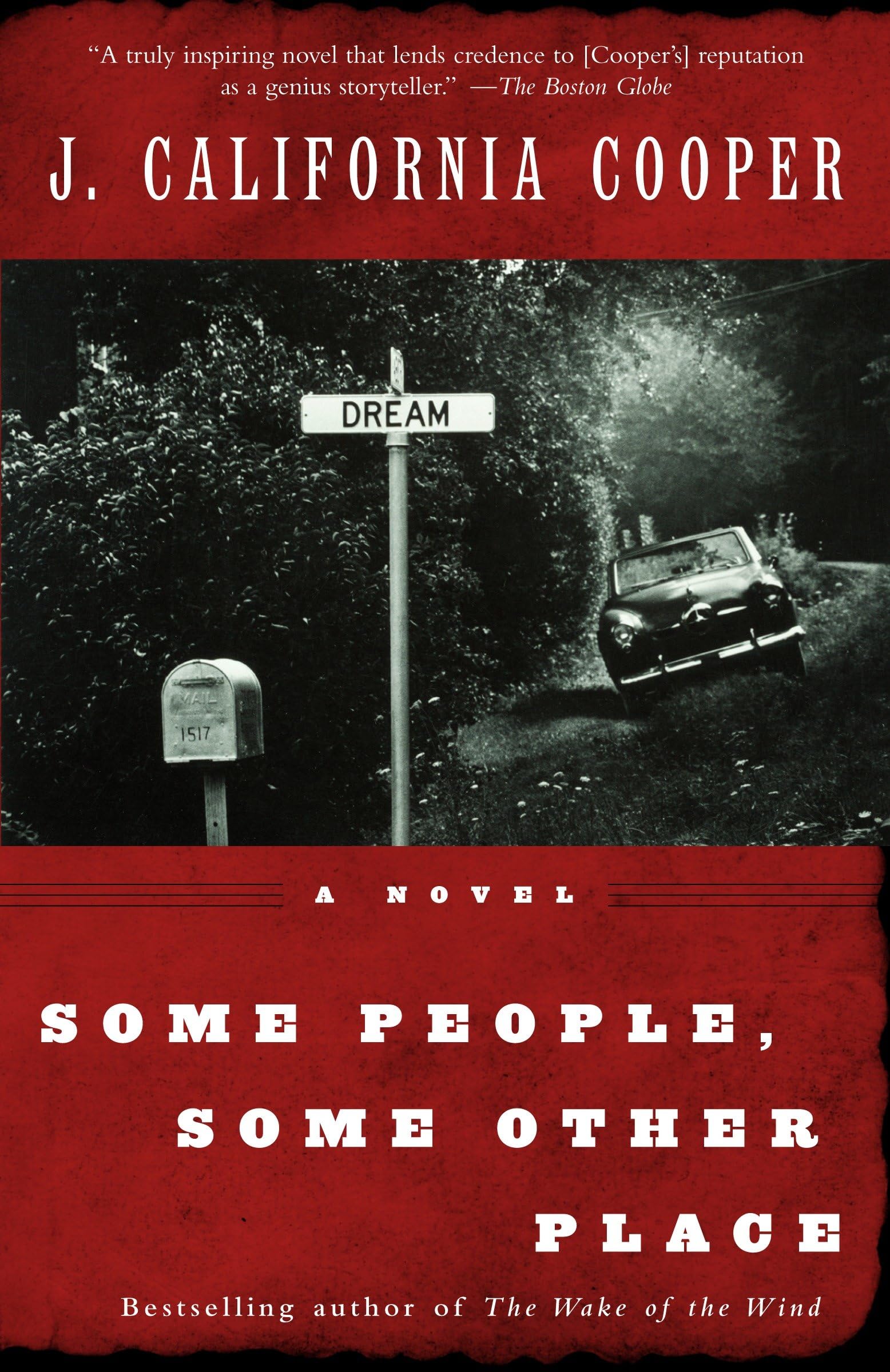



For generations Eula Too’s family has been making a journey North, year after year, step by painful step; and she’s determined to be the one to make it all the way to Chicago. In and out of school, taking care of her fourteen brothers and sisters, she can see no way out. But when a new family burden threatens to overwhelm her, she at last leaves for the city, only to find that her life gets even tougher. Ranging from the Deep South at the turn of the century, to a diverse contemporary town filled with people striving for a better life, Some People, Some Other Place is J. California Cooper at her irresistible, surprising best. “A truly inspiring novel that lends credence to [Cooper’s] reputation as a genius storyteller”— The Boston Globe “The author’s storytelling gifts are at their peak. . . . I was hypnotized. I was helpless. I couldn’t stop reading” —Carolyn See, The Washington Post “Stirring. . . . You laugh, cry, cheer, pity, and pray for her highly spirited cast.” — Upscale “A graceful tale of people surviving because of, and in spite of, one another.” — Essence "J. California Cooper returns with a sweeping novel about love and heartbreak, perseverance and luck, telling her tale with an insight and grace that reaffirms Alice Walker's words of praise for her previous works: "Her style is deceptively simple and direct and the vale of tears in which her characters reside is never so deep that a rich chuckle at a person's foolishness cannot be heard." In her acclaimed novels and short stories, J. California Cooper has created moving portraits of people striving to make their way in a hard, often unjust world. Whether it explores the blatant racial and class biases of nineteenth-century America or the more subtle forms of discrimination that exist today, "It is the universality of her themes that has made Ms. Cooper's work popular," as the "Dallas Morning News has written. "Some People, Some Other Place is Cooper's biggest, most far-reaching novel to date. A multigenerational tale, it is set in a town called "Place," on a street named "Dream Street." In the words of the novel's narrator, "the block surely had about it a feeling of long accumulation of history, of life, of many lives intertwined." As she chronicles the interlocking lives of the residents of Dream Street, Cooper places the stories of the individuals and their families within the wider context of America's social and economic history. We meet the narrator's great grandparents, who left the poverty of the Deep South in 1895 and made their way to a farm in Oklahoma; her grandparents, who continued the northward journey with their eyes on the promised jobs of the industrial Midwest but were forced to settle without reaching their goal; and her mother, who finishes thejourney and discovers that life at 903 Dream Street carries new burdens as well as rewards. The neighbors on the block are people of all colors, all striving to overcome personal troubles and disappointments, and all holding fast to their dreams of a better life. J. California Cooper is the author of the novels Family and The Wake of the Wind and of seven collections of short stories, including Homemade Love , winner of the 1989 American Book Award. Among her numerous awards are the James Baldwin Writing Award and the Literary Lion Award from the American Library Association. She has one daughter and lives in Portland, Oregon. Chapter One Sometime around 1895 in America, Negroes were spreading out and up from the hard past of the poor South seeking food and survival. Among them were a man and woman with four young children: two, three, four, and five years old. The traveling was hard and they were often hungry. They reached what seemed to them to be a large city in Oklahoma . . . and stopped. They had to stop because the mother did not have another step in her feet. She could not bear to drag her children another step. The husband left them behind, near a small river, as he went to seek a Negro person to get information about a place for his family to sleep a few days and, perhaps, a job. They did not have a morsel of food. He found an old couple who were sharecroppers and worked a piece of land on another man's property. The old couple had only a small room and kitchen they lived in, a small shed for tools and a mule. Used to seeing such troubles, even having had them themselves, they allowed the man to bring his family into the shed for the little warmth and protection it offered from the cold nights. The old farmers could not, in their heart, allow the sad, bedraggled, unfed and unrested children go hungry and tired. They took some greens and a few potatoes from their garden. The tired mother wanted to help, but was shooed away by the old wife who cooked for the family, her own memories roiling around in her mind. They had no meat to share. Her two chickens were for eggs to sell. The traveling family arranged themselves against the walls and on the floor i