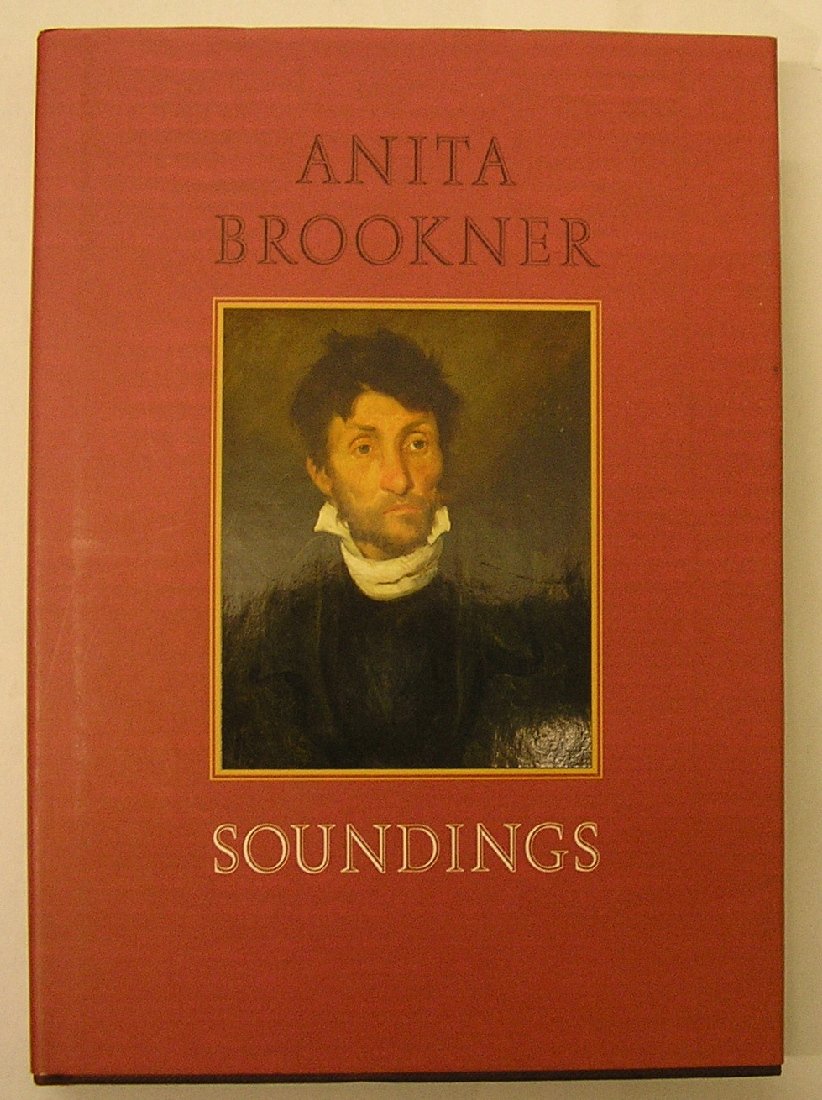



A compilation of essays written during the last twenty-five years covers such topics as nineteenth-century French painting, the literary works of Rousseau and Doris Lessing, and the Bible Some of the best art writing is not in art magazines but in the weekly and fortnightly general literary journals that continue to traffic in fine essays. These two new collections feature the best work from two masters of the trade. Fenton (poetry, Oxford) writes intricate, erudite essays for the New York Review of Books in enjoyably nimble prose that retains a pellucid accessibility for college-level readers. The density of his pieces, laden with retorts and counterclaims directed at other critics, belies the fact that some of them are as short as ten pages. His intellectual reach is impressively broad, exemplified here by 15 essays covering territory ranging from Jasper Johns to Egyptian funerary statues. BrooknerAknown both as a scholar of art and a Booker Prize-winning novelistAcontributes regular reviews to both the London Review of Books and the Times Literary Supplement. Her style evinces a contagious love of culture, with a tendency toward the ascerbic cri de coeur. One title under consideration she calls "badly produced, badly written and undeniably brilliant." In 22 compact essays, Brookner considers such diverse topics as Delacroix, Doris Lessing, and Dr. Herman Tarnower. It's to her credit that many of these reviews, some dating back to 1975, are far less stale than their onetime targets. Both of these books are comparable to recent collections by Robert Hughes, Lucy Lippard, and Andrew Graham-DixonAgood purchases for academic and large public libraries.ADouglas F. Smith, Oakland P.L., CA Copyright 1998 Reed Business Information, Inc. An opinionated, if somewhat professorial, collection of essays on French art and literature by the Booker Prize - winning novelist and art historian. Before Brookner had ever penned Hotel du Lac or any other work of fiction, she wrote about Watteau, Greuze, Gricault, and David. The essays collected here were written during the past quarter-century and published originally in the Times Literary Supplement or the London Review of Books. Although no one could call these pieces spellbinding, they - re written with a suave clarity and subtle wit. In counterpoint to heavily theoretical art history, Brookner allows herself a novelist's pleasure in biographical detail. From a traditional perspective, unabashed interpolation of art and life may be fraught with danger, but Brookner never abandons her intellectual rigor or critical distance. She just closes in on her subjects with an ardent curiosity. Thanks, perhaps, to her work as a writer of fiction, her essays on 18th- and 19th-century art and literature benefit from her sensitivity to the interplay of philosophy, politics, culture, social change, and personality. Time and again, she focuses on tensions evident in the work itself, as well as in the creator. Her essay on Delacroix, for example, explores the dual threads of Classicism and Romanticism - restraint and self-revelation - that remain visible in his writing, if not in his art. When she keeps to art history, Brookner - s proclamations amuse and inform; unfortunately, she also veers into contemporary subjects. It's anyone's guess why she chose to toss in a piece about Diana Trilling's book on the trial of Jean Harris, for example. The cumulative effect of Brookner's critical boldness is less heavy-handed and overbearing than fiercely, even warmly pedagogical. (3 b&w illustrations) -- Copyright ©1998, Kirkus Associates, LP. All rights reserved. Here is a book that deserves recognition as a great work of art history. -- Brian Sewell, Evening Standard, London Anita Brookner is a Fellow of New Hall, Cambridge. She is widely admired for her novels, of which Hotel du Lac won the Booker Prize in 1984.