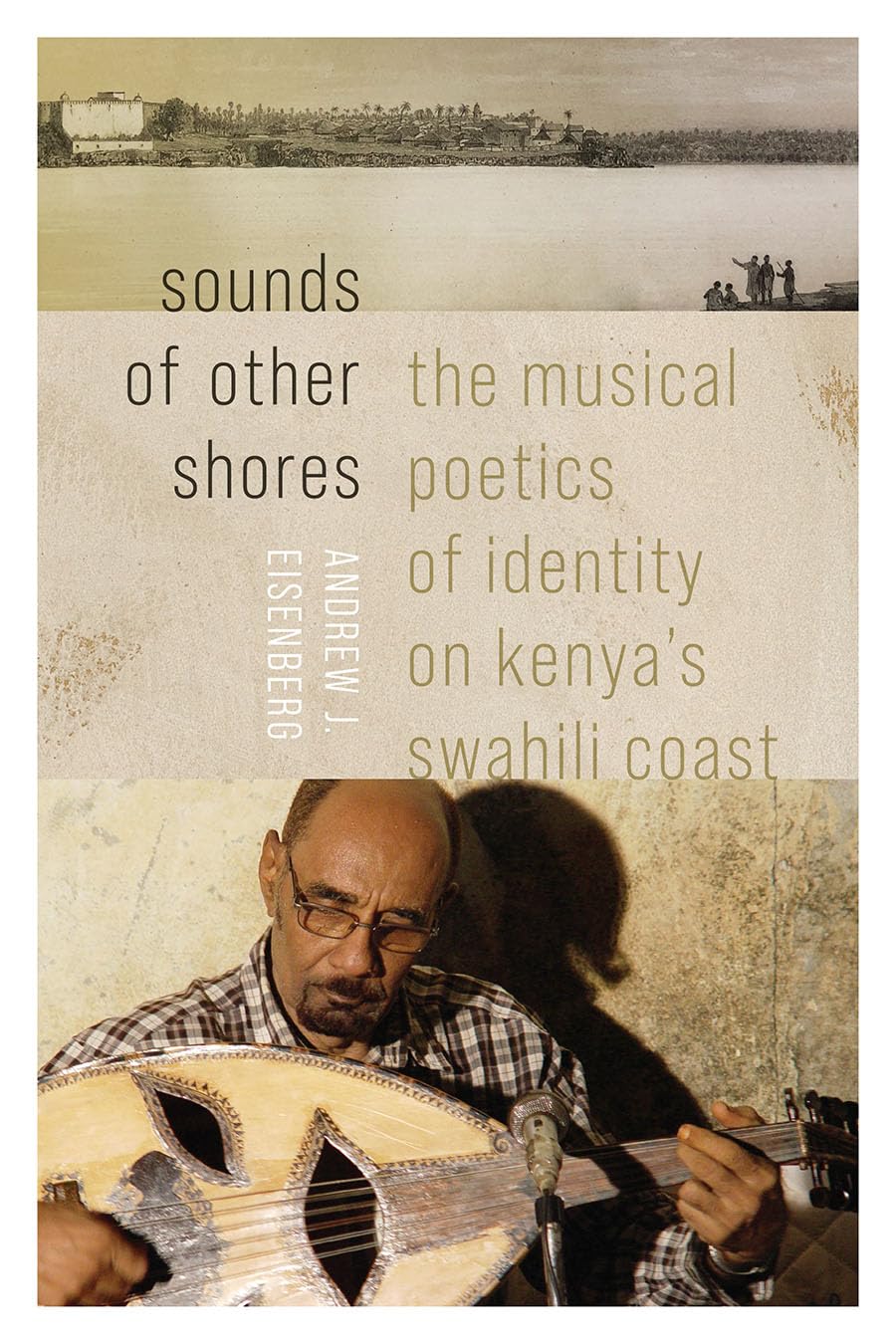
Sounds of Other Shores: The Musical Poetics of Identity on Kenya's Swahili Coast (Music / Culture)
$19.80
by Andrew J. Eisenberg



A study of transoceanic musical appropriation and Swahili ethnic subjectivity on the Kenyan coast Sounds of Other Shores takes an ethnographic ear to the history of transoceanic stylistic appropriation in the Swahili taarab music of the Kenyan coast. Swahili taarab, a form of sung poetry that emerged as East Africa's first mass-mediated popular music in the 1930s, is a famously cosmopolitan form, rich in audible influences from across the Indian Ocean. But the variants of the genre that emerged in the Kenyan coastal city of Mombasa during the twentieth century feature particularly dramatic, even flamboyant, appropriations of Indian and Arab sonic gestures and styles. Combining oral history, interpretive ethnography, and musical analysis, Sounds of Other Shores explores how Swahili-speaking Muslims in twentieth-century Mombasa derived pleasure and meaning from acts of transoceanic musical appropriation, arguing that these acts served as ways of reflecting on and mediating the complexities and contradictions associated with being "Swahili" in colonial and postcolonial Kenya. The result is a musical anthropology of Kenyan Swahili subjectivity that reframes longstanding questions about Swahili identity while contributing to broader discussions about identity and citizenship in Africa and the Indian Ocean world. " Sounds of Other Shores , with its extensive bibliography, is a major contribution to the study of the centuries-long history of successive settlements on the Kenya coast (Mombasa, Lamu, Zanzibar) and their integral connections to the Indian Ocean... The book is, of course, of particular interest to (ethno)musicologists, as the extremely detailed descriptions and genealogy of this transoceanic genre and its bearers offer a comprehensive history of hybridization and models for future research in this and other areas."―Winifred Lambrecht, Rhode Island School of Design, Journal of Folklore Research Reviews "This is a very fascinating book that foregrounds, at this moment in time, music's continued role in shaping societal identities and ways of belonging. It will be read widely and enthusiastically by a variety of scholars from various disciplines such as ethnomusicology, musicology, as well as linguistic and social anthropology."―Charles Lwanga, University of Michigan, Music & Musical Performance: An International Journal "The combination of research methodological approaches from oral histories and interpretative ethnography to close analyses of musical performances enables Eisenberg to present a deep knowledge of the multifaceted nature of Mombassan taarab and its relationship with Swahili social identities... Sounds of Other Shores contributes significantly to this scholarship by deepening our understanding of this music and its entanglement with Swahili identity and history."―Imani Sanga, Ethnomusicology Forum "Eisenberg provides potent music histories that lie at the heart of a genre, invigorating the debates about Waswahili belonging and citizenship beginning before European colonization and proceeding to Kenya's post-colonial eras."―Jean Kidula, author of Music in Kenyan Christianity: Logooli Religious Song "A work of deep and sustained research, formidable both in its theoretical sophistication and historical depth, Sounds of Other Shores is a fabulously rich investigation of cosmopolitan acoustemology."―Steven Feld, author of Jazz Cosmopolitanism in Accra "This book provides a serious examination of Swahili hip-hop, and an important demonstration of how a study of music builds on and informs notions of identity. Eisenberg's insights are original and valuable."―Janet Topp Fargion, author of Taarab Music in Zanzibar in the Twentieth Century "This insightful and rich study traces the genealogy of taarab, not simply as a transoceanic musical genre, but as a meaningful and integral dimension of Swahili identity and space, of uswahili itself."―Farouk Topan, Emeritus Professor, Aga Khan University ANDREW J. EISENBERG (Abu Dhabi, UAE) is associate professor of music and program head for music at New York University Abu Dhabi. He served as a postdoctoral research associate on the European Research Council-funded "Music, Digitisation, Mediation" project and currently co-directs NYU Abu Dhabi's Music and Sound Cultures (MaSC) lab.