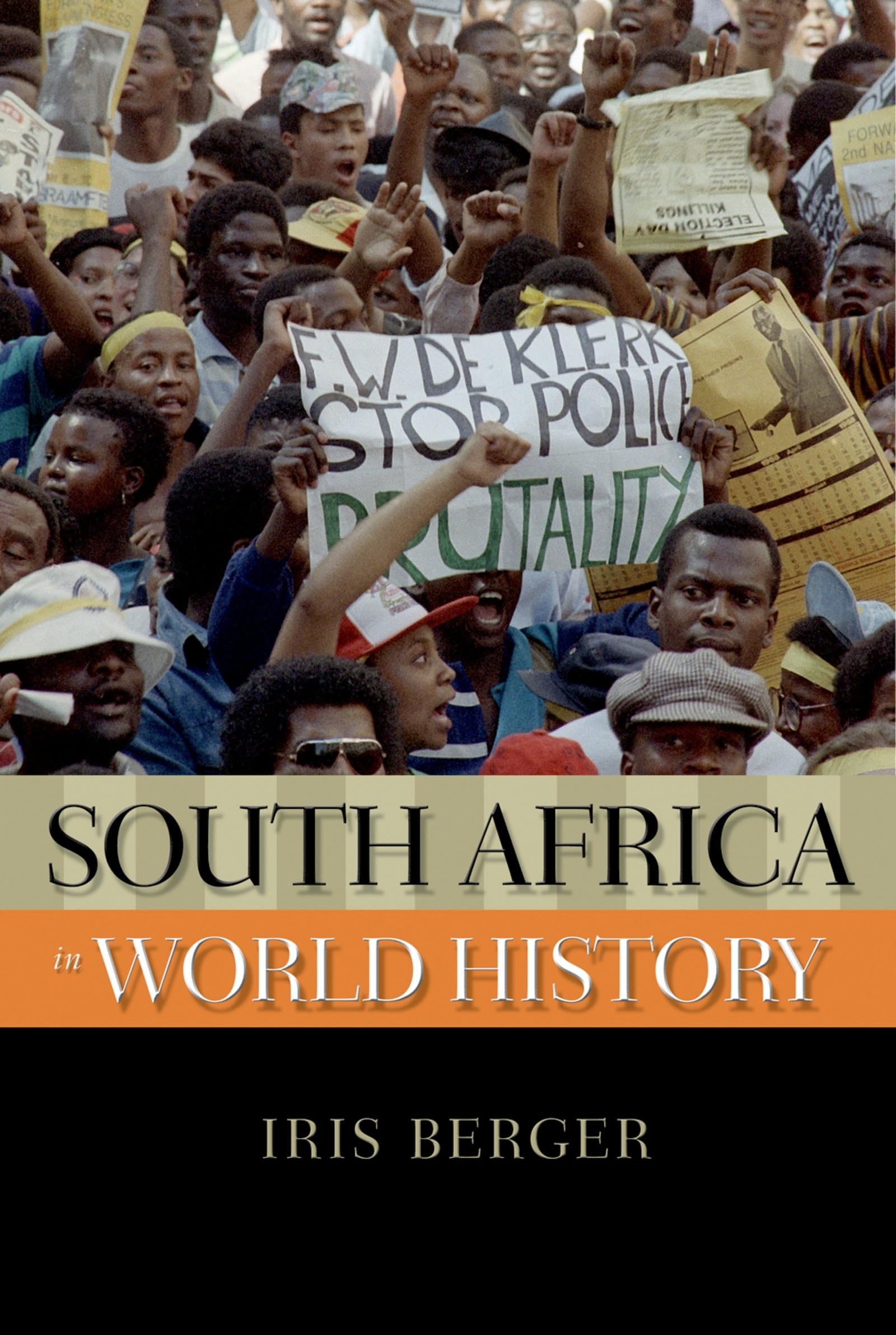



This volume begins in the early centuries of the Common Era with the various groups of people who had settled in southern Africa. Stone Age foragers, farmers with iron technology, and pastoralists all interacted to create a complex society before Europeans arrived. In the seventeenth century, Dutch settlers developed a colonial society based on the menial labor of indigenous inhabitants of the Cape and slaves imported from the East Indies and other parts of Africa. British conquest in the early nineteenth century brought an end to slavery, as well as new forms of colonial domination, tension between the British and the original Dutch settlers, armed struggle between expanding European communities and Africans (including the highly militarized Zulu kingdom), and intensive missionary activity that transformed many African societies. The discovery of diamonds and gold in the late nineteenth century brought industrialization based on migrant labor, new clashes between British and Africaaners, the final conquest of African societies, and new European migrants. During the twentieth-century, despite further economic development, African communities were increasingly impoverished. New forms of racial domination lead to the implementation of apartheid in 1948 and heightened political organizing among both African and Africaaner nationalists. The intensification of resistance in the 1970s and '80s coupled with drastic changes in the international balance of power brought an end to the apartheid state in 1994 and an intensified struggle to overcome apartheid's economic and political legacy by building a new nonracial society. The book emphasizes social and cultural history, focusing on people's interactions and identities according to race, class, gender, religion and ethnicity. It also addresses changes in literature (both oral and written), music, and the arts and draws on the extensive biographical and autobiographical literature to provide a personal focus for the discussion of major themes. While this emphasis reflects dominant trends in historical scholarship for the past two decades, it also includes recent material on environmental history and relationships between African Americans and South Africans. Where relevant, it highlights comparisons between South African and U.S. history. "Berger's book...is fully cognisant of the latest research and written with verve and clarity. More than any of its competitors, it skilfully uses individual stories and episodes to convey the complexity of life in South Africa...This history is lively and poignant."-- Kronos Discusses the history of South Africa from the early centuries of the Common Era to the present-day This volume offers the first general survey of South African history to fully integrate social history and women's history and the first to emphasize connections between the United States and South Africa. Written by Iris Berger, a recognized authority on South Africa and a past president of the African Studies Association, this engaging history ranges from the first Stone Age foragers and Iron Age farmers to the coming of the Dutch settlers and the introduction of slavery, the British conquest in the early nineteenth century, the discovery of gold and diamonds, the rise of Afrikaner nationalism, the imposition of apartheid, the Soweto Uprising, and the creation of a new government headed by Nelson Mandela. Throughout the narrative, Berger uses individual biographies to illuminate issues of race, gender, class, religion, ethnicity, and culture. Connecting the South African past with urgent contemporary problems, the book also discusses the Truth and Reconciliation Commission, the devastating HIV/Aids epidemic in the country, and continuing struggles against poverty, racism, and sexism. Iris Berger is Professor of History, Africana Studies, and Women's Studies at the University at Albany, State University of New York. She is the author of Women in Sub-Saharan Africa: Restoring Women to History, with E. Frances White; Threads of Solidarity: Women in South African Industry, 1900-1980; and the award-winning Religion and Resistance: East African Kingdoms in the Precolonial Period. She is also the co-editor (with Claire Robertson) of Women and Class in Africa and a past President of the African Studies Association.