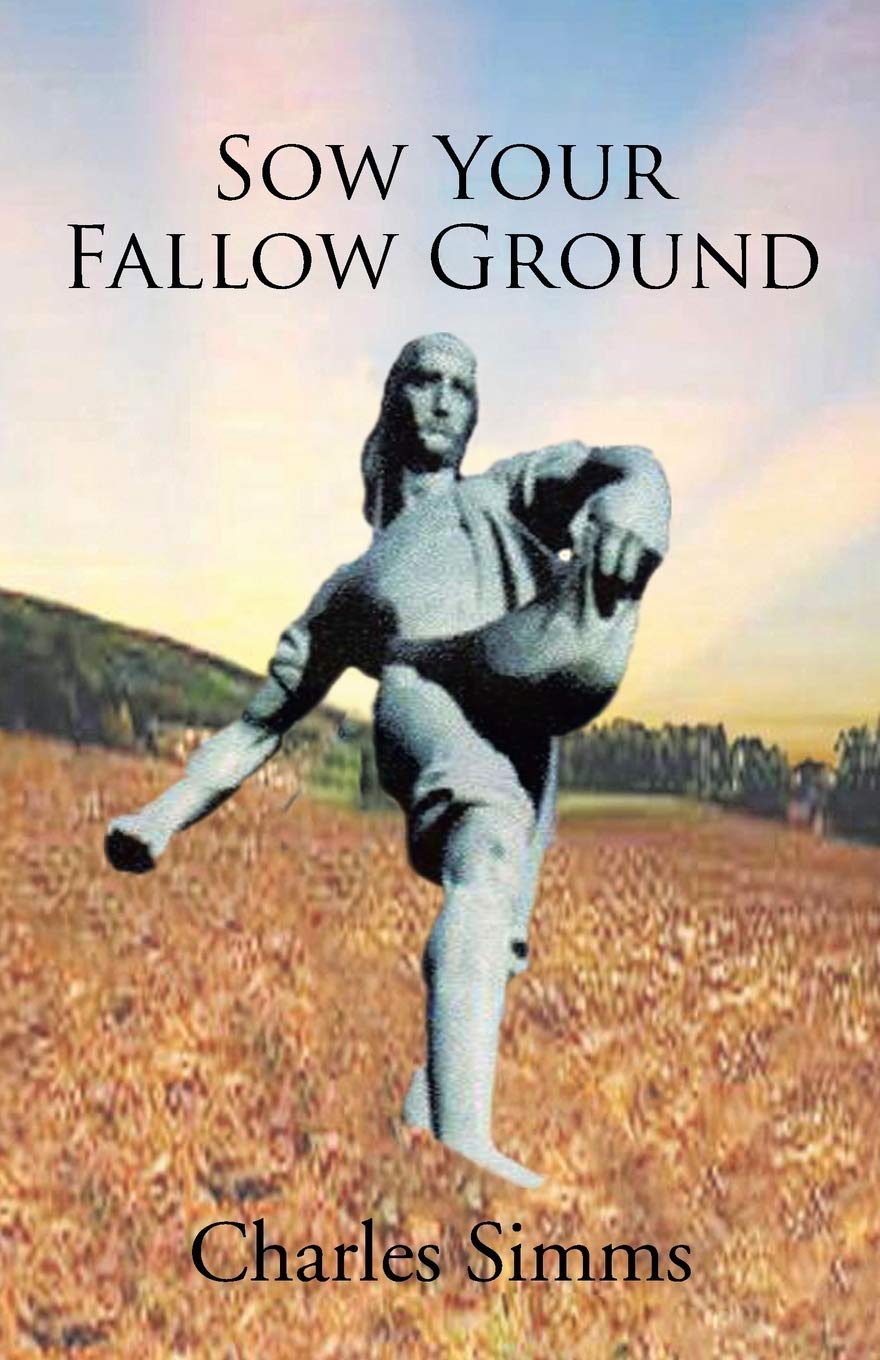



Sow Your Fallow Ground begins the discussion of how you choose what action to take for social justice. You must be the judge of why to take action, but the reasons to do so are fully explained in the Bible. The reason we have the power to choose is our ability to imagine the future effects of immediate choices; still, we often neglect that God-given ability. Sow Your Fallow Ground is about communication in light of the science of human action-the communication that separates humankind from lesser life forms. These concepts merge easily with the authentic Bible, in spite of the belief by many that the Bible and natural science are mutually exclusive. The science of praxeology, which is the common name for human action, teaches us how we make hundreds of choices every day. How we make those choices is a "value-free" science; still, without some kind of rudder, compass, or guiding star, we drift into every kind of faulty behavior from unhealthy addictions to economic booms, busts, and wars. There is a very important connection between the infallible Bible, human action science (neither humanism nor psychology), and economics as a single subject. Like the biblical Trinity or a three-legged stool, they are different aspects of the same thing-the choices we make. Sow Your Fallow Ground By Charles Simms Trafford Publishing Copyright © 2012 Charles Simms All right reserved. ISBN: 978-1-4269-9669-6 Contents About the cover design................................viiDedication............................................ixIn Appreciation.......................................xiPreface...............................................xiii1 Beginnings..........................................12 The Fallow Ground...................................113 Potential Sowers....................................194 Fallow Farm & Rookie Farmer.........................275 Law of Imagination..................................336 Law of Association..................................437 The Law of Choice...................................498 Law of Marginal Utility.............................579 Law of Originary Interest...........................6910 How We Learn.......................................7511 Fertile Seeds......................................8712 PurposeorMission Statement.........................95A I, Pencil...........................................99B First Thanksgiving Proclamation.....................107C Tax and Spend Poll..................................109D Song of a Thousand Years............................111 Chapter One Beginnings On the first day of the fall semester at Centerville High School, the science teacher, Mr. Simpkins, called the roll, filled out the seating chart by student preference, then folded his hands and smiled. After a short time one boy raised his hand and asked, "What Is this class about?" With a quick glance at the seating chart Mr. Simpkins replied, "Thank you for asking—Robert, that's what science is really about. What causes this disease? How can we create more energy? What makes the seasons change? What are the demographics of Centerville? Why do we have hurricanes? How can we increase food production? Or how can we reduce garbage? "There are over sixty active fields of science and this lab has some information or equipment for less than a third of them and references to some of the others. You are free to explore any field you wish by yourself or in teams of two and include any data you have found elsewhere. There are also about a dozen emerging science fields that are sometimes implied in an established science and you may explore one of those. "There will be a science fair at the end of the semester when each student or team will submit a paper or project about what they learned because, except for the three R's, in science and in life, we all choose what to learn. That's what makes each of us unique and how the world of knowledge unfolds. Finally, you will be graded on how clearly you explain or demonstrate your findings because science must be shared with the public in order to be useful. If two or more want to study the same science, they should study different aspects to avoid competition in grading." Mr. Simpkins was referring to the natural sciences and the customary scientific method although this book will suggest one use for the theoretical science of praxeology , with the common name of human action. Praxeology comes from Medieval Latin or Greek meaning established practice or custom. What's also interesting, a Greek sculptor named Praxiteles in the 4th century B.C. is famous for the reality of his statues of people. But the modern science of human action grew out of research in the field of economics, in other words what we do rather than what we look like or how we're made. Economics is not a dry subject. It is not a dismal subject. It is not about statistics. It is about human life. It is about the ideas that motivate hu