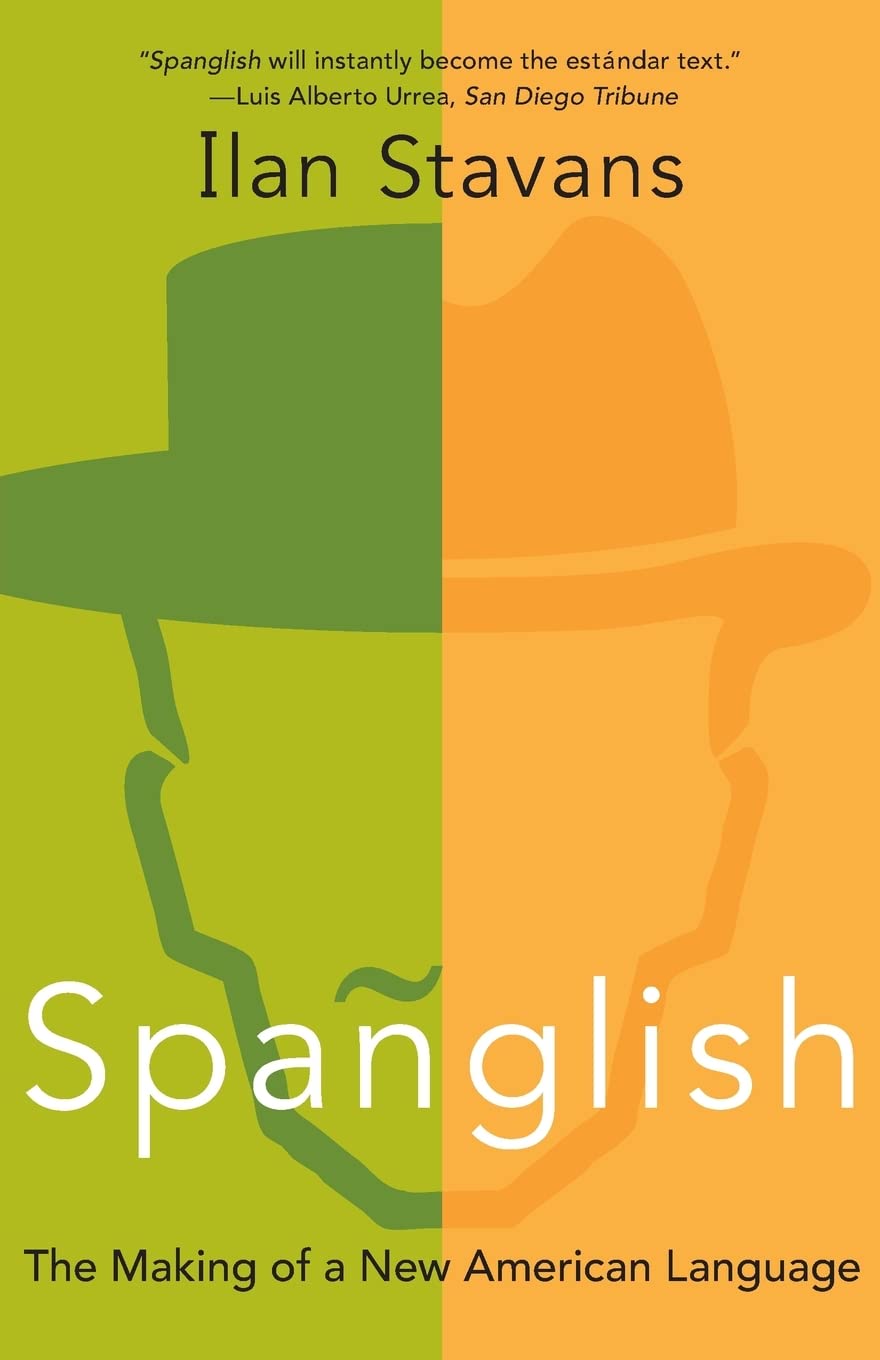
Spanglish: The Making of a New American Language – An Exploration of the Creative Spanish-English Hybrid Shaping Latino Culture
$11.21
by Ilan Stavans



With the release of the census figures in 2000, Latino America wasanointed the future driving force of American culture. The emergence of Spanglish as a form of communication is one of the more influential markers of an America gone Latino. Spanish, present on this continent since the fifteenth century, when Iberian explorers sought to colonize territories in what are now Florida, New Mexico, Texas, and California, has become ubiquitous in the last few decades. The nation's unofficial second language, it is highly visible on several 24-hour TV networks and on more than 200 radio stations across the country. But Spanish north of the Rio Grande has not spread in its pure Iberian form. On the contrary, a signature of the brewing "Latin Fever" that has swept the United States since the mid-1980s is the astonishing creative linguistic amalgam of tongues used by people of Hispanic descent, not only in major cities but in rural areas as well -- neither Spanish nor English, but a hybrid, known only as Spanglish. With the release of the census figures in 2000, Latino America wasanointed the future driving force of American culture. The emergence of Spanglish as a form of communication is one of the more influential markers of an America gone Latino. Spanish, present on this continent since the fifteenth century, when Iberian explorers sought to colonize territories in what are now Florida, New Mexico, Texas, and California, has become ubiquitous in the last few decades. The nation's unofficial second language, it is highly visible on several 24-hour TV networks and on more than 200 radio stations across the country. But Spanish north of the Rio Grande has not spread in its pure Iberian form. On the contrary, a signature of the brewing "Latin Fever" that has swept the United States since the mid-1980s is the astonishing creative linguistic amalgam of tongues used by people of Hispanic descent, not only in major cities but in rural areas as well -- neither Spanish nor English, but a hybrid, known only as Spanglish. Ilan Stavans is Lewis-Sebring Professor in Latin American and Latino Culture and Five College–40th Anniversary Professor at Amherst College. Ilán Stavans nació en México, en 1961. Cursó estudios de posgrado en la Universidad de Columbia, y ahora tiene la cátedra Lewis-Sebring de cultura latina y latinoamericana en Amherst College. Excerpt Introduction La jerga loca ¿Cómo empezó everything? How did I stumble upon it? Walking the streets of El Barrio in New York City, at least initially. Wanderingaround, as the Mexican expression puts it, con la oreja al vuelo, with earswide open. Later on, of course, my appreciation for Spanglish evolveddramatically as I raveled around los Unaited Esteits. Bu at the beginning was New York. It always is, isn't it? I had arrived in Manhattan in the mid-eighties. My first one-room apartment, which I shared with three roommates, was on Broadway and122nd Street. The area was bustling with color: immigrants from theAmericas, especially from he Dominican Republic, Mexico, El Salvador, and Colombia, intermingling with students from Columbia University, Barnard and Teacher's College, and with future ministers andrabbis from Union Theological Seminary and The Jewish TheologicalSeminary. The ethnic juxtaposition was exhilarating indeed. But sight wasn't everything. Sound was equally important. Color and noise went together, as I quickly learned. I was enthralled by the clashing voices I encountered on a regular walk in the Upper West Side: English, Spanish, Yiddish, Hebrew ... Those voices often changed as one oscillated to different areas of hecity: Arabic, French, Polish, Russian, Swahili and scores of other tongueswere added to the mix. What kind of symphony was I immersed in?Was his he sound of the entire universe or only of my neighborhood? There was a newspaper stand on he corner of 110th and Broadway, next to a bagel bakery and a Korean grocery store. I regularly made myshopping in those blocks, so I regularly stopped to browse. Newspapersand magazines in English predominated in it, and Chinese and Israeliperiodicals were also for sale. But the owner displayed he Spanish-language items with emphasis: El Diario/La Prensa , Noticias del Mundo , Diario de las Américas , Cosmopolitan , Imagen ... As a Mexican native, Ioften bough one of them in the morning, "just to keep up with what's up," as I would tell my friends. But to keep up with these publicationswas also to invite your tongue for a bumpy ride. The grammar andsyntax used in them was never fully "normal," e.g., it replicated, oftenunconsciously, English-language patterns. I was obvious that its authorsand editors were americanos with a loose connection to la lengua deBorges. "Están contaminaos ...," a teacher of mine in he Departmentof Spanish at Columbia would tell me. "Pobrecitos ... They've lost allsense of verbal propriety." Or had they? My favorite section to read in El Diario/La Prensa , already then t