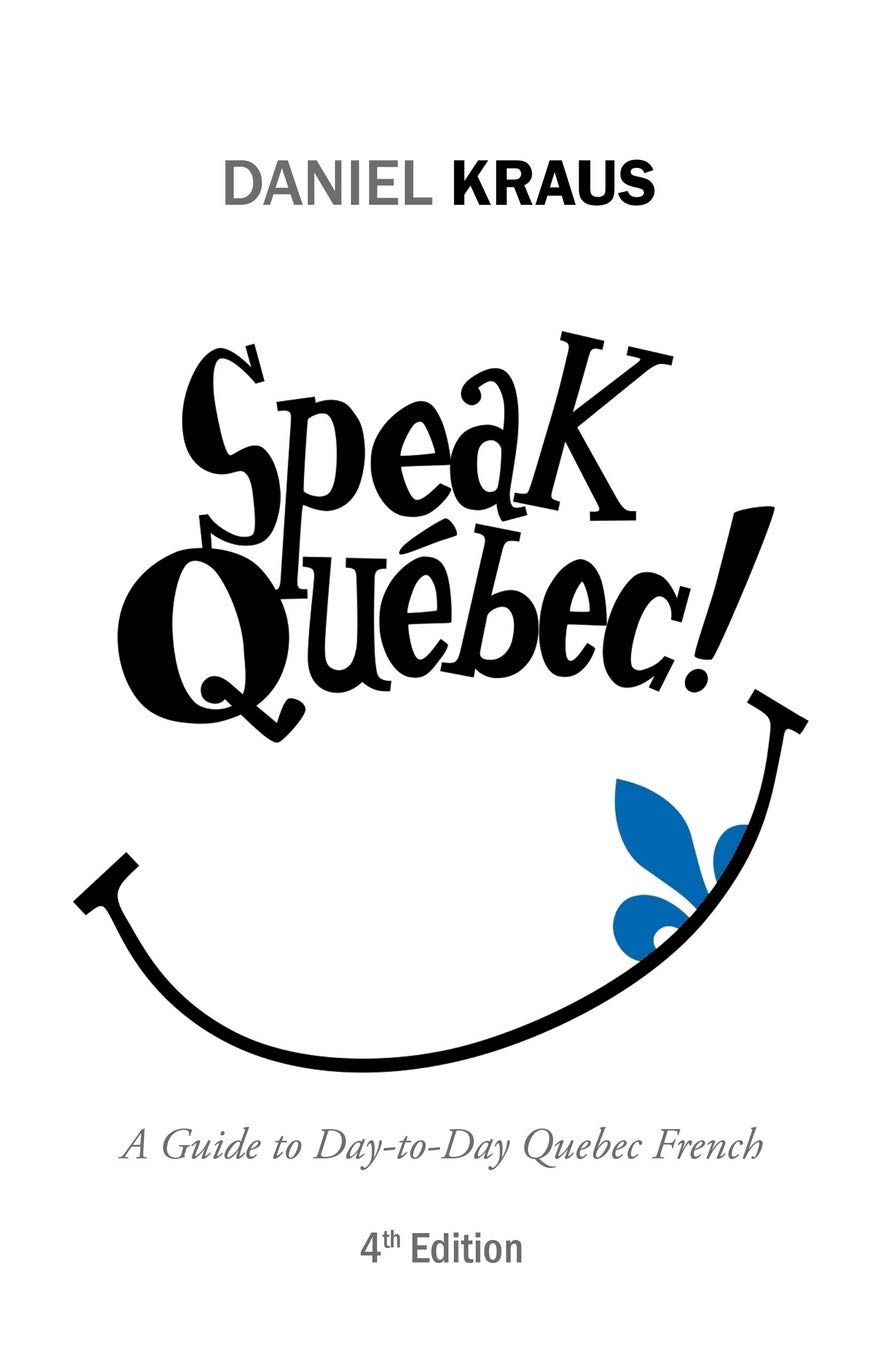



Regarde ça! As-tu déjà vu ça? Tu me crois-tu? Speak Québec! is a fun and practical handbook designed to help both native English and French speakers understand and speak Québécois, the common tongue in Québec. Comprising over three thousand commonly used words and expressions, Speak Québec! provides a dynamic and accurate reference for daily Québec conversation, including clear examples of common sayings heard around the Province. It also includes a complete history of the language, and a guide to differences in pronunciation and grammar from International French. Designed for quick reference and practical usage, Speak Québec! is a terrific way to understand and appreciate one of the oldest, richest, and most inspired cultures in North America. Speak Québec! A Guide to Day-to-Day Quebec French By Daniel Kraus iUniverse Copyright © 2016 Daniel Kraus All rights reserved. ISBN: 978-1-5320-0250-2 Contents Thanks, vii, Preface, xi, Introduction, xiii, A Brief Linguistic History, 1, General Pronunciation Tendencies, 7, Slurs, 9, Affricates, 10, Diphthongs, 10, Clipped Endings, 11, Verbs & Conjugating, 11, Structural Differences, 12, Word-Level Changes, 14, Sayings & Slurs, 16, Swears and Insults, 18, The Nouns, 18, The Adjectives, 20, The Verbs, 21, Dictionary, 22, A, 24, B, 40, C, 56, D, 75, E, 84, F, 93, G, 103, H, 109, I, 111, J, 113, K, 115, L, 116, M, 120, N, 128, O, 130, P, 133, Q, 149, R, 151, S, 156, T, 165, U,V, 174, W, 177, X,Y, 178, Z, 179, Conclusions, 181, References, 183, Online Sources, 185, CHAPTER 1 A Brief Linguistic History New France (?-1763) The evolution of the Québécois language actually began in prehistory, long before the arrival of the first Europeans. The Inuit, Native Americans who had migrated thousands of years earlier across the frozen expanse of the Bering Strait, developed – unbeknownst to them – many words that survive in daily Québec parlance to this day. The First Nations – such as the Micmac, the Cree, and the Outaouais also had a hand in developing the modern Québec tongue, as their cultures grew and thrived and as they developed words for the unique world around them. The arrival of the first French explorer (Jacques Cartier, in 1534) brought French traditions, language, and culture of the period to Quebec. Although Cartier made three separate trips to North America — travelling up the St. Lawrence River as far south as Montreal – it was only half a century later, with the founding of Quebec City in 1608 by Samuel de Champlain, that France had a true foothold in the New World. The quickly blossoming fur trade in Quebec brought a rising tide of explorers to the province. With the founding ofVille Marie (modern-day Montreal) in 1642, French presence in the colonies increased quickly, and the development of the province of Quebec was afoot. Although the language used in Quebec during this period largely reflected the accent of Paris (whence most of the earliest French settlers came), certain regional groups also brought their particular dialects – Normand, Basque, Flemish, etc. Many of the unique accents and linguistic tendencies identified in Quebec today date straight back to this period, and the reign of Louis XIV As would be expected, however, these new settlers lacked words for many of the things they encountered. The fauna, flora, and native culture about them had no equivalents even in rural France, and so these early pioneers began to use the native terms for things particular to their new world. These settlers adopted Native American words for modes of transport and items (toboggans, moccasins, etc.) they had never before encountered. The same held true for names of new animals (wapiti, caribou, achigan, ouananiche), which were simply phonetic transcriptions of the Native American names. The name ouaouaron (giant frog) in fact, derives directly from the Native American onomatopoeia for the deep bellowing sound the creature makes. A good number of city names in Quebec were derived from the Native American names for places – towns such as Chicoutimi, Tadoussac, Natashquan, and others. Many other modern Québec terms also evolved from these early days, drawn from agriculture, fishing, and winter survival. British Control (1763–1840) By the mid 18 century, the gradual arrival of British interests in the New World – most notably the 13 colonies bordering New France — began to significantly influence the original French settlers. The inevitable clashes between the two sides reflected the almost continuous state of war between their mother countries. The British and French approaches to colonization were notably different, however. Whereas the British remained in an essentially urban lifestyle, the French became familiar with the Native Americans, signed treaties with the tribes, and learned their languages. The significant linguistic overlaps with both English and the native tongues increased,