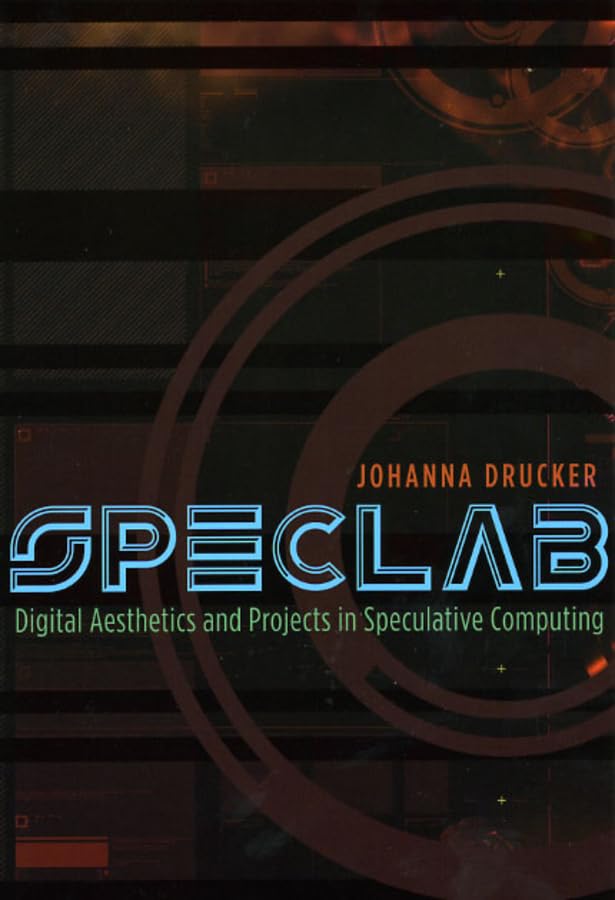
SpecLab: Digital Aesthetics and Projects in Speculative Computing
$92.60
by Johanna Drucker



Nearly a decade ago, Johanna Drucker cofounded the University of Virginia’s SpecLab, a digital humanities laboratory dedicated to risky projects with serious aims. In SpecLab she explores the implications of these radical efforts to use critical practices and aesthetic principles against the authority of technology based on analytic models of knowledge. Inspired by the imaginative frontiers of graphic arts and experimental literature and the technical possibilities of computation and information management, the projects Drucker engages range from Subjective Meteorology to Artists’ Books Online to the as yet unrealized ’Patacritical Demon, an interactive tool for exposing the structures that underlie our interpretations of text. Illuminating the kind of future such experiments could enable, SpecLab functions as more than a set of case studies at the intersection of computers and humanistic inquiry. It also exemplifies Drucker’s contention that humanists must play a role in designing models of knowledge for the digital age—models that will determine how our culture will function in years to come. “As we all grope our way into a remediating world, this book talks about how to put first things first: most especially thinking before knowing and aesthetic practice before philosophical reflection. Am Anfang war die Tat has rarely been so well demonstrated.” -- Jerome McGann, University of Virginia Johanna Drucker is the Breslauer Professor of Bibliographical Studies and a distinguished professor in the Department of Information Studies at the University of California, Los Angeles. She has been the recipient of Fulbright, Mellon, and Getty Fellowships and in 2019 was the inaugural Distinguished Senior Humanities Fellow at the Beinecke Library, Yale University. Her artist books are included in museums and libraries in North America and Europe, and her creative work was the subject of a traveling retrospective, Druckworks 1972-2012: 40 Years of Books and Projects . Her publications include Visualizing Interpretation , Iliazd: Meta-biography of a Modernist , and The Digital Humanities Coursebook . SPECLAB Digital Aesthetics and Projects in Speculative Computing By JOHANNA DRUCKER THE UNIVERSITY OF CHICAGO PRESS Copyright © 2009 The University of Chicago All right reserved. ISBN: 978-0-226-16507-3 Contents List of Illustrations..............................................................................ixIntroduction: The Background to SpecLab............................................................xi1.0 SPECULATIVE COMPUTING..........................................................................11.1 From Digital Humanities to Speculative Computing...............................................31.2 Speculative Computing: Basic Principles and Essential Distinctions.............................192.0 PROJECTS AT SPECLAB............................................................................312.1 Temporal Modeling..............................................................................372.2 Ivanhoe........................................................................................652.3 Subjective Meteorology: A System of Mapping Personal Weather...................................992.4 Modeling a Critical Approach: Metadata in ABsOnline............................................1092.5 The 'Patacritical Demon........................................................................1193.0 FROM AESTHETICS TO AESTHESIS...................................................................1273.1 Graphesis and Code.............................................................................1333.2 Intimations of (Im)materiality: Text as Code in the Electronic Environment.....................1453.3 Modeling Functionality: From Codex to e-Book...................................................1653.4 Aesthetics and New Media.......................................................................1753.5 Digital Aesthetics and Critical Opposition.....................................................1894.0 LESSONS OF SPECLAB.............................................................................197Notes..............................................................................................201Bibliography.......................................................................................219Index..............................................................................................229 Chapter One From Digital Humanities to Speculative Computing Our activities in speculative computing were built on the foundation of digital humanities. The community at the University of Virginia in which these activities flourished was largely, though not exclusively, concerned with what could be done with texts in electronic form. Early on, it became clear that aggregation of information, access to surrogates of primary materials, and the manipulation of texts an