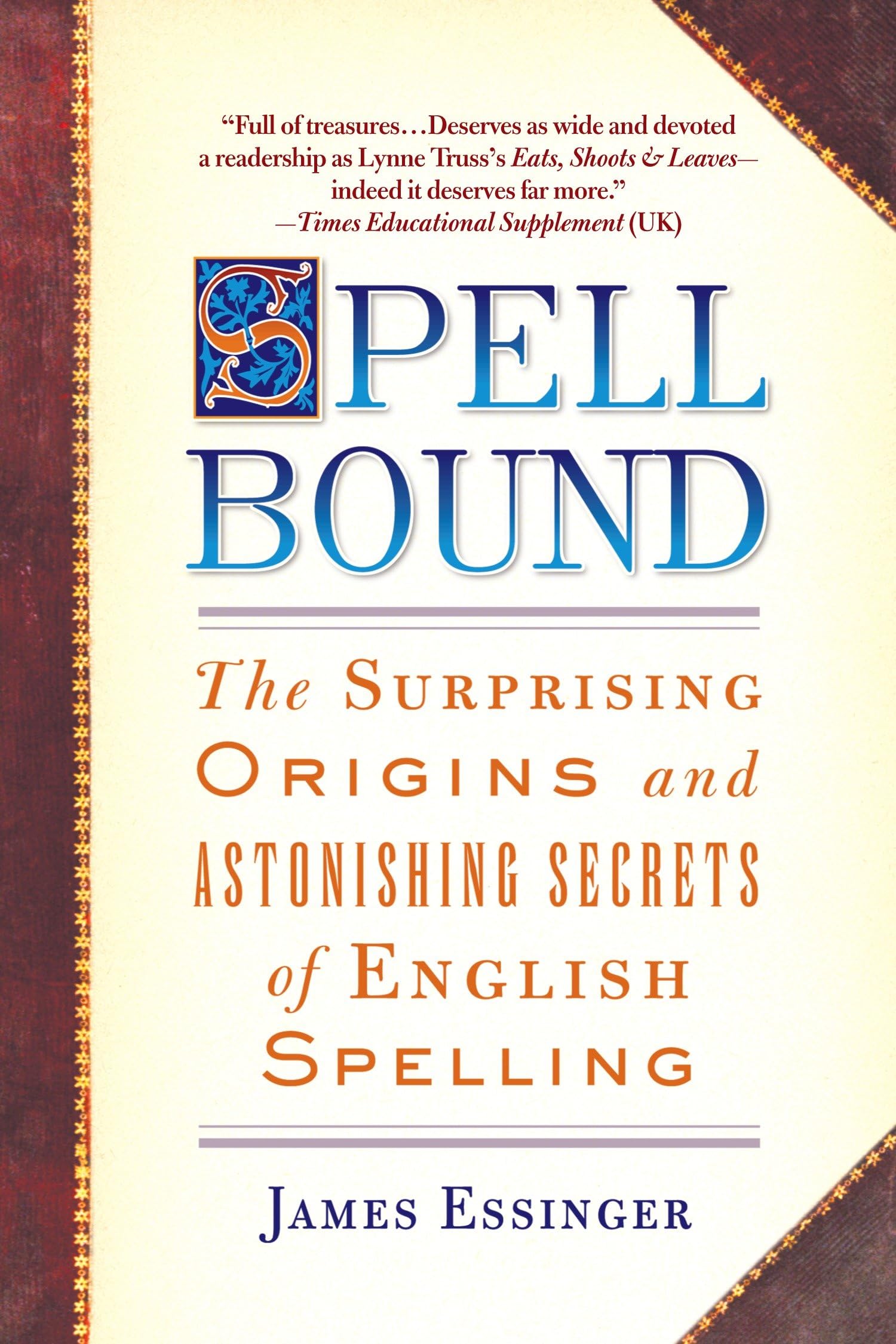
Spellbound: The Surprising Origins and Astonishing Secrets of English Spelling
$13.00
by James Essinger



Welcome to the illogical, idiosyncratic, outrageous linguistic phenomenon known as the English language. The story of how this ragtag collection of words evolved is a winding tale replete with intriguing accidents and bizarre twists of fate. In this eye-opening, fabulously entertaining book, James Essinger unlocks the mysteries that have confounded linguists and scholars for millennia. From the sophisticated writing systems of the ancient Sumerians through the tongue twisters of Middle English, the popular National Spelling Bee, and the mobile phone text-messaging of today, Spellbound chronicles the fascinating history of English spelling, including insights about the vast number of words English has borrowed from other languages (“orange,” “vanilla,” and “ketchup,” to name a few), and how their meanings differ from country to country. Featuring a lively cast of characters ranging from the fictional to the historically noteworthy (Chaucer, Samuel Johnson, Noah Webster, Shakespeare, Bill Gates), this affectionate tribute to English spelling shows why our whimsical, capricious common language continues to hold us spellbound. “His enthusiasm is contagious.... Mr. Essinger explains convincingly why our verb inflections are as simple as they are and why our nouns have no grammatical gender.”— Wall Street Journal James Essinger is an Oxford graduate who has published more than thirty books. He is particularly interested in the history of ideas that have had a practical impact on the modern world. His previous writings and his time spent teaching English abroad leave him exceptionally well qualified in the linguistic field. Chapter 1 Method in the Madness? "What's your name, sir?" enquired the judge. "Sam Weller, my lord," replied that gentleman. "Do you spell it with a 'V' or a 'W'?" enquired the judge. "That depends upon the taste and fancy of the speller, my lord," replied Sam. –Charles Dickens, The Pickwick Papers (1837) FIFTY years ago, an ex-schoolmaster called Geoffrey Willans sat down to write a book about a schoolboy. In fact, Willans went one better than that, and decided to make it seem as if the book were written by his schoolboy, Nigel Molesworth. Nigel is one of English literature's great comic creations. He entices us to luxuriate in his anarchic, outrageous, yet curiously innocent world. From the moment he bursts into existence on the title page of Down With Skool!–the first of the four Molesworth books–Nigel reveals himself to be a keen observer of the foibles and cruelties of humanity. The school he attends–St. Custard's–is run by a ghoulish headmaster, Mr. GRIMES, whose surname is always written in uppercase by a terrified Nigel. GRIMES supplements his educational income by running an extracurricular whelk stall. We're reliably informed by Nigel that GRIMES would very gladly arrange for all the pupils to be driven off a cliff in a bus, were it not that this would deprive him of his livelihood. The other masters are hardly an improvement. They include the alarmingly unpredictable Sigismund, the mad math master. There is also a considerate, narrow-eyed pedagogue who observes to one boy before caning him, "Your psychoanalyst may say one thing, Blatworthy, I say another. And my treatment is free." The masters, pupils, and parents provide a wide-ranging panorama of passions, appetites, and vices: There are few crevices of the human condition into which Nigel does not insert an inky finger. One thing Nigel certainly can't do, though, is spell. In his world, masters are very "ferce" and go around brandishing "kanes." He also airs his opinion that "peotry" is "sissy stuff that rhymes" and informs us that a boy might learn that everything in Latin happened a long time ago, but only if he can stay awake in class for "long enuff." As for football (soccer), many professional–and national–teams of today might echo his sentiments on the matter . . . Foopball is a tuough game but it is a pity you canot win by hacking everbode. "Everybody," that is. Much of the fun of the Molesworth books is their cranky spelling, which one can't help feeling Geoffrey Willans knew all too well from his own days as a schoolmaster. Yet Nigel's spelling is never so erratic that it makes no sense at all; there is always plenty of method in the madness. And after all, why not spell "canes" as "kanes"? Why not write "enuff" for "enough," especially when the sound "ough" in English can also be pronounced as in "cough," "plough," "borough," "dough," "nought," and even two ways in that town name foreigners find so intimidating: "Loughborough"? Doesn't spelling "enough" as "enuff" constitute a magnificent subversive revenge? Spell it that way, and the whole established world of orthodoxy, authority, law, repression, and edict–the sort of world which, incidentally, once led to small boys being caned by sadistic masters–starts to tremble. Yet Nigel hasn't the slightest interest in starting a revolution in spelling, let