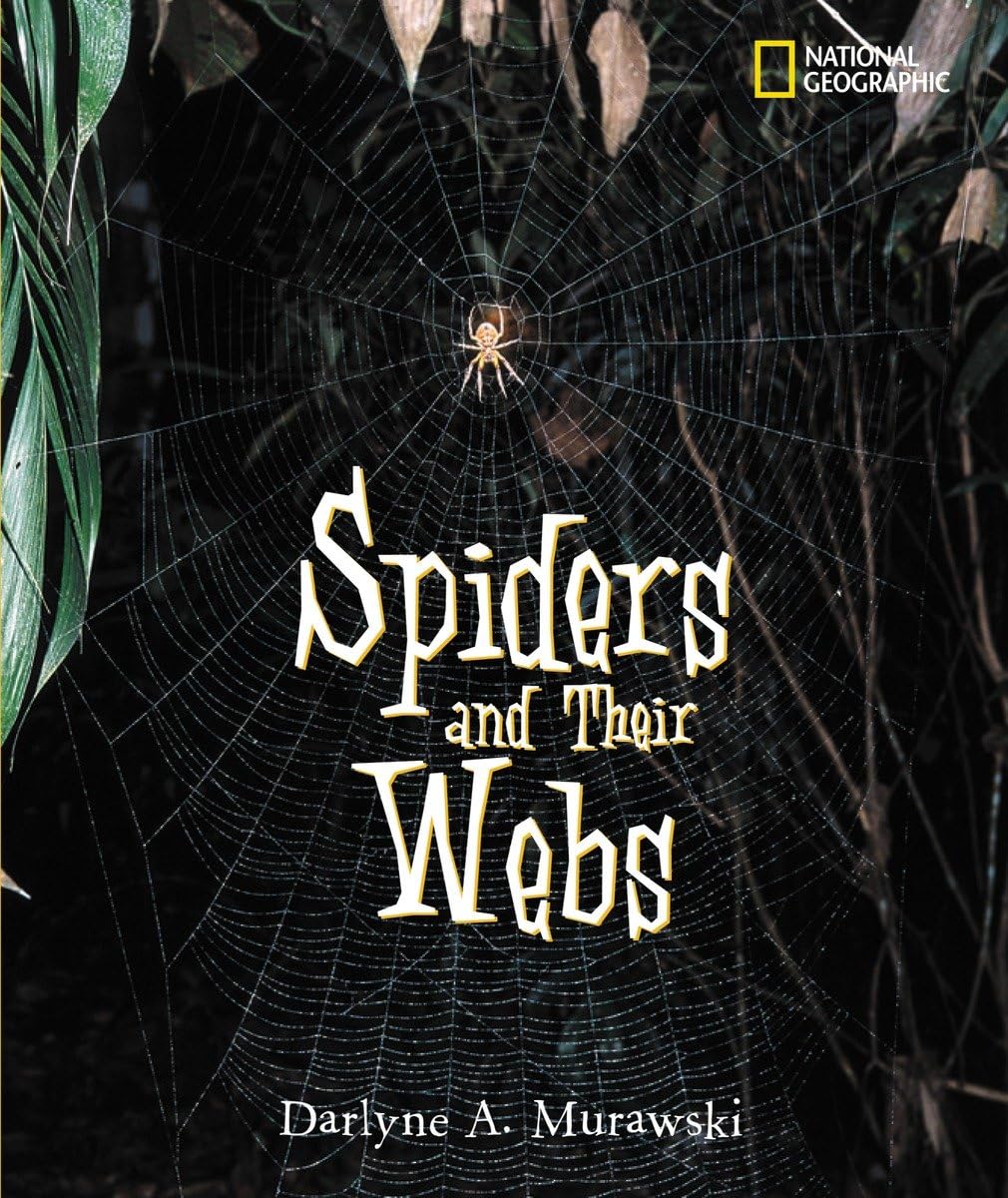



Spider webs that mimic flowers? A spider that "lassos" its prey? A web large enough to cover a garbage truck? These are just a few of the incredible "did you knows" kids will discover in the irresistible book about the fascinating and diverse ways spiders use their webs to trap prey. Grade 3-5–Outstanding color photographs capture the natural beauty of spider webs in this unique volume. A preface discusses a few major characteristics shared by all spiders and some special characteristics of web builders, followed by profiles of nine different species. Each one is introduced on a page of large-print text and illustrated with a sharp photo and a fact panel listing the scientific name, average size, habitat, prey, etc. The main text briefly describes some key physical and behavioral characteristics of the featured species, how its web functions, and the consistency of the spider silk threads used. The concluding sections describe five additional uses of spider silk, give directions for making webs visible outdoors, and relate some of the author's experiences in putting the book together. A lucid glossary of terms, some of which are not mentioned in the text, and a short list of books, magazines, and Web sites are appended. While the text is clearly written and well organized, it is the photography that stands out here. With its marvelous pictures, clear text, and fresh approach to a popular topic, this title will be a good companion volume to Sandra Markle's Outside and Inside Spiders (S & S, 1994) and Seymour Simon's Spiders (HarperCollins, 2003). –Karey Wehner, formerly at San Francisco Public Library Gr. 2-5. Even fainthearted arachnophobes will appreciate this gallery of spider profiles featuring full-color, telephoto views of species ranging from the surprisingly unthreatening ogre-faced spider to a furry-legged tarantula. Fact bars citing scientific classification, habitat, food, and body size appear beneath photos of specific species as large-print text elaborates on particular feeding and web-spinning behavior. A biologist and photojournalist for National Geographic, Murawski writes about her subjects with an awe and a reverence that will encourage reluctant children to move beyond spiders' creepy reputation to their fascinating features. But children looking for high drama won't be disappointed: "Then the spider delivers a deadly bite and sucks its prey dry." An extensive author's note describes Murawski's photographic techniques, which are further outlined in a step-by-step guide to powdering a web for easy viewing. A glossary and suggestions for further reading close this attractive addition to the biology shelves. Gillian Engberg Copyright © American Library Association. All rights reserved Darlyne A. Murawski is a biologist, writer, and award-winning nature photographer who is a regular contributor to National Geographic magazine. She has a Ph.D. in botany from the University of Texas and has done post-doctoral research at Harvard and the University of Georgia. She has a master of Fine Arts degree from the School of the Art Institute of Chicago. In 2001 Murawski won the Award of Excellence from Communication Arts for her photography and has twice been the finalist in the Alfred Eisenstaedt Awards for Magazine Photography. Born in Chircao, she currently lives in Arlington, Massachusetts.