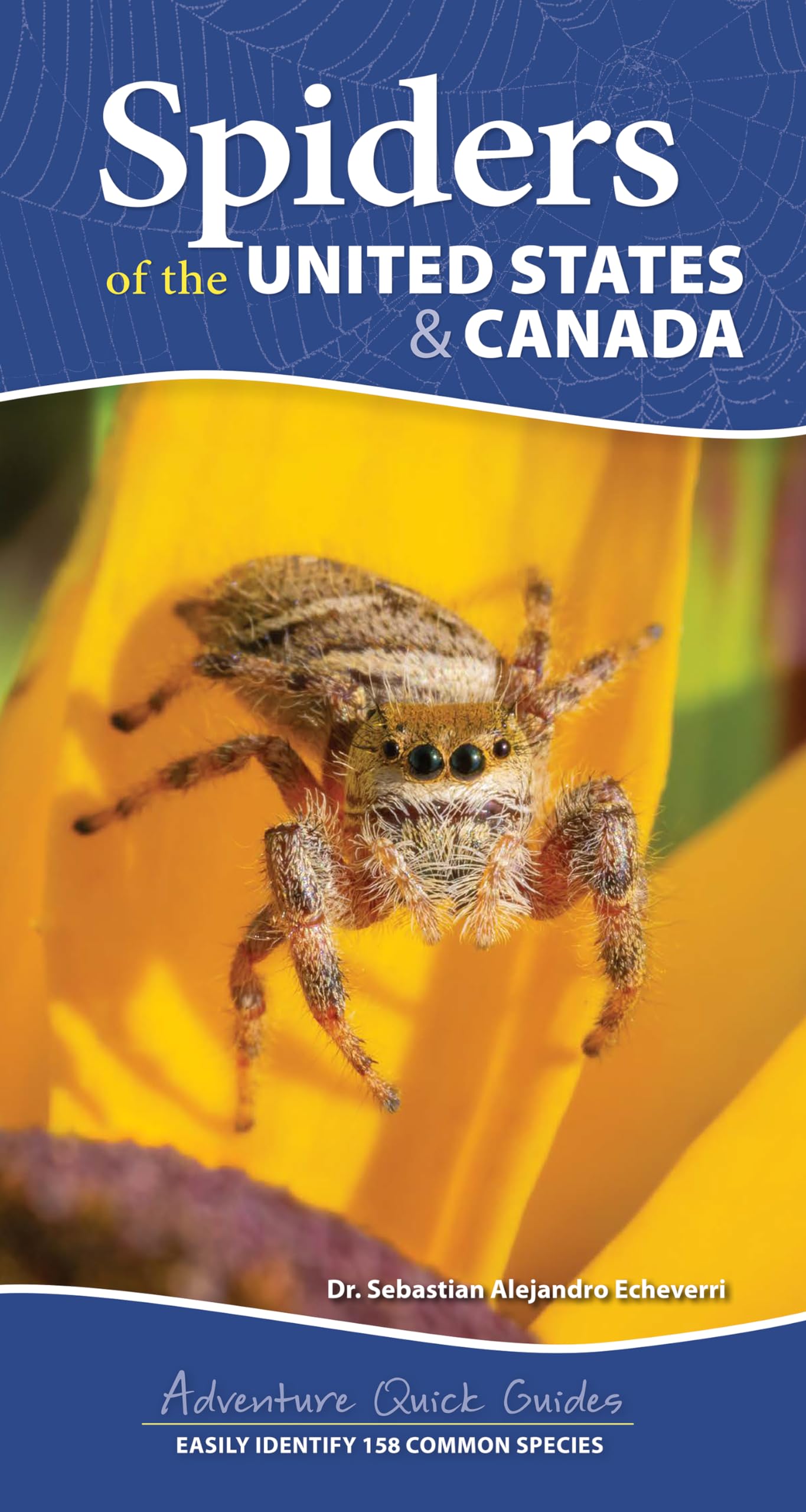
Spiders of the United States & Canada: Easily Identify 158 Common Species (Adventure Quick Guides)
$5.64
by Dr. Sebastian Alejandro Echeverri



Learn how to identify spiders found across the United States and Canada with this handy quick guide. Some people love them, while others fear them. One thing is certain: spiders play an essential part of a healthy ecosystem. They are key predators of insect pests—like fleas and mosquitoes—and they serve as prey for beloved animals, such as birds. If you see spiders in your area, keep this convenient guide close at hand. Designed for ease of use, the spiral-bound booklet is organized by type of spider web for quick identification. Narrow your choices by the web you see, and view just a few spiders at a time. Plus, you’ll also find sections for spiders that don’t utilize webs. The professional photographs showcase 158 species. Written by debut author Dr. Sebastian Alejandro Echeverri—co-host of the BBC Earth Podcast —the Spiders of the United States & Canada guide features the most common and important species to know. Book Features Pocket-size format—easier than laminated foldouts - Professional photos showing key markings - Easy-to-use information for even casual observers - The author’s three steps to identifying spiders Improve your identification skills and learn more about spiders and their webs, with this lightweight quick guide. Dr. Sebastian Alejandro Echeverri is your friendly neighborhood science communicator, wildlife photographer, and, of course, spider scientist. His mission is to make science and nature more accessible, inclusive, and joyful for everyone. Sebastian’s boundless excitement for spiders began when, in 2014, he saw a close-up video of a jumping spider’s courtship dance. He completed his PhD in 2020, studying why and how these spiders get their audience’s attention. Sebastian spent most of his life unaware that he is autistic and has ADHD but now finally (kind of) understands how his brain works. When not talking about all sorts of wonderfully weird animals, he enjoys reading sci-fi stories, watching anime, and playing video and board games. An Introduction to Spiders Many of us know spiders through their immense cultural impact—in traditional mythology, modern media, and ongoing research into super-strong materials and cancer treatments. And yet, the real animals are full of even more wonder. Spiders catch more than 500 million tons of insects each year, protecting crops and helping control deadly diseases. Spiders themselves are a crucial food source for many mammals, lizards, and birds, especially when rearing offspring. And while often prey, spiders are incredibly ancient survivors. Their earliest fossils are from 300 million years ago, long before the first dinosaurs or even the Atlantic Ocean. Since then, they’ve evolved to live in almost every habitat on Earth, including around people. As a result, spiders are some of the most easily accessible wildlife around. From Fear to Fascination Accolades aside, spiders can be a source of strong negative feelings for some. Arachnophobia, or fear of spiders, is often culturally learned: media about spiders, even if educational, frequently depicts them as dangerous and out to get us. Even many spider fans—scientists, photographers, educators—are former arachnophobes who learned to be comfortable around spiders. It can help to remember that spiders are just animals, not monsters, and the overwhelming majority have venom that barely affects our bodies. We’re simply too big, and we’re not bugs. In reality, spiders are tiny, fragile, and seemingly aware that biting giants (us!) is a bad idea. North of Mexico, there are only two types—brown recluses (genus Loxosceles) and widows (genus Latrodectus) —that have “medically significant” venom, requiring a visit to the doctor for treatment. And even those spiders would much rather run away; confirmed bites usually happen only when the spider is trapped against a person’s skin. Many “spider bites” are misdiagnosed. While learning facts is only part of the journey, it can help us take the next step of building new, positive experiences. I hope this guide sparks your curiosity (and perhaps compassion) for these wonderfully weird animals and helps you engage with spiders on your own terms and pace.