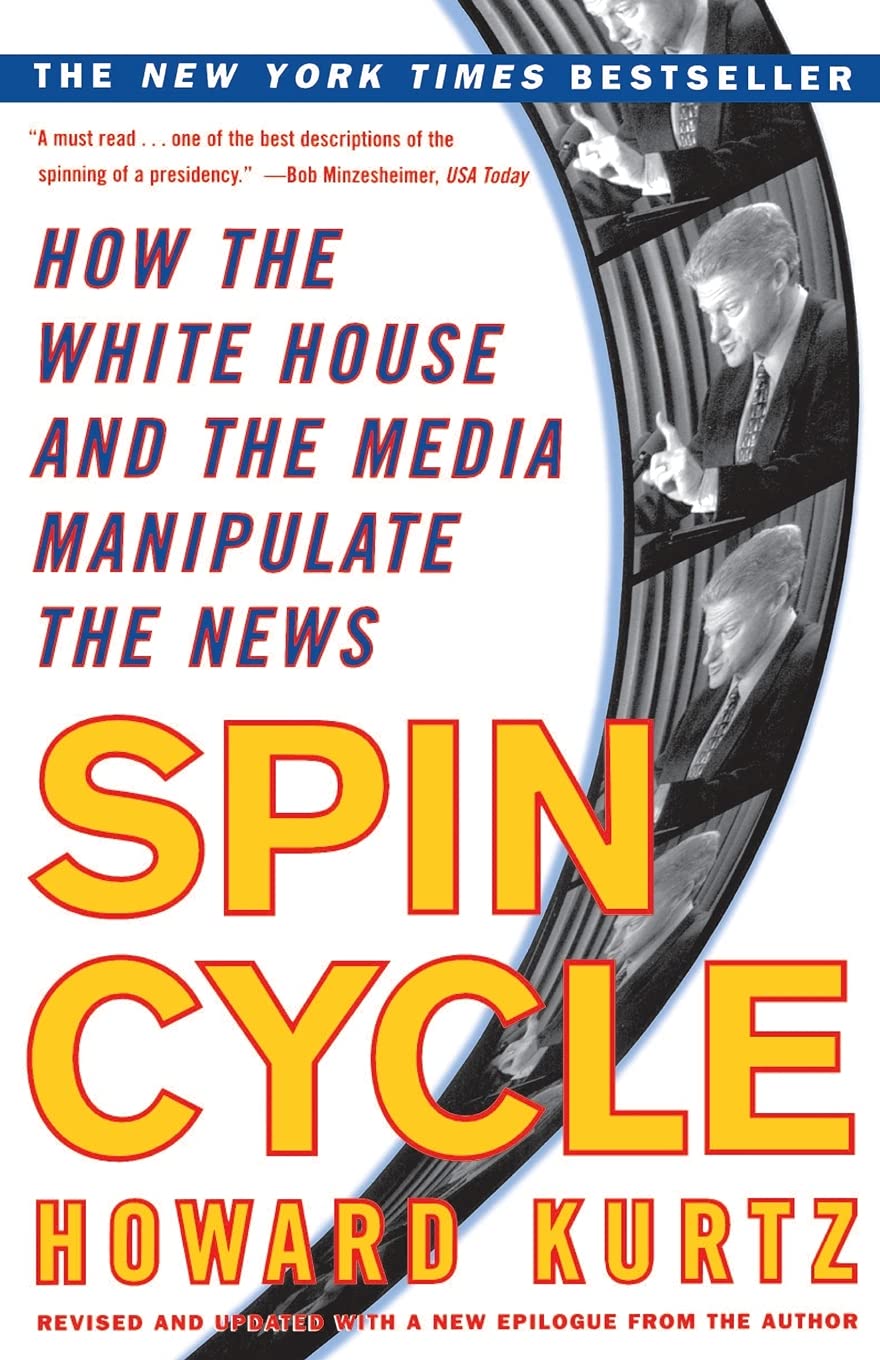
Spin Cycle: How the White House and the Media Manipulate the News (Revised and Updated)
$12.12
by Howard Kurtz



Spin Cycle is the first behind-the-scenes account of the White House political operation as it packages and shapes the news by manipulating, misleading, and in some cases, intimidating the press. It is also the tale of how some of the nation's top journalists buy into these efforts and, often, put their own spin on the news. Compelling, infuriating, often devastatingly funny, this is the story you should read before you pick up the newspaper tomorrow morning. Pete Hamill Howard Kurtz takes us into the sick little world of obsessed, self-important, prosecutorial journalists and their opposing cadre of self-important, image-mongering White House flacks. From his solid reporting, we are reminded again of the way image and process have triumphed over political substance, and why so many millions of American have lost all interest in political news. Anybody who cares deeply about the future of this Republic should read this book, and tremble. Wendy Kaminer The New York Times Book Review Spin Cycle is a revealing, highly detailed insider account....[which] should dispel any lingering myths about a liberal mainstream press eager to promote the president. Mark Jurkowitz The Boston Globe In 300 nail-biting pages, Clinton's strategists and spinmasters are shown desperately scrambling and bailing to keep a torrent of scandals from sinking the battered ship of state.... Spin Cycle provides an intimate view of the daily battles between the president and the media for control of the news. Keith Schneider Detroit Free Press In Spin Cycle, Kurtz has written another winner...[he] does a masterful job describing the relentless and unseemly jockeying for professional advancement and public attention by journalists, the president's handlers, and the president himself. Howard Kurtz is the media reporter for The Washington Post , and also writes a weekly column for the newspaper and a daily blog for its website. He is also host of CNN's Reliable Sources , the longest-running media criticism show on television. His previous books include New York Times bestselling Spin Cycle: Inside the Clinton Propaganda Machine (1998) and The Fortune Tellers: Inside Wall Street's Game of Money, Media, and Manipulation (2000). His book Hot Air: All Talk All the Time (1996) was named by Business Week as one of the ten best business books of the year and Media Circus: The Trouble with America's Newspapers (1993) was chosen as the best recent book about the news media by American Journalism Review . Kurtz joined The Washington Post in 1981, and his work has appeared in Vanity Fair, Newsweek, New York , and other national magazines. He lives with his family in Chevy Chase, Maryland. From the Introduction On the afternoon of January 21, 1998, a year and a day after Bill Clinton's second inauguration, a grim-faced Mike McCurry walked into the White House Briefing Room to face the music. The news, McCurry knew, was bad, so undeniably awful that any attempt at spin would be ludicrous. The canny press secretary had bobbed and weaved and jabbed and scolded his way through all manner of Clinton scandals, from the arcane Whitewater land dealings to the crass campaign fundraising excesses to the tawdry tale of Paula Jones. But this one was different. The banner headline in that morning's Washington Post made clear that this was a crisis that could spell the end of the Clinton presidency. The Big Guy, as the staffers called him, had been accused of having sex with a former White House intern, Monica Lewinsky, in the executive mansion for more than a year, from the time that she was twenty-one years old. Even worse, Clinton was being accused of lying under oath about the affaircommitting perjuryand urging the young woman to lie as well. The reporters, McCurry believed, would be poised to pummel him. That was his job, of course, to stand at the podium and take whatever abuse the fourth estate wanted to dish out, hoping to score a few points in the process and convey what he could of the president's agenda. But the White House correspondents had been supremely frustrated for the past year as Clinton kept slip-sliding his way through the scandalous muck. The president had maintained his extraordinary popularity despite their dogged efforts to hold him accountable for what they saw as the misconduct and the evasions that marked his administration. He had connected with the American public, and they had largely failed. Clinton, in their view, had gotten away with it. Until now. That morning, the president and three of his lawyershis outside attorneys, Robert Bennett and David Kendall, and Charles Ruff, the White House counselhad hammered out a carefully worded statement in which Clinton denied any "improper relationship" with Monica Lewinsky. McCurry had checked the final version with the boss"Fine," Clinton saidand then read the statement to the press. McCurry had not asked the president himself if he had been banging the