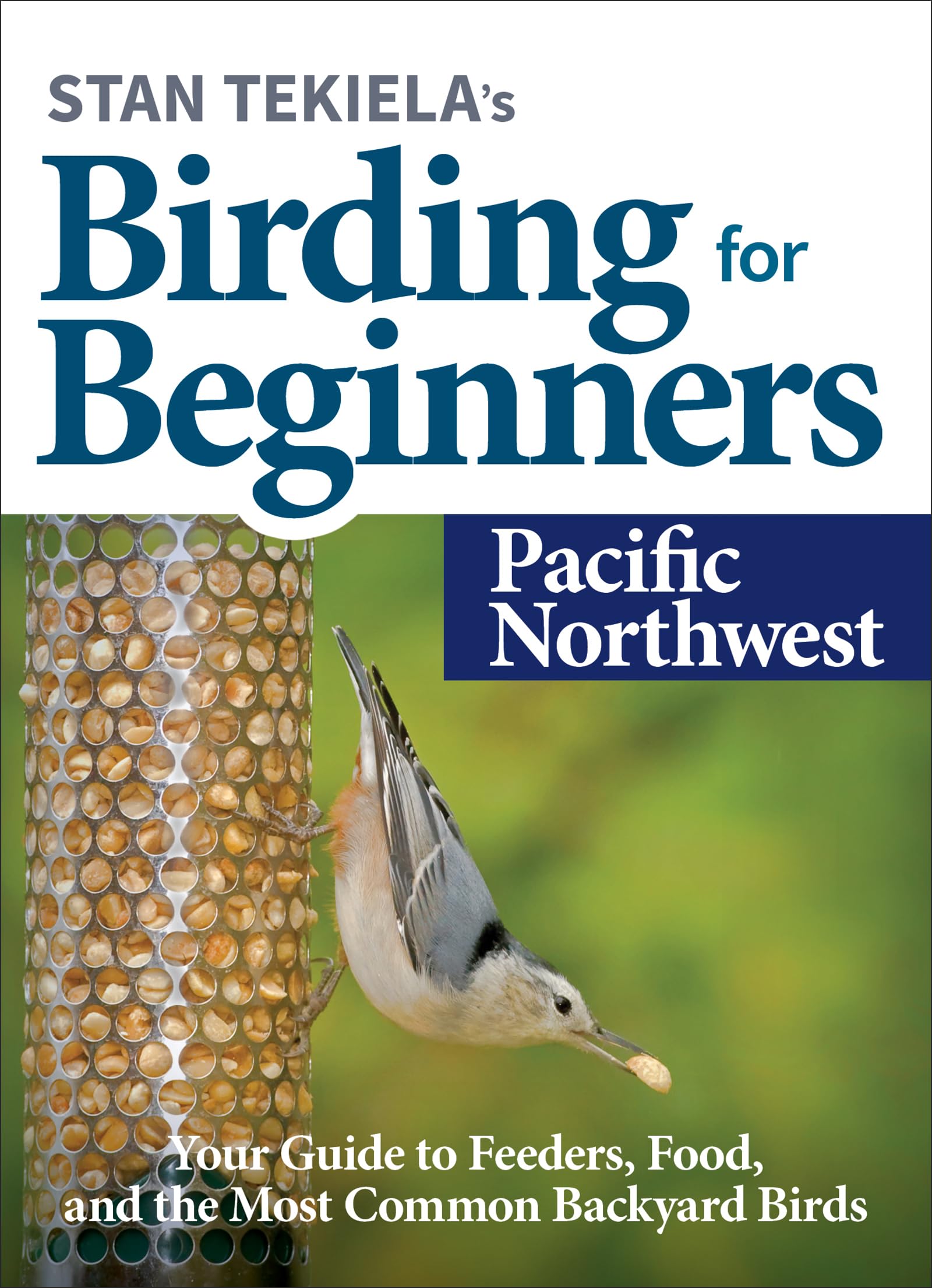
Stan Tekiela’s Birding for Beginners: Pacific Northwest: Your Guide to Feeders, Food, and the Most Common Backyard Birds (Bird-Watching Basics)
$11.99
by Stan Tekiela



Find Joy in the Beauty and Wonder of Birds Birding is among the most popular outdoor activities―especially in the Pacific Northwest, where hundreds of different bird species can be seen and observed. Now is the perfect time to join the fun and let our feathered friends astonish and inspire you. Award-winning author, naturalist, and wildlife photographer Stan Tekiela has written best-selling bird identification guides for almost every state. In Stan Tekiela’s Birding for Beginners: Pacific Northwest , he provides the information you need to become a skilled birder in Oregon and Washington. The first section of the book presents “how to” information. Learn the basics of bird feeders. Get to know your birdseed. Create a bird-friendly yard―and even make your own bird food with do-it-yourself recipes. The book’s second section is an identification guide, featuring 57 Northwestern birds that are most likely to be seen at your backyard feeder or near your home. The species are organized by color, making it simple to identify what you see. If you spot a yellow bird, go to the yellow section to discover what it is. Each bird gets a full-page photograph with notations about key field marks, or identification characteristics. The full-color photos are paired with information ranging from the bird’s nest and eggs to favorite foods, as well as Stan’s fascinating naturalist notes. Give birding a try, and get started with the guidance of an expert. You’ll be amazed by how much joy birds can bring, and you’ll have a lifetime to enjoy them. “This accessible guide for an increasingly popular hobby teaches how to attract a variety of birds with specific food and create a welcoming space for year-round and migratory birds.” —David Miller, Library Journal Naturalist, wildlife photographer, and writer Stan Tekiela is the author of more than 175 field guides, nature books, children’s books, wildlife audio CDs, puzzles, and playing cards, presenting many species of birds, mammals, reptiles, amphibians, trees, wildflowers, and cacti in the United States. With a Bachelor of Science degree in Natural History from the University of Minnesota and as an active professional naturalist for more than 25 years, Stan studies and photographs wildlife throughout the United States and Canada. He has received various national and regional awards for his books and photographs. Also a well-known columnist and radio personality, his syndicated column appears in more than 25 newspapers and his wildlife programs are broadcast on a number of Midwest radio stations. American Goldfinch Spinus tristis Size: 5" (13 cm) Male: Bright canary-yellow finch with a black forehead and tail. Black wings with white wing bars. White rump. No markings on the chest. Winter male is similar to the female. Female: dull olive-yellow plumage with brown wings; lacks a black forehead Juvenile: same as female Nest: cup; female builds; 1 brood per year Eggs: 4–6; pale blue without markings When Seen: year-round Food: seeds, insects; comes to seed feeders Compare: The Pine Siskin (pg. 75) has a streaked chest and belly and yellow wing bars. The female House Finch (pg. 77) has a heavily streaked chest. Stan’s Notes: A common backyard resident. Most often found in open fields, scrubby areas and woodlands. Enjoys Nyjer seed in feeders. Breeds in late summer. Lines its nest with the silky down from wild thistle. Almost always in small flocks. Twitters while it flies. Flight is roller coaster-like. Moves around to find adequate food during winter. Often called Wild Canary due to the male’s canary-colored plumage. Male sings a pleasant, high-pitched song.