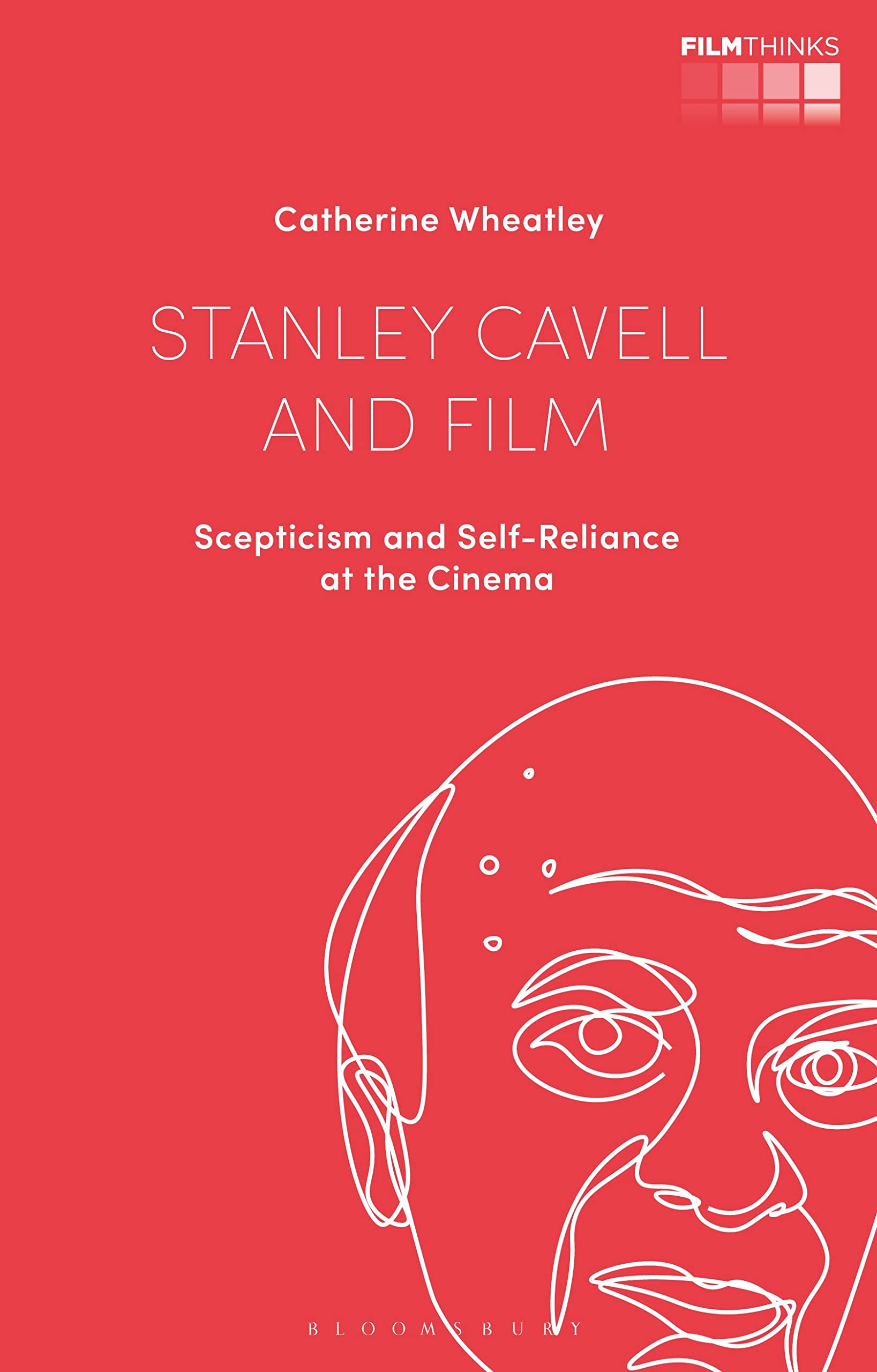
Stanley Cavell and Film: Scepticism and Self-Reliance at the Cinema (Film Thinks)
$25.12
by Catherine Wheatley



“Film is made for philosophy,” asserted Stanley Cavell. In addition to his work on scepticism, morality, and the intentions and meanings of ordinary language, the American philosopher wrote fascinatingly about cinema, arguing that film can reveal new ground for thinking through old philosophical problems. In this book, Catherine Wheatley draws upon Cavell’s explicitly film-inspired works, key philosophical concepts and autobiographical writings, examining his analyses of films from Hollywood’s Golden Age, the French New Wave, contemporary action cinema, silent film heroes Chaplin and Keaton, directors Cocteau and Hitchcock, and performers Greta Garbo and Ginger Rogers. Revealing the ways in which Cavell’s thinking was shaped by the movies, Wheatly poses the question: what was it about film that taught the philosopher how best to live in the world? “Wheatley deftly synthesizes the wide ranging and interdisciplinary works of Cavell into a coherent unity.” ― Film Matters Catherine Wheatley is Lecturer in Film Studies at King's College London, UK. She is the author of Michael Haneke's Cinema: The Ethic of the Image (2008) and the co-editor of Je t'aime… moi non plus (2010). Lúcia Nagib is Professor of Film and Director of the Centre for Film Aesthetics and Cultures (CFAC) at the University of Reading. Her research has focused, among other subjects, on polycentric approaches to world cinema, new waves and new cinemas, cinematic realism and intermediality. She is the author of World Cinema and the Ethics of Realism (Continuum, 2011), Brazil on Screen: Cinema Novo, New Cinema, Utopia (I.B. Tauris, 2007), The Brazilian Film Revival: Interviews with 90 Filmmakers of the 90s (Editora 34, 2002), Born of the Ashes: The Auteur and the Individual in Oshima's Films (Edusp, 1995), Around the Japanese Nouvelle Vague (Editora da Unicamp, 1993) and Werner Herzog: Film as Reality (EstaçãoLiberdade, 1991). She is the editor of Impure Cinema: Intermedial and Intercultural Approaches to Film (with Anne Jerslev, 2013), Theorizing World Cinema (with Chris Perriam and Rajinder Dudrah, I.B. Tauris, 2011), Realism and the Audiovisual Media (with Cecília Mello, Palgrave, 2009), The New Brazilian Cinema (I.B. Tauris, 2003), Master Mizoguchi (Navegar, 1990) and Ozu (Marco Zero, 1990).