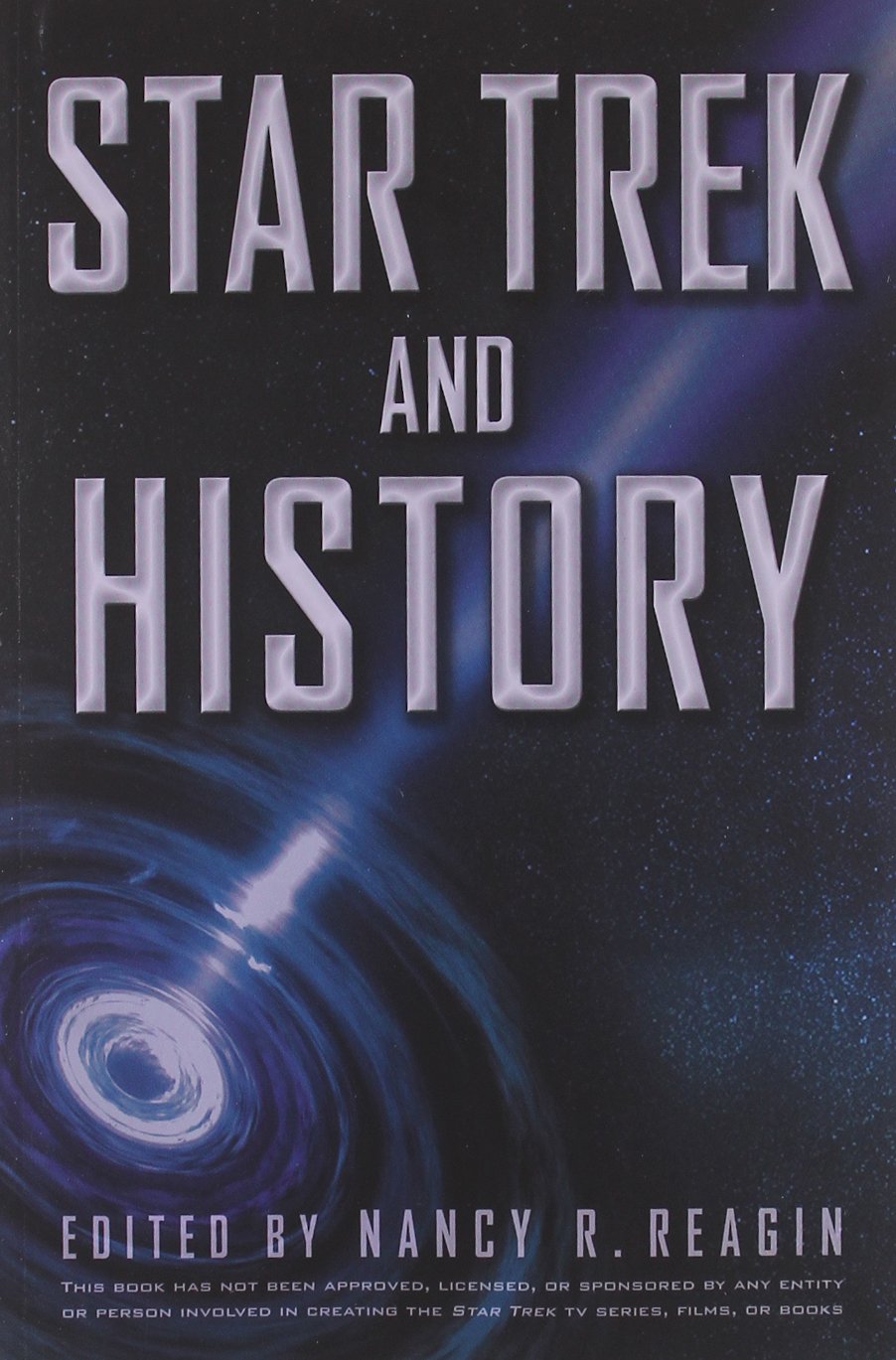



A guide to the history that informs the world of Star Trek just in time for the next JJ Abrams Star Trek movie For a series set in our future, Star Trek revisits the past constantly. Kirk and Spock battle Nazis, Roman gladiators, and witness the Great Depression. When they're not doubling back on their own earlier timelines, the crew uses the holodeck to spend time in the American Old West or Victorian England. Alien races have their own complex and fascinating histories, too. The Star Trek universe is a sci-fi imagining of a future world that is rooted in our own human history. Gene Roddenberry created a television show with a new world and new rules in order to comment on social and political issues of the 1960s, from the Vietnam War and race relations to the war on terror and women's rights. Later Star Trek series and films also grapple with the issues of their own decades: HIV, ecological threats, the collapse of the Soviet Union, and terrorism. How did Uhura spur real-life gender and racial change in the 1960s? Is Kirk inextricably linked with the mythical Old West? What history do the Klingons share with the Soviet Union? Can Nazi Germany shed light on the history and culture of the Cardassians? Star Trek and History explains how the holodeck is as much a source for entertainment as it is a historical teaching tool, how much of the technology we enjoy today had its conceptual roots in Star Trek , and how by looking at Norse mythology we can find our very own Q. Features an exclusive interview with Nichelle Nichols, the actress behind the original Lt. Uhura, conducted at the National Air and Space Museum - Explains the historical inspiration behind many of the show's alien races and storylines - Covers topics ranging from how stellar cartography dates back to Ancient Rome, Greece, and Babylonia to how our "Great Books" of western literature continue to be an important influence to Star Trek 's characters of the future - Includes a timeline comparing the stardates of Star Trek 's timeline to our own real world history Filled with fascinating historical comparisons, Star Trek and History is an essential companion for every Star Trek fan. Are Kirk's "roots" in the American Wild West? How did Uhura spur real-life gender and racial change in the 1960s? Are the Klingons medieval, or are they crypto-Soviets? Can Nazi Germany shed light on the history and culture of the Cardassians? For a series set in our future, Star Trek constantly revisits the past. Kirk and Spock battle Nazis and Roman gladiators and witness the Great Depression. When they're not doubling back on their own earlier timelines, the crew uses the holodeck to spend time in the American Old West or Victorian England. Alien races have their own complex and fascinating histories, too, in part because Star Trek 's writers sometimes used our own histories as the model for alien cultures. Star Trek and History explores the human history that has inspired many of the show's storylines, characters, and cultures. It's filled with intriguing historical insights and comparisons, such as how the Federation's (and the Borg's) stellar cartography dates back to ancient Rome, Greece, and Babylonia; how the classics of Western literature continue to be an important influence in the lives of Star Trek 's characters centuries from now; and how by looking at Norse mythology we can find our very own Q. It also probes many compelling connections with more recent history, from how the Xindi attack in Star Trek: Enterprise reflected the 9/11 terrorist attacks on the United States to how the Star Trek universe of the future predicted the development of today's technology, from cell phones and iPads to Facebook. Featuring an exclusive interview with Nichelle Nichols (the original Lt. Uhura) and a fascinating timeline comparing Star Trek 's stardates to our own real world history, Star Trek and History is an essential companion for every Star Trek fan. NANCY R. REAGIN is the Chair of the Department of Women's and Gender Studies at Pace University in New York City, where she is also a professor of history. She has published several books in modern European history, and has firm opinions about how the holodeck and other technologies could be used to teach history at Starfleet Academy. She is also the editor of Twilight and History and Harry Potter and History , and the coeditor of Star Wars and History .