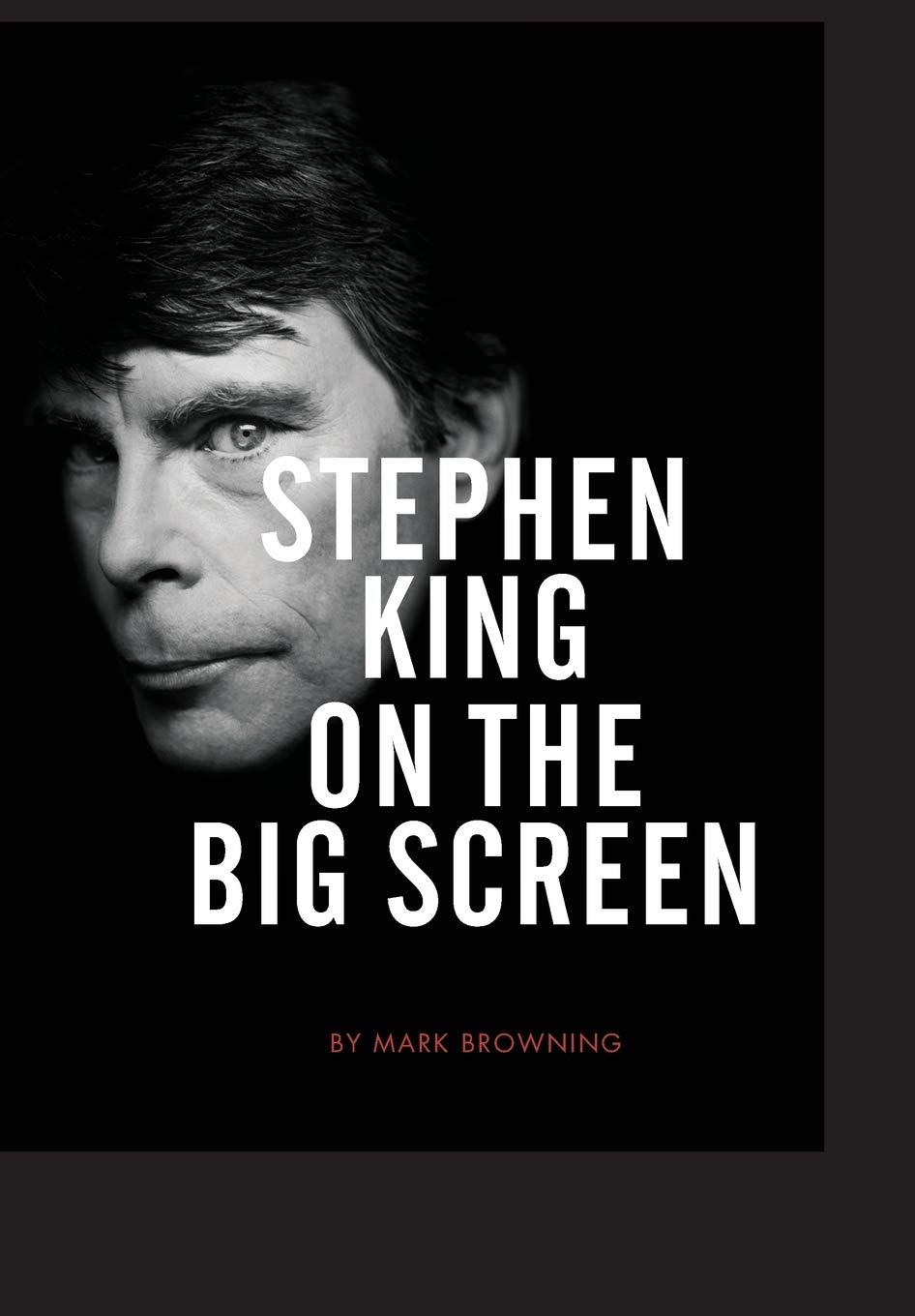



The Shining. Carrie. Misery. These are just a few of the film adaptations that have been made from the terrifying and eerie work of novelist and short story writer Stephen King. It is nearly impossible to think of another author who has inspired so many, and such diverse filmmakers—yet there has never before been a work by a film specialist that focused solely on Stephen King. Mark Browning, in Stephen King on the Big Screen , takes a film-by-film approach to exploring why some adaptations of King’s work are more successful than others. Browning discusses every single film adaptation given a global cinematic release—including films by such well-known directors as Stanley Kubrick, George A. Romero, and David Cronenberg. His is the first book to consider in detail Sleepwalkers , Dreamcatcher, and 1408 as well as the much-neglected portmanteau films and touchstones like The Shawshank Redemption and The Green Mile. In a highly readable and engaging style, Browning examines how different film directors have interpreted and translated the original literary texts into a new medium. Throughout, he reveals the elements of style and approach that have helped make King one of the world’s best-selling authors. This entertaining and accessible guide to the complete corpus of Stephen King films is a must-have for fans of his fiction and of the many directors who have sought to capture his macabre stories and bizarre characters in cinematic form. “Stephen King was among the first generation of horror writers to be overtly influenced by cinematic horror as well as literary, so it’s hardly surprising that he is the most widely adapted horror novelist there is. These adaptations are, as Mark Browning observes in this excellent work, very hit-and-miss. It is a meticulously critical work; scholarly but not pretentious, giving both praise and scorn where it’s due, and acknowledging the greatnesses and flaws of the films as adaptations, suggesting some interesting viewing strategies along the way. An excellent study of why adaptations work/fail, and for any King fan it’s definitive.” -- Andrew McQuade ― Gorezone “The book is refreshingly accessible; no attempt has been made to fit the films into an overarching theoretical paradigm, in the belief that readers would be more interested in approaching King work as ‘a rite-of-passage experience’ that consistently challenges our expectations.” -- Lawrence Raw “Should be of great interest to both King fans and film fanatics alike. Through revealing fresh perspectives it’s a critically rigorous but also highly enjoyable read.” ― Zone Horror Published On: 2009-07-21 "Browning's examination of the film adaptations of Stephen King's novels looks at them in terms of their success as films as well as in terms of how well they reflect what's in the books. This is a riveting, in-depth analysis of what makes King so popular both as an author and as a provider of substance for movies. . . . Anyone who collects King's novels will want to add this to his or her collection."— Booksmonthly ― Booksmonthly Published On: 2011-11-07 Mark Browning has taught English and film studies in a number of schools in England and was senior lecturer in education at Bath Spa University. He is the author of David Cronenberg: Author or Filmmaker? and Stephen King on the Big Screen , also published by Intellect. He currently lives and works as a teacher and freelance writer in Germany. Stephen King on the Big Screen By Mark Browning Intellect Ltd Copyright © 2009 Intellect Ltd All rights reserved. ISBN: 978-1-84150-245-8 Contents Introduction, Chapter 1 Mind Over Matter: Telekinesis, Chapter 2 Tales from the Darkside: The Portmanteau film, Chapter 3 Sometimes Dead is Better: The Body Under the Sheet, Chapter 4 Boys to Men: Rites-of-Passage, Chapter 5 The Rise of the Machines: 1950s Science-Fiction B-Movie, Chapter 6 The Great Escape: Prison Drama, Chapter 7 Books of Blood: The Writer, Chapter 8 The Terror of Everyday Life and Final Girls, Conclusion, References, CHAPTER 1 Mind Over Matter : Telekinesis Public interest in psychic powers did not suddenly begin in the 1970s, but the decade produced a number of powerful cultural expressions of it from the emergence of entertainer/illusionist Uri Geller to the development of new cinematic subgenres. William Friedkin's The Exorcist (1973) reanimated religious horror and virtually single-handedly created the subgenre of the possessed child narrative. Along with The Medusa Touch (Jack Gold, 1978), The Fury (Brian De Palma, 1978) and Scanners (David Cronenberg, 1981), Carrie and Firestarter were amongst the first films to popularize the terrifying, possibly world-destroying, potential of telekinesis. In The Medusa Touch, John Morlar (Richard Burton) has the power to induce destruction on an increasing scale by power of mind alone, culminating in a political warning a