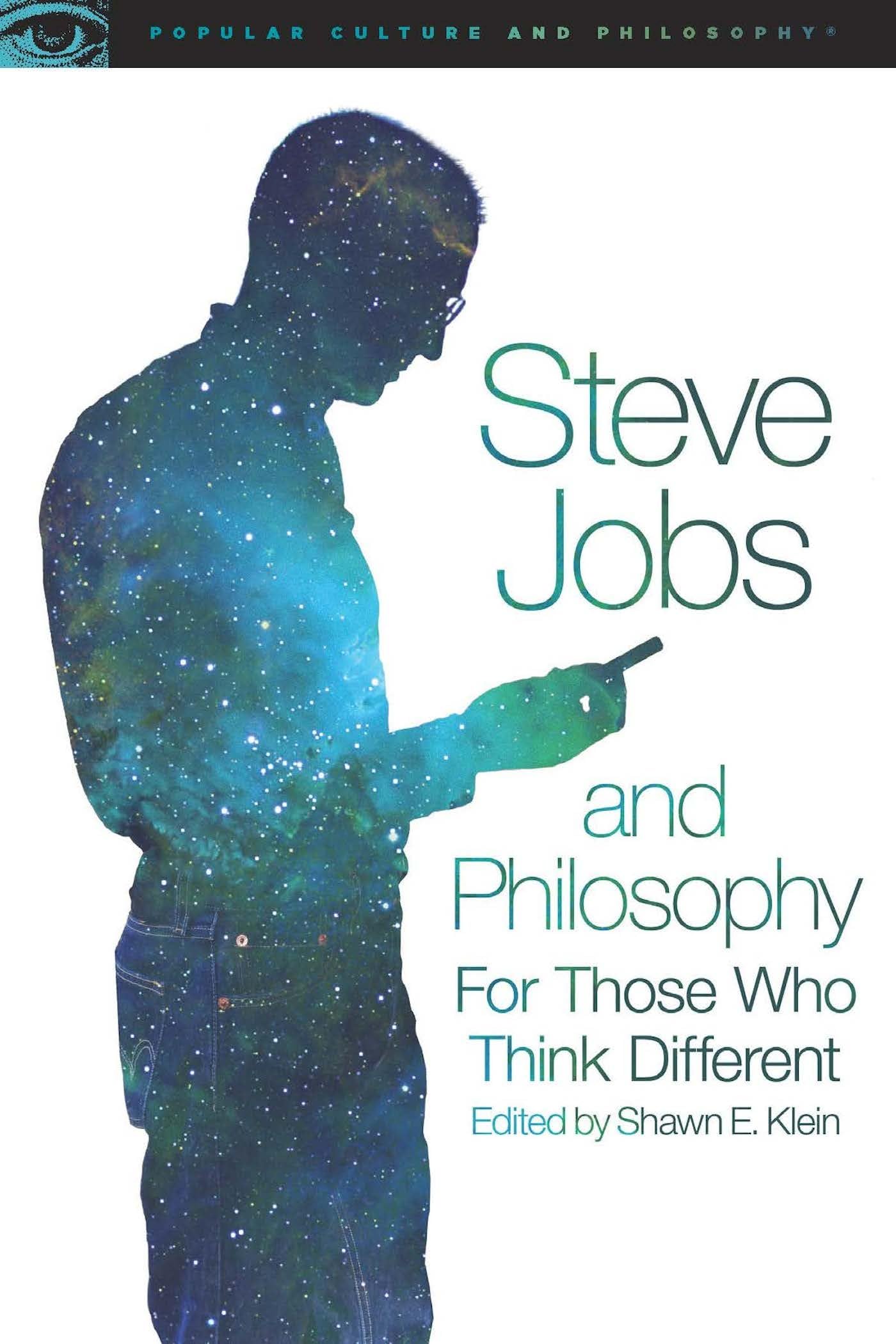
Steve Jobs and Philosophy: For Those Who Think Different (Popular Culture and Philosophy, 89)
$17.10
by Shawn E. Klein



Steve Jobs represents a whole range of values and ideas in pluralistic American culture. He was a barefoot hippy capitalist who did more to change our everyday lives than anyone since Thomas Edison. Coming from modest means and education, he revolutionized several key industries and became fantastically wealthy. In Steve Jobs and Philosophy 16 philosophers examine the inspiring yet often baffling world of Steve Jobs. What can we learn about business ethics from his example? What are the major virtues of a creative innovator? How could Jobs defy conventional business practices? How did he combine values and attitudes previously believed to be unmixable? What does it really mean to think different”? Can entrepreneurs be made or are they just born? If Jobs didn’t make any major inventions, what was his contribution? What does Jobs teach us about the notions of simplicity and functionality in design? How do Jobs’s achievements alter the way we think about technology in relation to human life? Steve Jobs and Philosophy covers vital issues in ethics, business, aesthetics, and technology. It includes a fascinating appendix listing all the philosophers mentioned in the book, along with explanations of their lives and key themes in their thoughts. The chapters in Steve Jobs and Philosophy cover issues in entrepreneurship, ethics, business, aesthetics, and technology. In "The Reality Distortion Field of Steve Jobs," James Edwin Mahon looks at the ethical implications of Jobs' (in)famous ability to bend the facts and people to his will. - In "Counter-Culture Capitalist," Carrie-Ann Biondi challenges the stereotypes of Jobs as a billionaire and a 60's-style hippie. She shows that capitalism and counter-cultural attitudes are not adversarial. Indeed, they are often mutually reinforcing. - In "The Anti-Social Creator," Terry W. Noel finds the traditional set of virtues--prudence, justice, courage, and temperance--don't fit Steve Jobs or other entrepreneurs and suggests three virtues that Jobs exemplified and that are more conducive to the entrepreneurial life: independence of mind, vision, and audacity. - In "What Pixar Taught Millennials about Personhood," Kyle Munkittrick looks at the way Pixar movies portray non-humans like toys and rats and how this affects how understanding of personhood. - In "How Can We Make Entrepreneurs," Stephen R. C. Hicks examines how Jobs' character fits with the entrepreneurial process and the typical traits of an entrepreneur. Hicks then looks at what these imply for improving education to unleash more with Steve Jobs-like potential. - In "The Visionary Entrepreneur," Robert F. Salvino focuses on the tension between the entrepreneur's drive for market innovation and personal success and society's demand for conformity and selflessness. - In "But Steve Jobs Didn't Invent Anything!," Ryan Krause and Owen Parker argue that while Jobs was not an inventor, he did see, in ways others did not, the great value these new technologies had. - In "What Does Market Success Show?," William R Thomas explores what role market success should have in our judgments about the goodness of a product. - In "Marley and Steve," Jason Walker critiques the claim that Jobs was morally deficient because he wasn't the big philanthropists so many of the other tech billionaires. - In "The Noble Truths of Steve Jobs," Shawn E. Klein and Danielle Fundora focus on how Buddhist thought seemed to affect and influence Jobs and his work. - In "Two Sides of Think Different," Robert White argues that Jobs demonstrated both independence and pseudo-independence in his life, but that at his core, Jobs was truly independent and should be praised and admired for this virtue. - In "The Moral Perfectionist," Jared Meyer examines Jobs' striving for perfection as an entrepreneur as a way of understanding how one can pursue one's human flourishing as a "moral entrepreneur." - In "Does Apple Know Right from Wrong," Jason Iuliano discusses the conditions of moral agency and whether any corporation including Apple meets these conditions. - In "Close Your Eyes, Hold Your Breath, Jump In," Paul Pardi examines the many ways that Jobs seemed to exemplify the philosophy of Existentialism. - In "Does Steve Jobs Live and Work for You?," Alexander R. Cohen is critical of the court's decision that Apple violated antitrust in its ebook deals with major book publishers. - In "Jobs and Heidegger Square Off on Technology," Christopher Ketcham imagines a conversation about technology between Steve Jobs and the Existential philosopher Martin Heidegger. - In "Simplicity is the Ultimate Sophistication," Dennis Knepp sees the ideas of Wilhelm Friedrich Hegel in the aesthetics of Jobs' characteristic simple sophistication. Shawn E. Klein is a philosopher specializing in ethics, popular culture, and the philosophy of sport. He co-edited Harry Potter and Philosophy: If Aristotle Ran Hogwarts (2004). Dr. Klein blogs at Philosophyblog.com and Sports