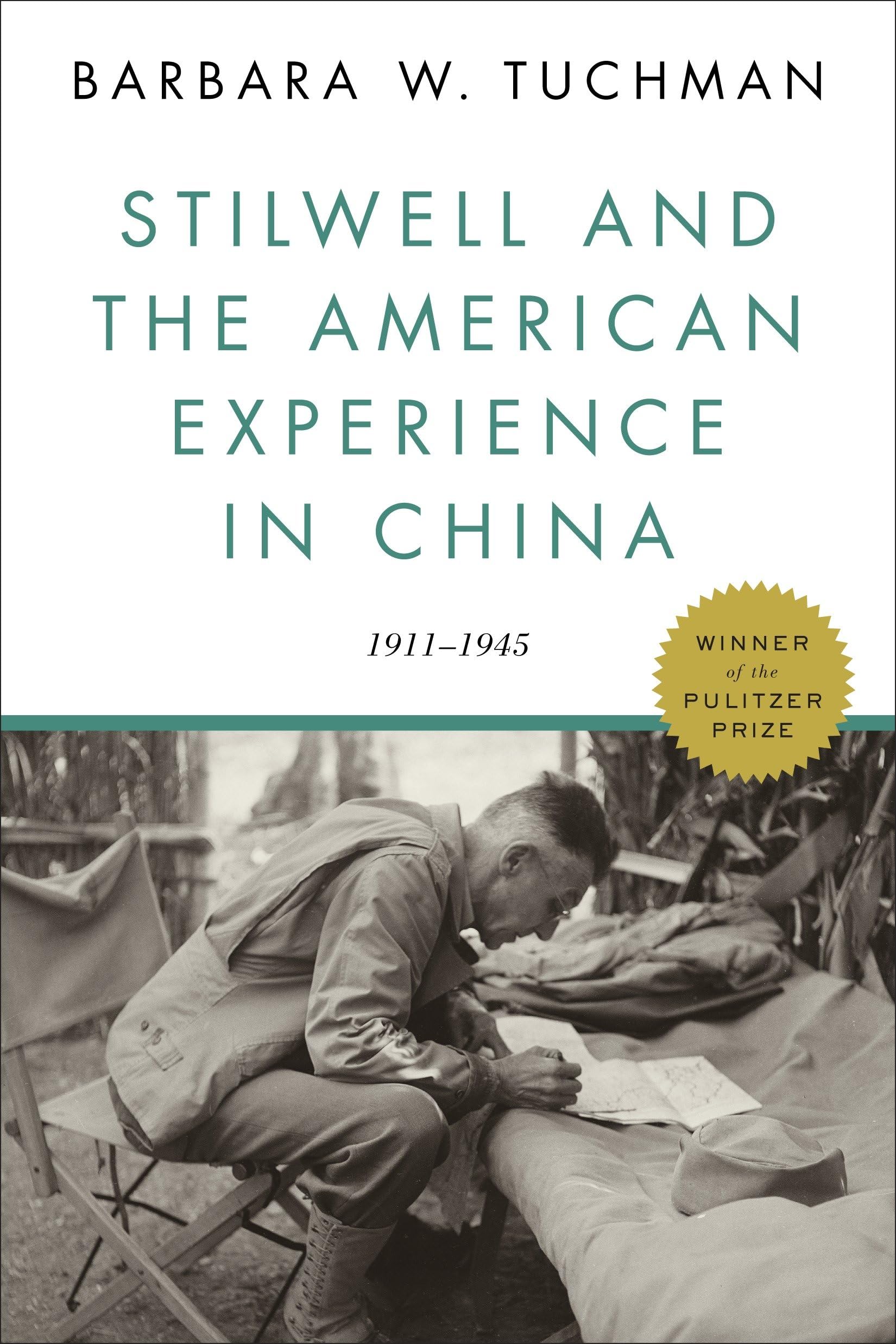



Barbara W. Tuchman won her second Pulitzer Prize for this nonfiction masterpiece—an authoritative work of history that recounts the birth of modern China through the eyes of one extraordinary American. General Joseph W. Stilwell was a man who loved China deeply and knew its people as few Americans ever have. Barbara W. Tuchman’s groundbreaking narrative follows Stilwell from the time he arrived in China during the Revolution of 1911, through his tours of duty in Peking and Tientsin in the 1920s and ’30s, to his return as theater commander in World War II, when the Nationalist government faced attack from both Japanese invaders and Communist insurgents. Peopled by warlords, ambassadors, and missionaries, this classic biography of the cantankerous but level-headed “Vinegar Joe” sparkles with Tuchman’s genius for animating the people who shaped history. Praise for Stilwell and the American Experience in China “Tuchman’s best book . . . so large in scope, so crammed with information, so clear in exposition, so assured in tone that one is tempted to say it is not a book but an education.” — The New Yorker “The most interesting and informative book on U.S.–China relations . . . a brilliant, lucid and authentic account.” — The Nation “A fantastic and complex story finely told.” — The New York Times Book Review “Tuchman’s best book . . . so large in scope, so crammed with information, so clear in exposition, so assured in tone that one is tempted to say it is not a book but an education.” — The New Yorker “The most interesting and informative book on U.S.–China relations . . . a brilliant, lucid and authentic account.” — The Nation “A fantastic and complex story finely told.” — The New York Times Book Review Barbara W. Tuchman (1912–1989) achieved prominence as a historian with The Zimmermann Telegram and international fame with The Guns of August —a huge bestseller and winner of the Pulitzer Prize. Her other works include Bible and Sword, The Proud Tower, Stilwell and the American Experience in China (for which Tuchman was awarded a second Pulitzer Prize), Notes from China, A Distant Mirror, Practicing History, The March of Folly, and The First Salute . 1 Foundations of an Officer Lieutenant Stilwell, aged twenty-eight, met China for the first time in November 1911 at the moment when the most ancient of independent nations stumbled into the twentieth century. Six weeks before he came, revolution had erupted half by accident, and, spreading from city to city in swaying battle against the Imperial forces, was about to overcome the decrepit Manchu regime. Haphazard in outbreak it was to be imperfect in triumph for it failed to fill the void left by what it swept away. The monarchy which had held together a quarter of the earth’s population found no firm successor. Fragmenting under rival claimants and already penetrated by a maze of foreign inroads into her sovereignty, China with lost cohesion and damaged confidence moved into the oncoming storms of the world’s most violent age. The visitor, on leave from military duty in the Philippines, was as pure Yankee in heritage as it was possible to be. He was the eighth generation in direct descent from Nicholas Stilwell, who had come to America from England in 1638 and acquired property in Staten Island, Long Island and Manhattan. His mother’s forebears named Fowler had also arrived in the 1630s and over succeeding generations had gathered in the major strains of colonial America: English, French Huguenot and Dutch. Nicholas Stilwell had produced some 1,600 descendants by the time Joe Stilwell was born, of whom two, Colonel Richard Stilwell and General Garrett Stilwell, fought in the American Revolution. A military career was not so much chosen by Joe as thrust on him by paternal whim. His father, Dr. Benjamin W. Stilwell, was a clever and handsome gentleman of authoritative character, comfortable circumstances and a variety of talents not carried too far. He was the son of John Stilwell, a dry-goods merchant of “business sagacity and exemplary habits” who had retired with a considerable fortune derived from investment in real estate and settled in Yonkers where he built an attractive house overlooking the Hudson and became a director of the Bank of Yonkers and a pillar of the Methodist Church. The family home remained in Yonkers thereafter. Benjamin Stilwell took a law degree at Columbia when he was twenty-one but did not establish himself in practice. Following his marriage in 1880 to Mary A. Peene, and the birth of a daughter, he moved to a plantation near Palatka, Florida, with the intention of developing a lumber business in southern pine. Here on March 19, 1883, his first son was born and named Joseph Warren for the friend and physician who attended at his birth. The name had been inherited from the original Dr. Joseph Warren of Boston who, refusing the post of Surgeon General for a more hazardous active c