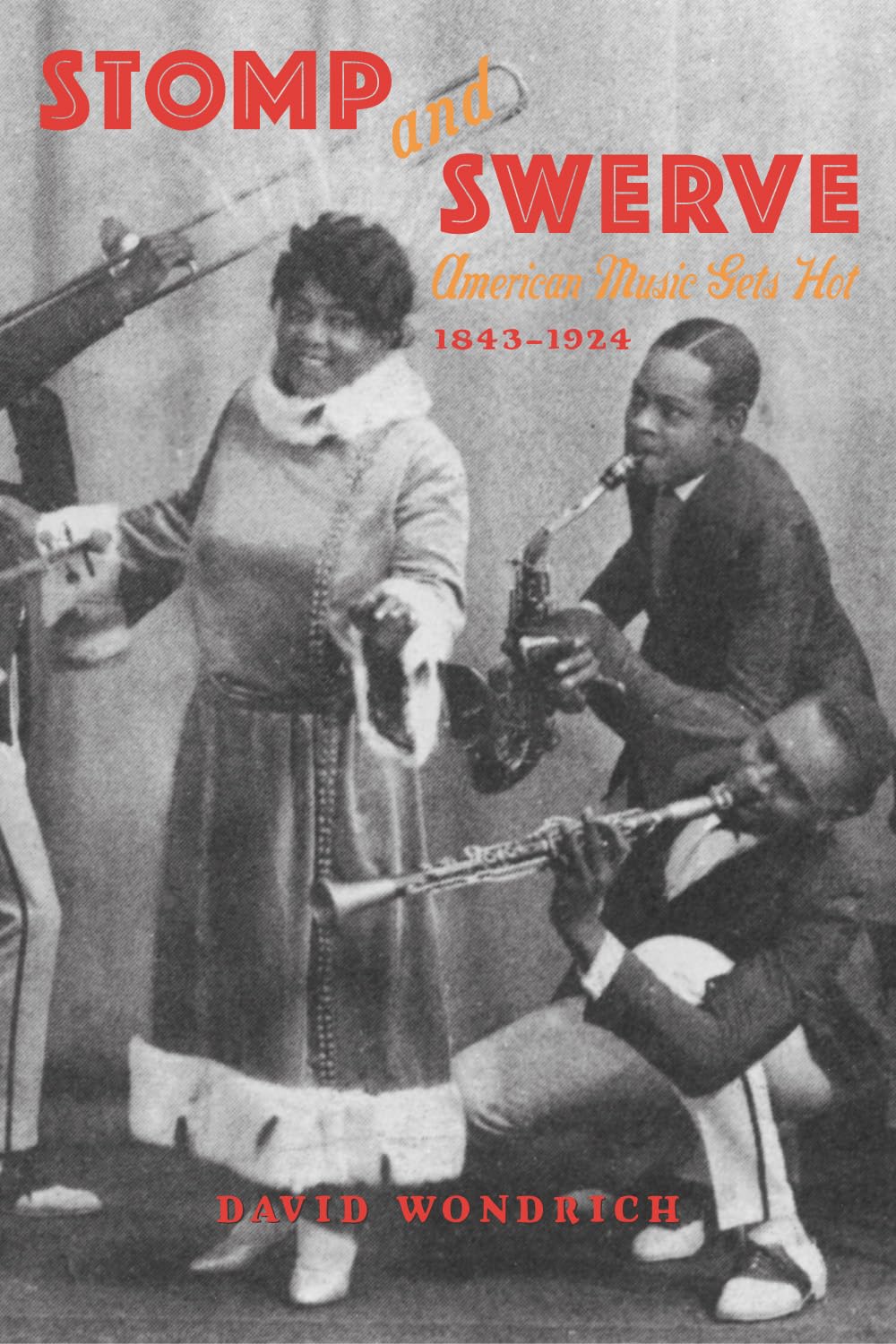



The early decades of American popular music—Stephen Foster, Scott Joplin, John Philip Sousa, Enrico Caruso—are, for most listeners, the dark ages. It wasn’t until the mid-1920s that the full spectrum of this music—black and white, urban and rural, sophisticated and crude—made it onto records for all to hear. This book brings a forgotten music, hot music, to life by describing how it became the dominant American music—how it outlasted sentimental waltzes and parlor ballads, symphonic marches and Tin Pan Alley novelty numbers—and how it became rock ’n’ roll. It reveals that the young men and women of that bygone era had the same musical instincts as their descendants Louis Armstrong, Elvis Presley, James Brown, Jimi Hendrix, and even Ozzy Osbourne. In minstrelsy, ragtime, brass bands, early jazz and blues, fiddle music, and many other forms, there was as much stomping and swerving as can be found in the most exciting performances of hot jazz, funk, and rock. Along the way, it explains how the strange combination of African with Scotch and Irish influences made music in the United States vastly different from other African and Caribbean forms; shares terrific stories about minstrel shows, “coon” songs, whorehouses, knife fights, and other low-life phenomena; and showcases a motley collection of performers heretofore unknown to all but the most avid musicologists and collectors. Hot American music, says Wondrich, has drive and swerve. Drive is the strong rhythmic component that gets the feet stomping. Swerve is the spontaneous bending of tempo, swinging of the beat, and embellishment of the musical line. Beginning with the minstrels who played "Negro" music on stage in blackface in a spirit of parody, Wondrich traces the evolution of hot music into ragtime ("Coon" music, it was called), blues, and jazz. Scottish and Irish music influenced minstrel music, just as Afro-Caribbean music influenced the blues and jazz--the acme of hot music. Unknown rural people and people in the (noncriminal) "Underworld" developed these musical styles, and the "Topworld" embraced this music as it came to reflect on general social conditions. Much later hot music is preserved on sound recordings, which Wondrich references while discussing major performers and composers (a CD containing some of the music will be released simultaneously with the book). Aside from his use of vernacular expletives to express strong opinions, Wondrich provides good guidance as the music gets hotter. Alan Hirsch Copyright © American Library Association. All rights reserved “Whorehouses! Knife fights! And John Philip Sousa! Who says musicology is boring?” —Esquire David Wondrich is the author of Esquire Drinks and writes about music and cocktails for The New York Times , Esquire , and The Village Voice . He lives in Brooklyn, New York. Stomp and Swerve American Music Gets Hot, 1843-1924 By David Wondrich Chicago Review Press Incorporated Copyright © 2003 David Wondrich All rights reserved. ISBN: 978-1-55652-496-7 Contents PREFACE, ACKNOWLEDGMENTS, INTRODUCTION Love and Strife, Drive and Swerve, Afro-Celtic Fusion, PART I Minstrelsy, or Get Out de Way, America's First Music Craze, The Horrors and Delights of Blackface Entertainment, PART II Ragtime, or All Coons Alike, Ragtime's Buried Roots: Brass Bands and the Birth of the Record Industry, Banjos, Coon Songs, and Vocal Groups, PART III Black Folks' Opera, Blues into Jazz, The Pathology of an Infection: The Blues in New Orleans and New York, Two Crazes: Jazz, 1917-1921; The Blues, 1920-1924, Birth of a New Art: Enrico Caruso, a Whole Bunch of Other Guys, and Louis Armstrong, CODA Emmett's Children, or Hillbilly Music, RECORDS, BOOKS, INDEX, CHAPTER 1 PART I Minstrelsy, or Get Out De Way [Ministrallorum] sunt duo genera. Quidam enim frequentant publicas potationes et lasciuas congregationes, et cantant ibi diuersas cantilenas ut moueant homines ad lasciuiam, et tales sunt damnabiles. Sunt autem alii qui cantant gesta principum et uita sanctorum et non faciunt innumerabiles turpitudines. There are two kinds of minstrels: some frequent public drinking-places and indecent gatherings, where they sing all sorts of popular songs in order to move people to indecency; such minstrels are damnable. There are others, however, who sing about the deeds of princes and the lives of the saints and don't do those countless filthy things. — THOMAS DE CABHAM (OB. 1313) America's First Music Craze In late January 1843, Daniel Decatur Emmett hosted an impromptu jam session in his room in Mrs. Brooke's boarding house at 37 Catherine Street, in New York's impressively unsavory Fourth Ward. (The tenement that's been camping out on the site for the last century or so now holds a Chinese beauty parlor and no plaque.) Emmett fiddled and Billy Whitlock picked on a banjo that Emmett had lying around, while Dick Pelham and Frank Brower kept time on tambourine and bones