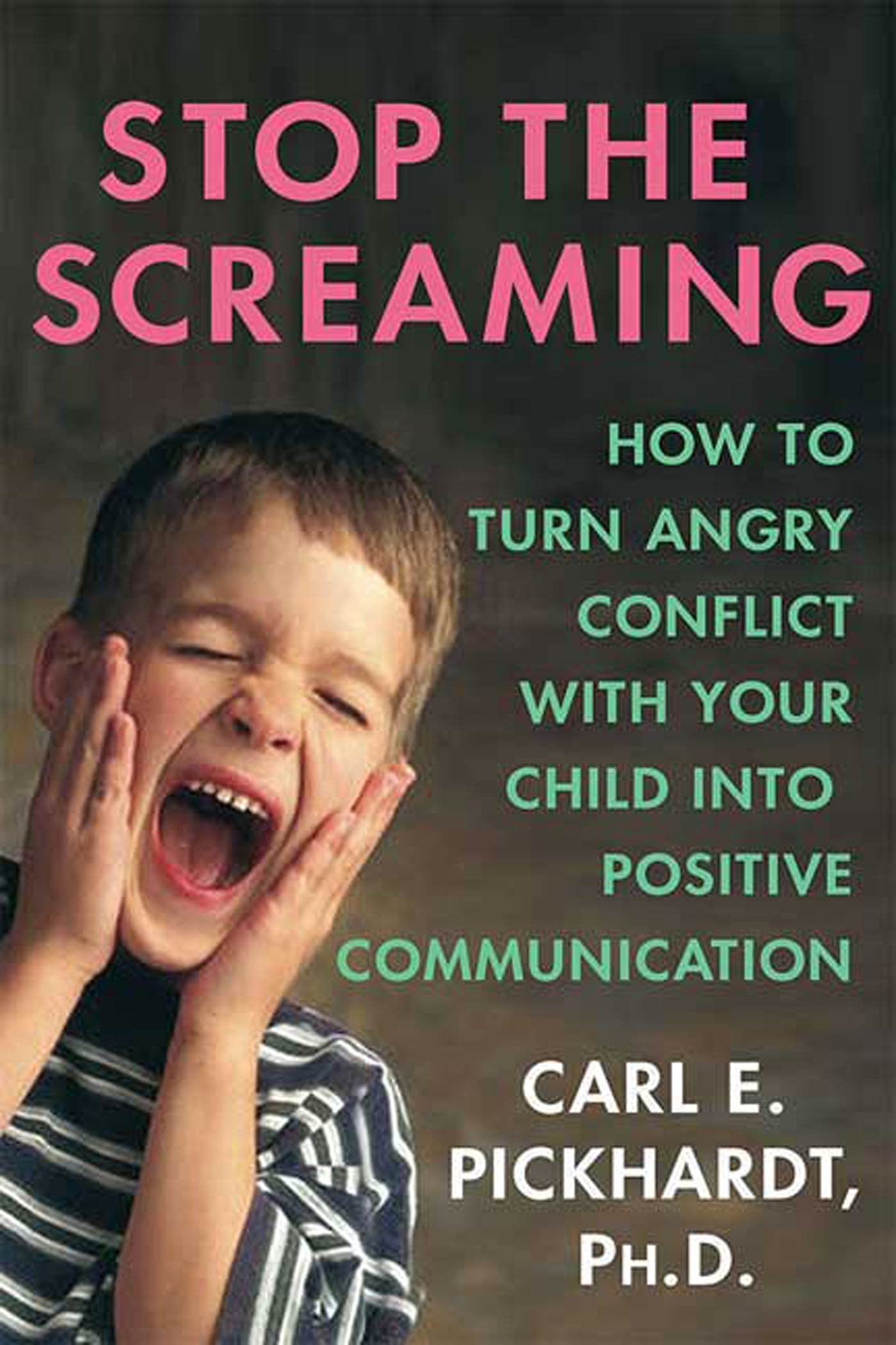
Stop the Screaming: How to Turn Angry Conflict With Your Child into Positive Communication
$19.93
by Carl E. Pickhardt Ph.D



Parenting expert Carl E. Pickhardt brings his considerable experience to tackling the most pervasive and difficult problems parents face in childrearing. Whereas many books on family conflict focus on the prickly teenage years, Pickhardt takes the long view and treats a broad range of ages--starting from the early toddler years all the way through college. He empowers parents to turn conflict into an opportunity to engage with their children on a deeper level. Readers will learn to: - Manage emotion during a fight so that you can hear the feelings behind the vitriol without taking offense. - Give criticism to children in a way that focuses on the behavior and not the person. - Find a hook inside silent tension that will let you connect with your children's feelings and show them a way to empathize with yours. - Consider your children's point of view during a disagreement and teach them to voice their grievances with respect. With a distinctive emphasis on how to distinguish types of conflict dependent on age and gender, Pickhardt shows parents how to turn the daily battles into opportunities for growth. This is a practical guide that helps parents confront difficult issues with which all families grapple. “As the father of two teenagers, I found Pickhardt's book to be an important, supportive, and straightforward look at one of the most challenging stages of fatherhood.” ― Armin Brott, author of The Expectant Father and Father for Life on The Connected Father “This book is a must-read for any parent who has an only child.” ― Texas Family on The Connected Father “Insightful and helpful.” ― Austin Statesman on The Connected Father Carl E. Pickhardt is the author of The Connected Father and Future of Your Only Child , and he is a contributing editor to Only Child Magazine . He has a private practice in Austin, Texas where he lives with his family. Stop the Screaming How to Turn Angry Conflict with Your Child Into Positive Communication By Carl E. Pickhardt Palgrave Macmillan Copyright © 2009 Carl E. Pickhardt All rights reserved. ISBN: 978-0-230-60645-6 Contents Disclaimer, 10, Acknowledgment, 11, Introduction, 13, 1 Cooperation and Conflict, 21, 2 Emotion and Conflict, 47, 3 Communication and Conflict, 71, 4 Intolerance and Conflict, 93, 5 Resemblance and Conflict, 121, 6 Change and Conflict, 145, 7 Authority and Conflict, 173, 8 Compromise and Conflict, 207, Appendix A: Behaviors to Avoid in Family Conflict, 217, Appendix B: A Code of Family Conflict, 219, Appendix C: In Case of Violence, 221, Notes, 223, Further Reading, 229, Index, 233, CHAPTER 1 COOPERATION AND CONFLICT Conflict depends on the principle of cooperation: For the creation, conduct, and resolution of all family conflicts (between parents, parent and child, siblings) the participation of opposing parties is required. By accepting individual responsibility for their share in this cooperation, parents and children can influence the process and outcome of what occurs. If they cast off that responsibility by blaming each other, however, an amicable resolution will likely be impossible to reach. HOW CONFLICT BEGINS Think of it this way. Despite appearances to the contrary, no human conflict ever really starts between people: It starts within people. Each person makes a judgment that some issue is worth contesting and then decides to engage the other party in a response. The younger sister says to herself, "I don't like it that my brother hit me, and I'm going to hit him back." Or consider the angry parent who is determined to "make" a silent child reveal what is bothering her because not knowing is bothering him. "If you don't tell me what's going on, you are going to bed early!" But angry demands only yield a more sullen response from the child. It is better for the parent to explain that when she won't say what is upsetting her, it leaves him wondering what is amiss. He can only guess what the matter is, will probably guess wrong, and perhaps act on that misunderstanding in ways she won't like. "How can I help you feel better if you won't tell me what's wrong? I bet it's that you got into more trouble with the teacher today. I'm going to call her tonight." Now the child blurts out that her friend was mean to her on the playground today. The parent who was prepared for conflict because he felt shut out can now offer comfort instead. What a person is thinking in the moment is the primary influence on whether she decides to initiate or collaborate in conflict. An eighteen-year-old once told me about a fight he almost started before he realized, just in time, that if he did, he would have major cause to regret it. "I'm driving down the highway when this pickup truck passes me and then swerves back in front of me so close I have to slam on the breaks to avoid rear-ending him. No way! Immediately, I'm tailgating this guy, cussing him out and furiously honking my horn. Finally,