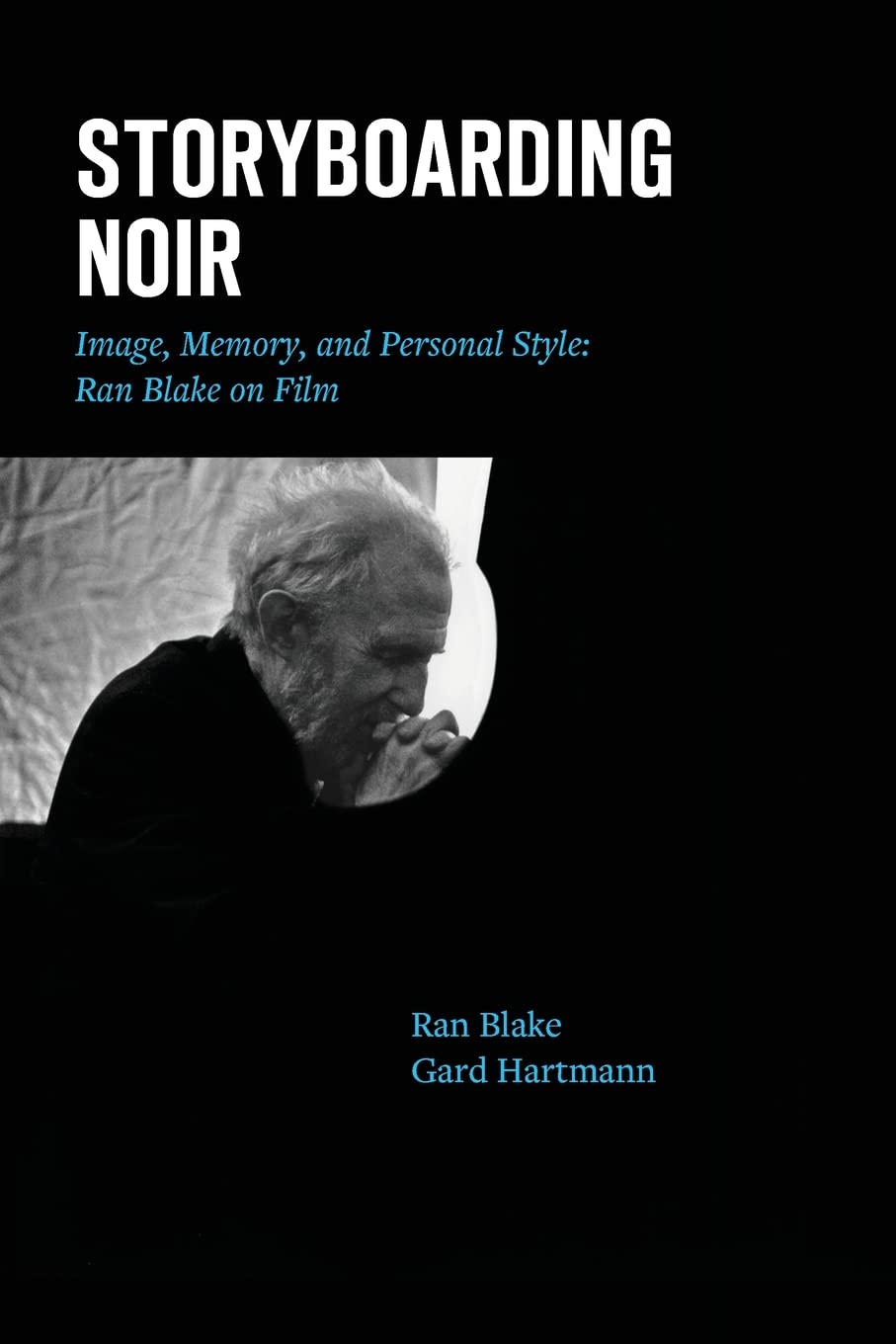



Storyboarding Noir offers a new perspective on the rich and varied history of film noir by demonstrating how storyboarding, a film-making technique, has been adapted by legendary pianist and MacArthur Genius Award winner Ran Blake. The book offers a method, when combined with intensive, long-term training of aural memory, that encourages students and professional musicians to create original and distinctive work. Woven throughout is a discussion of the creative process that is relevant to artistic endeavors in general. For moviegoers, Storyboarding Noir explores classic films from the Golden Age of Noir, including Laura, Night of the Hunter, Pickup on South Street, The Asphalt Jungle, Shadow of a Doubt. We also venture into more recent masterpieces such as The Pawnbroker, Taxi Driver, and two films by French New Wave director Claude Chabrol. In addition, a chapter called "Short Takes" recommends 35 lesser-known films for future viewing. As employed by film directors, a storyboard is a set of drawings that guides the actual shooting of the film; it stands between the script and the finished work. Scene by scene, a storyboard depicts the movement of the camera, the positioning of actors, the framing and timing of the shot, the sound effects: in short, all the technical elements that bring a film to life. Ran Blake discovered years ago that a less restrictive form of a storyboarding, adapted to music and open to improvisation, would be useful in his practice by linking aural elements with the visual. He maps out the journey, plots where specific scenes, characterizations, chords land in the composition, and translates this into sound on the piano. This approach makes it possible to move beyond the spine of the piece without abandoning it, perhaps leaving it for a while, improvising, then finding the way back to what he originally planned. We do not attempt to define film noir. What belongs to the genre, what does not, whether noir is a genre, or merely a style, where it begins and ends - these topics are better left to those of a more academic bent. The subject has been pummeled to near-death, not unlike the beating Alan Ladd endures in The Glass Key. But like Alan, it survives to take another punch - though perhaps just barely, saved by the bell, from two influential French critics who claimed: "We'd be oversimplifying things in calling film noir oneiric, strange, erotic, ambivalent, and cruel." Our oversimplifying is, well, simpler: we encourage watching and re-watching these films, not to probe the semiotics of cinema or the phenomenology of the viewing experience, but mostly to catch details - visual, thematic, narrative, musical - missed on a first see-through. Hopefully we've teased out enough of these elements to send viewers back to look again, and appreciate how marvelously-crafted many of these works are. Beyond the craft, we encourage readers to think how we carry these stories around, speculate on what might happen in a character's afterlife, make up subplots out of camera range to fill in gaps or inconsistencies - and search for Black Pony, the brand of whiskey Dana Andrews drinks in Laura. Will he and Gene Tierney stay together? Will young Charlie be happy with Jack Graham, post- Shadow of a Doubt ? Will Travis Bickle kill again? These extracurricular conjectures seem to us the natural outgrowth of a love affair with the movies - the legitimate offspring of this marriage we enter into, like inveterate starry-eyed newlyweds, repeat first-time offenders, each time the camera rolls It is fascinating to me that Ran Blake, a legendary musician and educator, would use film as a scaffold for creative thought and musical inspiration. As a film professional and fellow aficionado of film noir, I have great pleasure in hearing how mood, contrast, narrative drive, and doomed hopes could inspire albums of music that I've loved, and propel music students to expand their creative approach and vocabulary. - Thomas Robotham teaches filmmaking, cinematography, and screenwriting at Emerson College and is the author of Cinematic Storytelling: A Comprehensive Guide for Directors and Cinematographers (2021). With his long face and full beard, the pianist Ran Blake has the look of an Old Testament prophet. The darkness audible in so much of his music and a six-decade-long fascination with film noir suggest something more than a passing familiarity with the devil. Blake has been a passionate moviegoer since his Springfield boyhood. Again and again, his music has paid tribute to the movies. There may or may not be anyone alive who knows more about old movies of the noirish sort. There is definitely no one who loves them more, let alone who's as gifted a composer and pianist. - Mark Feeney writes on the arts for The Boston Globe. If indeed all the arts aspire to music then the unusually imaginative Ran Blake has provided a service to a dozen or so of his favorite movies by composing mus