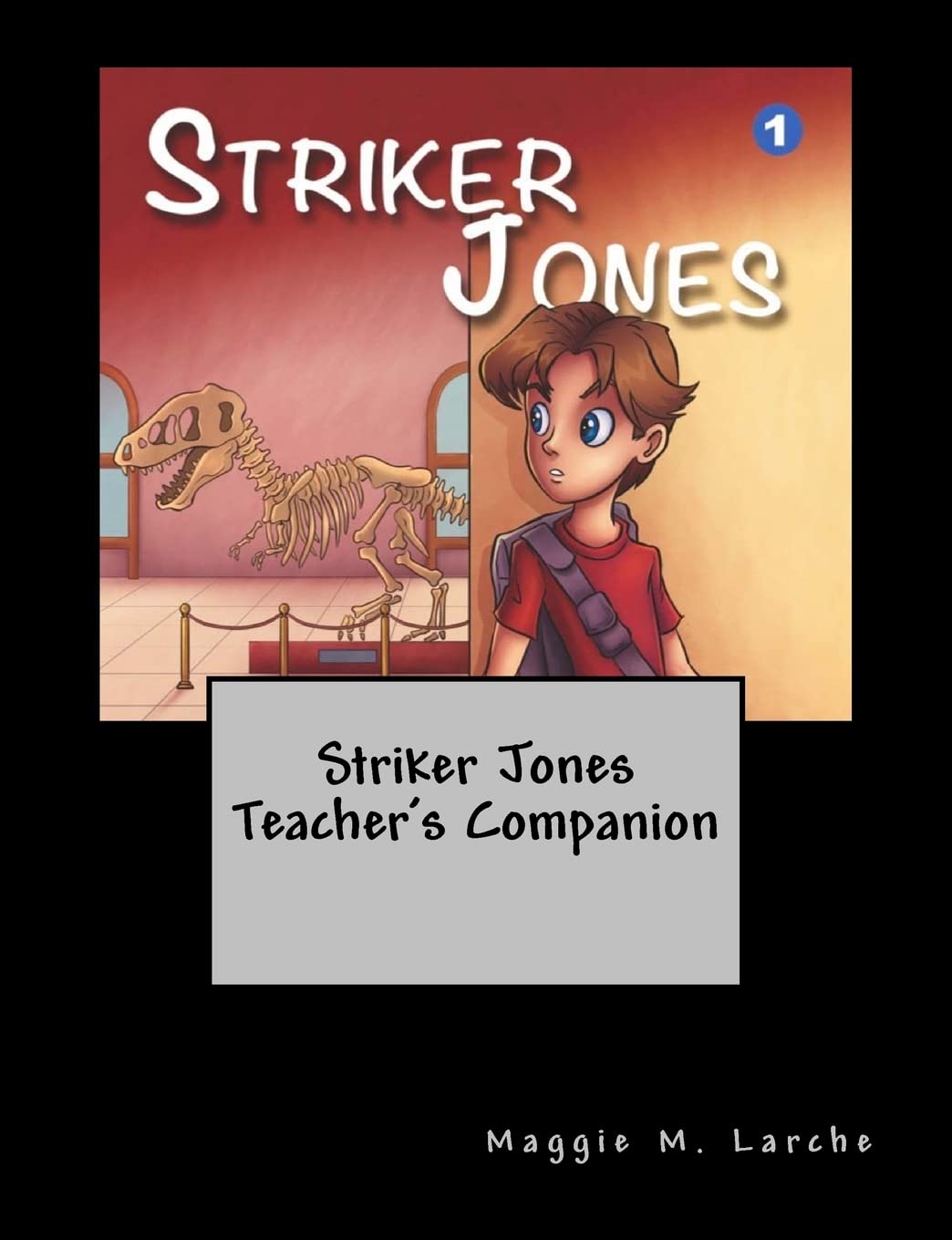



Economics for kids lesson plans paired with fun chapter mysteries. Teach real-life economics with stories that your kids will love! Economics doesn't have to be a difficult topic to teach to elementary students. Using the Striker Jones mystery series, you can introduce the topics to your kids in a unique story-based format. It's reading and social studies, all rolled into one. FAQs: Q: What components are included in each lesson? A: Each lesson explores the economic concepts raised in Striker Jones through vocabulary, discussion topics, fun group activities, and individual assignments. Q: What concepts are included? A: Concepts covered include supply and demand, goods vs. services, incentives, trade-offs, opportunity cost, competition, risk and benefits, barter, information asymmetry, diminishing marginal utility, benefits of trade, prices, profits, public choice, scarcity, and voting. Q: Does the Teacher's Companion include the novel? A: Yes, the entire Striker Jones novel is included in the Teacher's Companion, though you can also purchase the paperback version of the novel separately for student use. Q: Is this unit aligned to any standards? A: The lessons are aligned to Common Core reading and language arts standards, as well as the microeconomic voluntary national economic standards set by the National Council on Economic Education. Q: What do teachers say about Striker Jones? A: Read reviews by real teachers at www.elementaryecon.com/teacher-editions.html. Q: What do economics experts say about Striker Jones? A: "Striker Jones is an excellent text for older elementary students beginning to grasp more and more complicated economic concepts. Through its easy flowing narrative with lots of conversational dialogue, children will learn to see that economics affect their daily life far more than they realized!" - Rutgers University Project on Economics and Children "Striker Jones is an excellent text for older elementary students beginning to grasp more and more complicated economic concepts. Through its easy flowing narrative with lots of conversational dialogue, children will learn to see that economics affect their daily life far more than they realized!" - Rutgers University Project on Economics and Children "This book fits in perfectly with my economics unit!! I am also an English teacher and absolutely LOVE bringing reading into content areaclasses. This is a great resource and my students are really enjoying it!" - Barbara Pearson "My students LOVED LOVED LOVED your book. I used the discussionquestions and activities in your lesson plan pack. Thank you so much.We have already ordered a class set of the second book." - Heather B. "I was looking for something fun and different to implement into myclass. The students are really getting into reading these chapters. We read them when the chapter topic falls into alignment with ourobjectives for certain lessons. It is a great break from some of thetextbooks heavy reading and the kids are able to relate to thecharacters in the book." - Lisa Michalczuk "I wish I would have found this earlier!! So great to teach real life economics!" - Alyssa Winter "My class LOVES this novel!! - Sue Dembski "Awesome packet, teacher/student friendly. Great buy!" - Lavonna Woods "Awesome way to teach a difficult topic to elementary students!" - Steve Richardson "This is a great addition to a an economics lesson, in fact, I'm using it for my third graders lesson. Each short story is different andfeatures a different scenario you try to solve. In one, the solution is about bartering (trading), in another, it's about supply indemand. The author uses short scenarios that students could relateto; for example, the story about trading is about a baseball card. Vocabulary is appropriate for elementary age students and it wouldbe easy to add this to a lesson." - Alisha Painter "My fifth grade class loved this!" - Julie Cronin "There is no more important subject for young people to be exposed to right now than elementary economics. Larche has produced a well written primer that illustrates the economic fundamentals clearly, succinctly and with a cool factor that young readers will love. Think young Sherlock Holmes meets Milton Friedman!" - James Larriviere, Ph.D., Professor of Economics at Spring Hill College "Each chapter in this great book is a mini-mystery involving Striker and his friends. Each mystery ends with a leading question for readers to think about before getting the answer. The solution reinforces the economics concept(s) at work in Striker's solving the case. This is a fun way to learn (or relearn) the basics of economics. It's also an interesting and well-thought-out twist on the usual kid detective tales. Teachers will enjoy illustrating economics concepts by using these stories, and students will enjoy trying to outwit Striker the detective." - SocialStudiesforKids.com Maggie M. Larche thinks economics is more fun than jumping on a trampoline