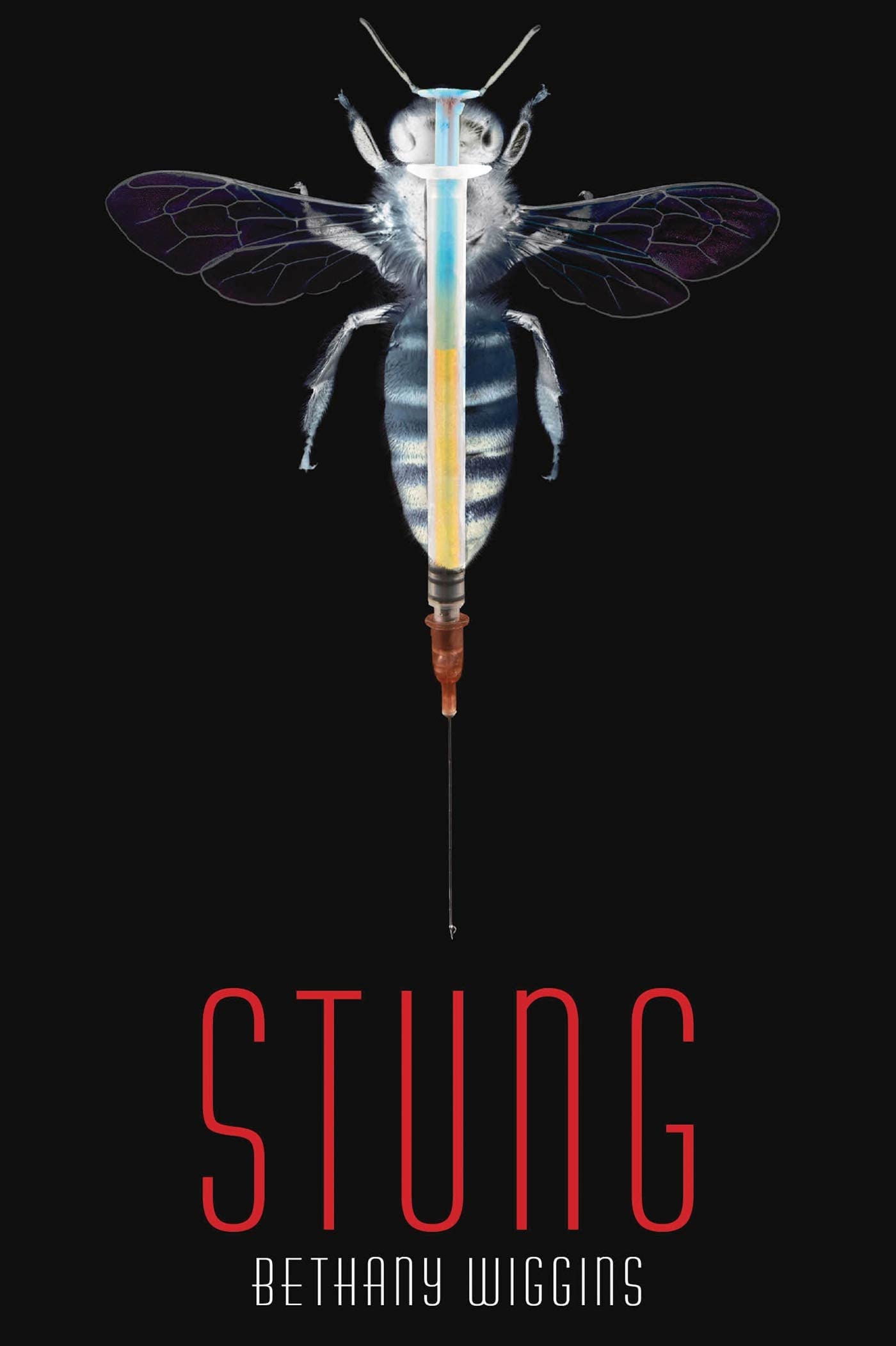



Fiona doesn't remember going to sleep. But when she opens her eyes, she discovers her entire world has been altered-her house is abandoned and broken, and the entire neighborhood is barren and dead. Even stranger is the tattoo on her right wrist-a black oval with five marks on either side-that she doesn't remember getting but somehow knows she must cover at any cost. And she's right. When the honeybee population collapsed, a worldwide pandemic occurred and the government tried to bio-engineer a cure. Only the solution was deadlier than the original problem-the vaccination turned people into ferocious, deadly beasts who were branded as a warning to un-vaccinated survivors. Key people needed to rebuild society are protected from disease and beasts inside a fortress-like wall. But Fiona has awakened branded, alone-and on the wrong side of the wall . . . Gr 8 Up-The pesticide developed to kill genetically modified bees that caused a bee flu epidemic killed almost everything else as well, leaving a world in which women are scarce, honey is more valuable than gold, and survival is tenuous. Fiona Tarsis wakes in the ruin of her Colorado home with no memory of how she got there. Lack of recall, however, does not keep her from recognizing a feral attacker as her twin brother, Jonah, and her flight from him through a window is just the beginning of her narrow escapes. Fo is captured by the militia, guardians of the gates to a walled city. Bowen, a handsome neighbor from Fo's old life, fills in the gaps in her memory. She learns that parents, desperate to save their children, voluntarily put them into comas hoping to keep them stable until a cure for the epidemic was found. The plot relies on coincidence and cannot fully hide weaknesses in characterization with its breakneck speed. Fo was 13 when she went into the coma, and 17 when she awakens with a more mature body and a mind that seemingly continued to develop while she was comatose. The inevitable love story is handled with some heat. Fo reacts instead of acts in the simplistic role of girl in peril. Sent to fight to the death, she is protected in the arena by Jonah until Bowen rescues her in the nick of time. The conclusion is anticlimactic, but the roaring pace keeps world-building to a minimum and makes this a crashing dystopic roller-coaster ride.-Janice M. Del Negro, GSLIS Dominican University, River Forest, ILα(c) Copyright 2013. Library Journals LLC, a wholly owned subsidiary of Media Source, Inc. No redistribution permitted. The last thing Fiona remembers is being 13 and hearing about the dangerous domino effect that could result from the extinction of bees. When she wakes up, she is 17, sporting a strange tattoo, and the world outside is in postapocalyptic chaos. A sewer urchin gives Fiona the short version: Colorado has become a lawless country where bands of marauders attempt to earn their way into the safer walled city. Though Fiona succeeds in concealing herself as a boy (hard to believe, given the manhandling she undergoes), she is captured and identified as a “Ten”—a person infected with a flawed vaccine that will turn her into a zombielike beast unless killed. Thankfully, this group is headed by a protective, hunky former neighbor of Fiona’s. As with many teen dystopias, the rushed backstory exists primarily to provide opportunity to squeeze our romantic leads into tight quarters, and the Colosseum-inspired finale feels airlifted from another plot. Wiggins is skilled, however, at dropping bits of Fiona’s returning memories at dramatic moments. Finished with Veronica Roth’s Divergent (2011) et al? Try this. Grades 8-11. --Daniel Kraus BETHANY WIGGINS is the author of Shifting . She started writing on a dare and dove headfirst into the world of writerly madness. She lives in the desert with her husband, four quirky kids, and two very fluffy cats. www.bethanywiggins.com