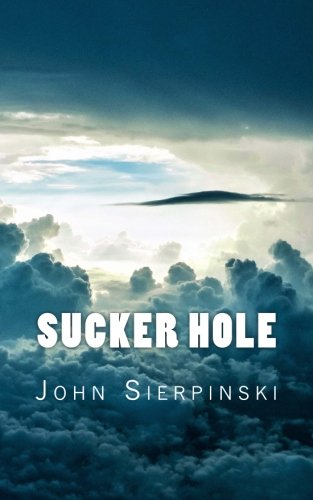



Sucker Hole: A fleeting patch of blue in an otherwise overcast sky. A little hope and then helplessness. A moment of looking up with anticipation and then it is taken away. The person who counted on that spotlight becomes a thrashing fool. The cloud, the sun, the iridescent sky, and the person looking up, the sucker. reviews: Sucker Hole is a collection of sharply cadenced poems, filled with wildly creative images. “Gray swallows the sun and spits out mouse hair.” An old car’s license plate flapping on one screw becomes “a poor man’s wind chime”. In one poem, the speaker’s father swallows “the salt pill of duty” and heads off to work. These are poems of childhood trauma, addiction, lost love, hard work, and regret. This hard-hitting emotionally moving narrative is so gut-wrenching that it will leave you hoping, in vain, that the poem’s narrator is not the poet. In the end you know they are one and the same. Nobody could make stuff like this up. - Ed Werstein, poet John writes about life with clarity and teaches us to keep our eyes open - for the flower blooming in the desert, the conversation with a lover in the middle of the night, or the weight of a dog's head against your leg. - Anneliese Finke John Sierpinski shows us that sucker holes come in many forms; from smooth water-washed stones in a girl’s small hand, to the smell of taffy and corndogs at the beach, to a numinous green circle of water, waiting beneath ice carved by fishermen. These deceptive sucker holes emerge from beautifully crafted oceans, waves, tsunamis of relentless grey. This is full-immersion poetry, involving all the senses. Grey has never been so colorful and evocative. Immerse yourself in the story of these poems and feel the magic in subtle glimmers of hope and strength: a domed planetarium with bone stars, chess players in Goodwill coats, and the writer and his father who do their “best to clear the big side mirrors.” - Sylvia Cavanaugh, author of Angular Embrace In Sucker Hole, John Sierpinski reveals the gaping holes in families, relationships, life. Fortunately for us, the poet found his way through the darkness to send back visceral lines that hold onto the imagination for a long time. The poems demand full attention at every turn of the page and remind us that we are all “…members of an anonymous group, those who know a certain kind of pain.” - Lisa Vihos, Stoneboat Literary Journal In Sucker Hole, John Sierpinski uses a full palette of colors to define episodes in his life which, though traumatic, seek balance. With a conversational tone and dry humor, Sierpinski gathers words like a blanket, to encircle and soothe: the death of his dog, the dysfunction of his family’s holiday gatherings, the loss of his father, the unreliability of love relationships, alcoholism. He remains one who will be “getting up, one more time, to try and steal Time’s wallet.” - Marilyn Zelke Windau, author of Owning Shadows What I see in John Sierpinski's first collection of poetry is sublimity, symbolism, human ache, personal voice, a rich sparseness , and a tie to the reader that pulls the solar plexus -- an ache that resonates. His poem Museum Exhibit -- Titanic is vivid and temporal. The characters in the poem show, and do not tell, a story of history and the present. - Ellen E Baird, Editor of Howl Art and Literary Magazine. John Sierpinski is a master storyteller. I think about Goldilocks and the Three Bears when I consider how he uses color and images; landscapes and incidents – not too much or too little, but just right. Just enough. If he’s ever had an impulse to show off his mastery of language (which I seriously doubt), he’s had the sound artistic judgment and humility to restrain it. He intends to connect and to banish loneliness through doing so and succeeds. - Sue Blaustein, poet