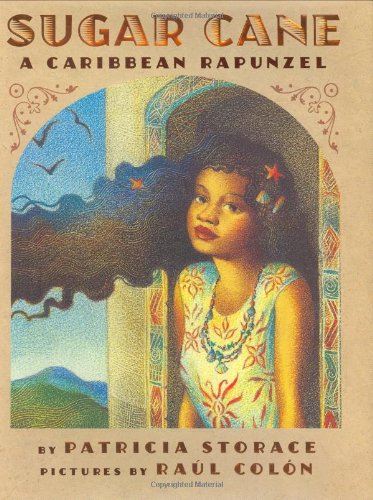



“You live in a tower without a stair, Sugar Cane, Sugar Cane, let down your hair.” Stolen away from her parents on her first birthday by island sorceress Madam Fate, beautiful Sugar Cane grows up in a tower overlooking the sea. With only a pet green monkey named Callaloo for company, Sugar Cane is lonelyher only consolation is her love of music. Often she stands at her window and sings, imagining that the echo of her voice is someone answering her. Then one night, someone does hear her song, but could this young man with a gift for music break the spell of Madam Fate and help Sugar Cane set herself free? Patricia Storace’s lyrical and poignant retelling of the Rapunzel tale in a Caribbean setting is perfectly matched with Raúl Colón’s lush illustrations. An unforgettable feast for the senses. *Starred Review* In her first book for children, award-winning poet Storace moves the story of Rapunzel to a sun-drenched Caribbean island teeming with magic. In this tropical retelling, a young fisherman's pregnant wife craves sugar cane. After a long search, the fisherman finds a sugar-cane patch and helps himself, but he is horrified to learn that the garden belongs to sorceress Madame Fate, who claims the fisherman's baby girl, Sugar Cane, on the child's first birthday. Storace's story cleaves close to the original's basic elements: the sorceress locks Sugar Cane in a high tower, which she enters by climbing her captive's long hair. Sugar Cane's voice draws a handsome young man to her high prison, and the young couple falls secretly in love. The story allows a more hopeful (and chaste) ending: the lovers escape in a whirl of terrifying magic and hold a joyful wedding before creating a child. Storace writes with a poet's command of rhythm, sound, and imagery: the water at night, for example, is "dark as sleep before dreams rise." Working in his signature textured style, Colón produces images that are as mesmerizing as the text. Brilliant, light-infused hues and swirling lines create glowing compositions of the island setting, the frightening conjure woman, and the Afro-Caribbean characters. Too long for a single read-aloud, this powerful tale will be best enjoyed in installments. For another fairy tale reset in Caribbean culture, suggest Robert San Souci's Cendrillon (1998). Engberg, Gillian