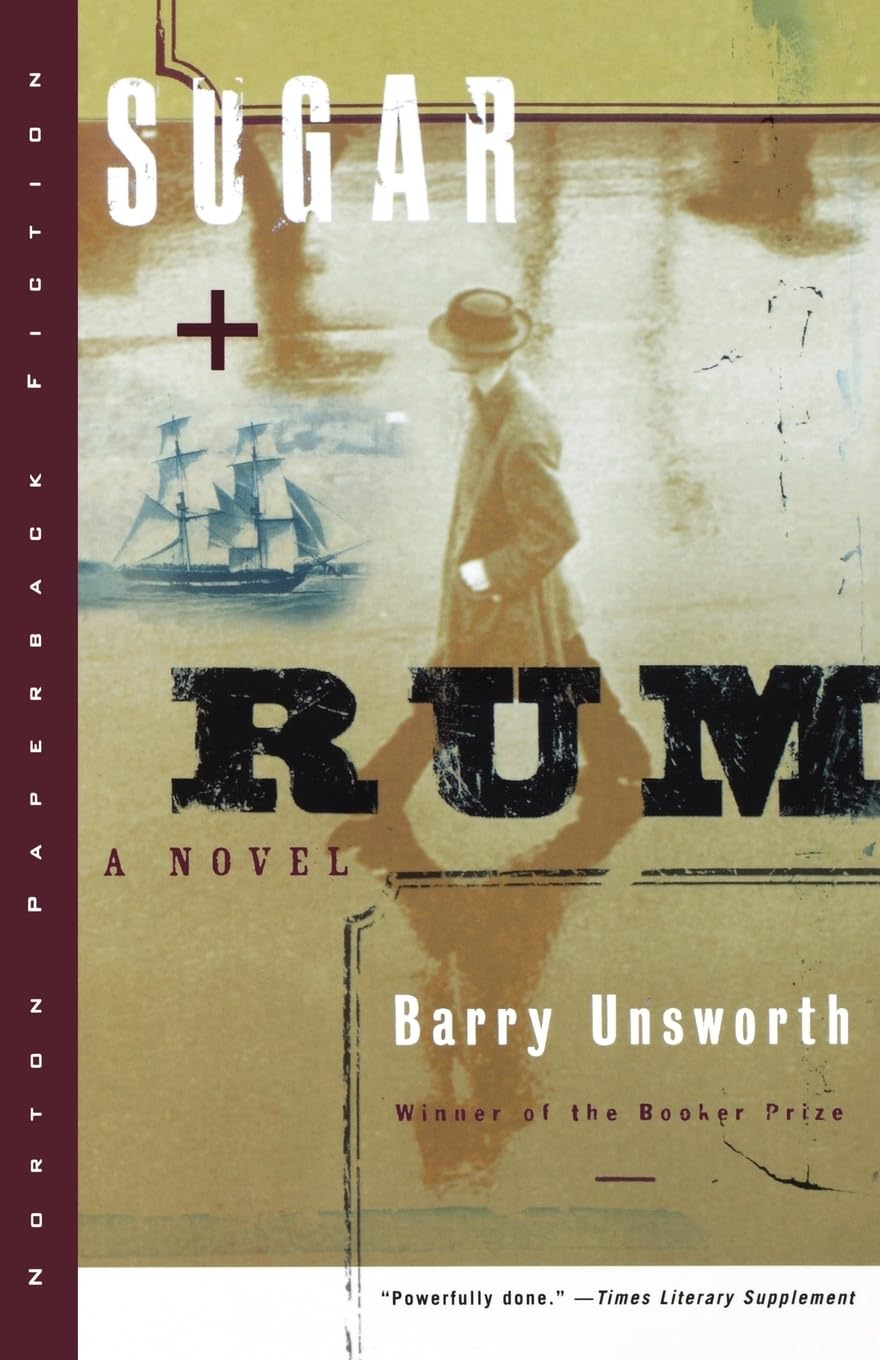



A "powerfully done" ( Times Literary Supplement ) and tantalizingly semi-autobiographical novel from the author of the Booker Prize-winning Sacred Hunger . Unable to work on his novel about Liverpool's slave trade, Benson is teaching creative writing and wandering the city. The pupils who bring him their fantasies are a sad, dispossessed group with varying degrees of literary talent. Caught up in a series of bizarre events, Benson nevertheless finds his own imagination sparked by an encounter with two old army colleagues: Thompson, down-and-out and homeless; and Slater, a fabulously wealthy entrepreneur. In trying to heal old wounds, Benson unleashes a plan that just may blow up in his face. "There is a violent resolution to this obsessive and provocative novel that examines the abscesses and abysses beneath the violence of urban life and offers a quixotic personal answer." ― The Times [London] "Fine descriptive writing and spirited humanity." ― The Guardian Published for the first time in the United States Booker Prize-winning author of Sacred Hunger The central situation--an aging, slightly dotty, blocked novelist going to seed amid the blight of late-Thatcher Liverpool--sounds irredeemably depressing, and yet by some narrative miracle Barry Unsworth makes Sugar and Rum a work of spirited playfulness, human sympathy, and quicksilver imagination. Clive Benson, hopelessly stuck in his historical novel about the horrors of Liverpool's slave trade, has taken to offering private instruction to a ragtag group of would-be writers he calls "the fictioneers." Prowling the shattered city streets in search of "signs, portents, auguries," Benson witnesses a suicide--a flashing leap from a high building--and soon after runs across an old wreck of an army buddy from World War II. These encounters precipitate a crisis: Benson becomes obsessed with a traumatic wartime episode in which he inadvertently led a friend to his death, and then, stumbling from fantasy to action, he hatches a scheme to exact revenge on the arrogant second lieutenant they served under. As engrossingly bizarre as it is, plot in Sugar and Rum is secondary to narrative warp and woof--metaphor, allusion, surreal juxtapositions. A hypnotist neighbor appears to offer advice on getting rid of the owl that has invaded Benson's flat; a magazine featuring Dali and Verdi leads to the detested second lieutenant; the terrible legacy of the slave trade shadows every aspect of contemporary Liverpool. Sugar and Rum is at once an inflamed political novel of class and race warfare, a satire of current social malaise, a portrait of the artist as a damaged but still plucky old man, a meditation on the meanings of performance, and a ripping good read. It is also an amusingly distorted autobiography, since Unsworth in real life succeeded in writing the slave-trade novel that defeats his alter ego-- Sacred Hunger , which won the Booker Prize. It's quite a juggling act, but Unsworth proves himself more than equal to the task. --David Laskin Clive Benson, a noted historical novelist, has moved from London to Liverpool to research a book on the slave trade. But the project is hopelessly stalled, and Benson, divorced and in his sixties, is beginning to feel that this drab industrial city may be the end of the line for him. To supplement dwindling royalties from earlier books, Benson hires himself out as a literary consultant, offering editorial advice to a morose group of would-be novelists. Unsworth is himself the author of several well-received historical novels, including the Booker Prize-winning Sacred Hunger (LJ 7/92), a novel about the Liverpool slave trade. Sugar and Rum is obviously partly autobiographical, and the first half of the book is a brilliant satire of the writing profession. In the second half, Unsworth attempts to use the slave trade as a metaphor for contemporary urban problems in Liverpool, with much less success. This interesting minor work by an important British novelist is noteworthy mainly as a supplement to Sacred Hunger. For larger fiction collections.AEdward B. St. John, Loyola Law Sch., Los Angeles Copyright 1999 Reed Business Information, Inc. A 1990 novel by Unsworth (After Hannibal, 1997, etc.) finally surfaces here, adding a distinctively quirky note to his Booker-winning Sacred Hunger (1992): here, an obsessive novelist overcomes writer's block by resolving the guilt he's carried since his closest friend died beside him in Italy during WWII. Benson is so blocked that he's taken to chatting up the wrecks of humanity he finds on his walks through the streets of Liverpool, where he's supposedly writing a tale of that city's prosperous days in the 18th-century slave trade but is actually frittering away his time as a manuscript consultant. He seeks portents of change everywhere, and witnessing a man jump to his death becomes a potent symbol for himthough of just what he can't be sure. His self-absorbed take on it, however,