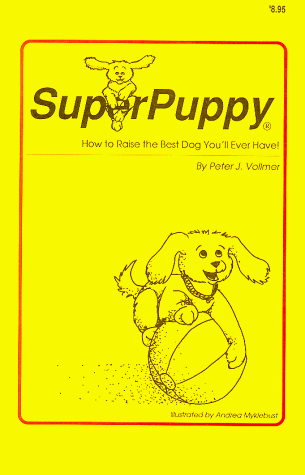



A must-read for all new puppy owners! In just 50 pages SuperPuppy will give you clear, concise suggestions covering: choosing a puppy, discipline, chewing, digging, jumping up, housetraining, barking, and nipping. You'll learn how to communicate better with your dog and how to get the most out of your relationship with one of the most remarkable creatures on earth. Peter Vollmer has worked with the Wisconsin Humane Society, Milwaukee Veterinary Medical Association, Hills Pet Products and dog training groups throughout the country to develop pet owner education programs that emphasize the need to begin training early. He received the Dog Writers' Association of America writing award for a series of articles on raising dogs that appeared in Veterinary Medicine/Small Animal Clinician. The book, SuperPuppy: How to Raise the Best Dog You'll Ever Have! developed from that series of articles. Peter currently lives in the San Diego area with his wife, Nancy and their dogs, Blackfoot, Sage and Pinto. They compete in agility and herding trials. One of the first considerations in raising a super puppy is careful selection. Dogs come in all shapes, sizes, coat lengths, colors and dispositions. One area people often overlook when choosing a puppy is a thorough investigation of the particular characteristics that their pup will come to develop. Getting a dog on impulse, based primarily on puppy appearance, is not the best approach. Most pups are cute and cuddly, but puppy "cuteness" is quickly outgrown. If you haven't already acquired a pup, consider whether you have the time necessary to raise him properly - or do you have more pressing considerations? Other responsibilities such as raising small children, school work, or full-time employment, may divert too much of your attention from the pup. Puppies, like small children, need a tremendous amount of social contact and direction in order to develop to their full potential - this means time on your part. Also, think about how its adult size will fit into your home and life-style. Can you provide adequate room for him, and will you be able to fulfill his exercise and grooming requirements. Another consideration is temperament - an important aspect that is all too often overlooked. Temperament involves general behavioral tendencies that certain breeds of dogs share or have in common. For example, herding and coursing breeds may be more inclined to chase moving objects than other breeds. Another aspect of temperament is the individual puppy's way of interacting with its world, regardless of its breed or past experiences. If you're thinking about a particular breed, take time to identify temperamental characteristics by locating breeders, trainers or pet shops with good reputations as knowledgeable professionals. Perhaps you know someone with a dog you like. Find out from them about the breeder, or ask local veterinarians or members of you local dog club. Honest, reliable breeders will be more than happy to inform you of their breed's qualities, both pro and con, and help you match a breed or individual with your life-style. If you have your mind set on adopting a puppy from the local animal shelter, terrific! Just take time to handle more than one prospect, and try to keep an open mind so you can find that special one. The last thing you'll want to do is return the dog because it was the wrong pet for you and the family. One more thing. As soon as your veterinarian feels your dog is old enough, have him or her neutered or spayed. This won't alter your dog's personality, but it will make it much, much easier for your pet to live with its human family and for you to live with a four-legged animal. If the dog were living in the wild, it would certainly need those hormones that spay/neuter removes, but the family dog need not, and should not, be under these primitive, hormonal influences. Another benefit of early spay/neuter is better health. Animal medical research show that older pet dogs, who were neutered while youngsters had fewer tumors and other related health problems. WHAT TO LOOK FOR If you haven't already chosen a pup, remember that a great amount of variability exists among individuals, even those of the same breed. So take time to study each prospect. Puppies require regular, non-traumatic human contact between the third and sixteenth weeks of life in order to prevent a subsequent fear of people. Researchers have discovered that this process, referred to a primary socialization, can still be accomplished beginning at around the seventh week, even if the dog has had little or no contact with people prior to that time. If you're not sure how the puppy was handled by the breeder or others, select a pup within the seven-week age group. When studying a prospect, be aware of any signs of withdrawal from or disinterest in people, as well as signs of being overly pushy. Balance is the key, so look for the well-rounded individual. Stay away from the extremes rep