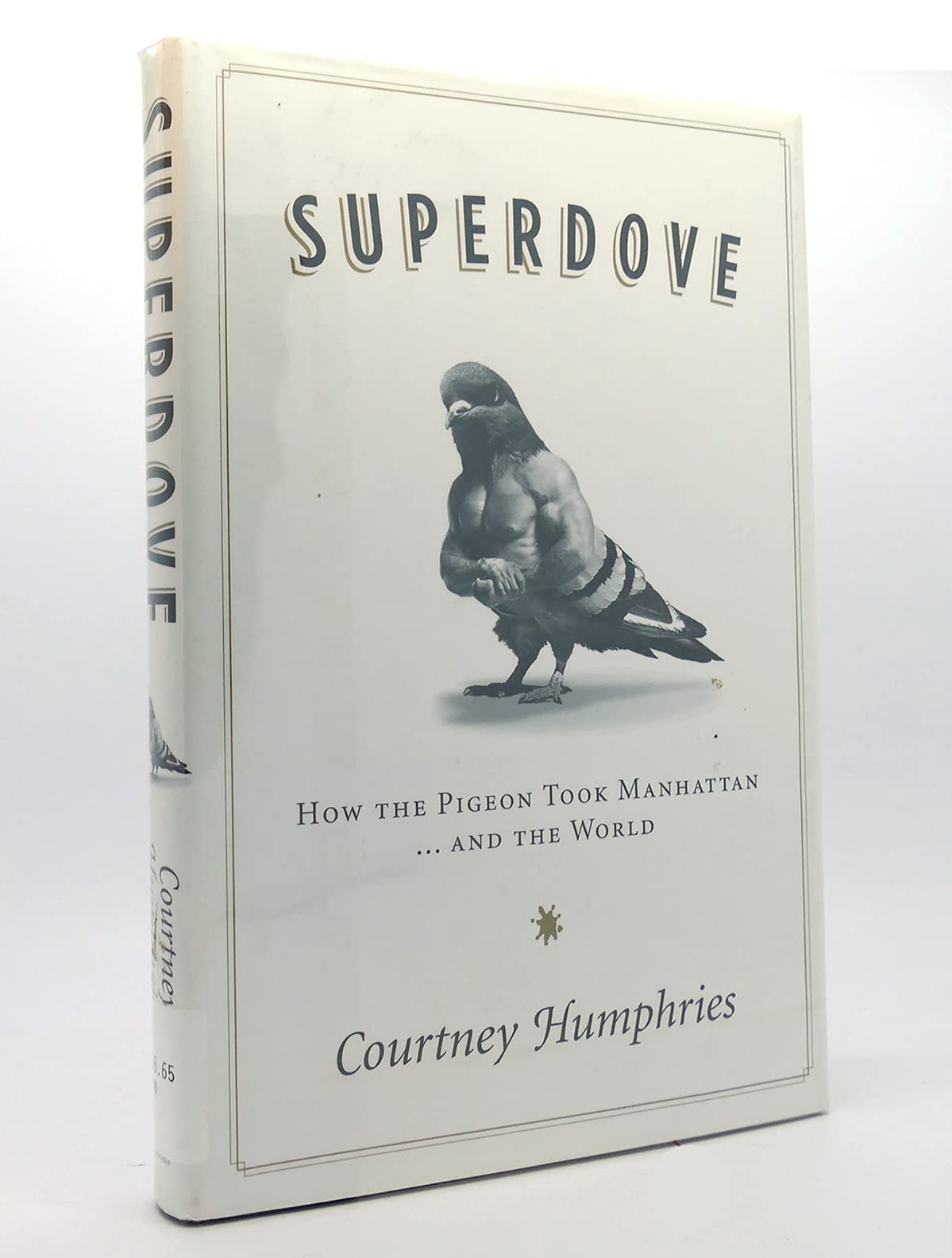



Why do we see pigeons as lowly urban pests and how did they become such common city dwellers? Courtney Humphries traces the natural history of the pigeon, recounting how these shy birds that once made their homes on the sparse cliffs of sea coasts came to dominate our urban public spaces. While detailing this evolution, Humphries introduces us to synanthropy: The concept that animals can become dependent on humans without ceasing to be wild; they can adapt to the cityscape as if it were a field or a forest. Superdove simultaneously explores the pigeon's cultural transformation, from its life in the dovecotes of ancient Egypt to its service in the trenches of World War I, to its feats within the pigeon-racing societies of today. While the dove is traditionally recognized as a symbol of peace, the pigeon has long inspired a different sort of fetishistic devotion from breeders, eaters, and artists—and from those who recognized and exploited the pigeon's astounding abilities. Because of their fecundity, pigeons were symbols of fertility associated with Aphrodite, while their keen ability to find their way home made them ideal messengers and even pilots. Their usefulness largely forgotten, today's pigeons have become as ubiquitous and reviled as rats. But Superdove reveals something more surprising: By using pigeons for our own purposes, we humans have changed their evolution. And in doing so, we have helped make pigeons the ideal city dwellers they are today. In the tradition of Rats , the book that made its namesake rodents famous, Superdove is the fascinating story of the pigeon's journey from the wild to the city—the home they'll never leave. “In prose as clear as water [Courtney Humphries] writes a compelling story of how pigeons conquered the world, while threading in history, anecdotes, and even the way that the birds we now consider a nusance helped Darwin create the theory of evolution.” - David Gessner, author of Return of the Osprey and Sick of Nature “Superdove is one of the best natural history reads I’ve had in years.” - Ted Kerasote, author of MERLE'S DOOR: LESSONS FROM A FREETHINKING DOG “Smart and affectionate all at once, that sheds light on how one animal’s “nature” can be another’s Fifth Avenue. Reading it is simply a delight.” - Robert Kanigel, Director, Graduate Program in Science Writing , MIT “Enteratining and thorough account of the bird’s colorful history.” - Audobon Magazine “Humphries makes us care about the lowly urban pigeon.” - Booklist “Accessible and well-researched account” - New Scientist “A cultural, historical, and biological study of the timeless human-pigeon relationship...giving meaning to a species you once saw as dirty and dull--if you saw them at all.” - New York Observer “How did this ‘un-bird,’ as some scientists deride Columbia livia, become part of every city’s natural environment? The answers span georgraphy, evolution, and culture, but the excellent SUPERDOVE goes beyond, to explore what pigeons reveal about human nature. It isn’t always pretty...Humphries is a wonderful storyteller, with a sly sense of humor and a light touch.” - New York Times Book Review “Humphries follows the pigeon’s development as a game bird, a cheap food source, a highly prized messenger service, and ultimately, a modern-day pest...Humphries succeeds in examining something everyone takes for granted, and proving that it’s worthy of a second look.” - The Onion “A fascinating biography.” - SEED Magazine “A first-person blend of science and culture.” - USA Today Why do we see pigeons as lowly urban pests and how did they become such common city dwellers? Courtney Humphries traces the natural history of the pigeon, recounting how these shy birds that once made their homes on the sparse cliffs of sea coasts came to dominate our urban public spaces. While detailing this evolution, Humphries introduces us to synanthropy: The concept that animals can become dependent on humans without ceasing to be wild; they can adapt to the cityscape as if it were a field or a forest. Superdove simultaneously explores the pigeon's cultural transformation, from its life in the dovecotes of ancient Egypt to its service in the trenches of World War I, to its feats within the pigeon-racing societies of today. While the dove is traditionally recognized as a symbol of peace, the pigeon has long inspired a different sort of fetishistic devotion from breeders, eaters, and artists—and from those who recognized and exploited the pigeon's astounding abilities. Because of their fecundity, pigeons were symbols of fertility associated with Aphrodite, while their keen ability to find their way home made them ideal messengers and even pilots. Their usefulness largely forgotten, today's pigeons have become as ubiquitous and reviled as rats. But Superdove reveals something more surprising: By using pigeons for our own purposes, we humans have changed their evolution. And in doing so, we have helped make pig