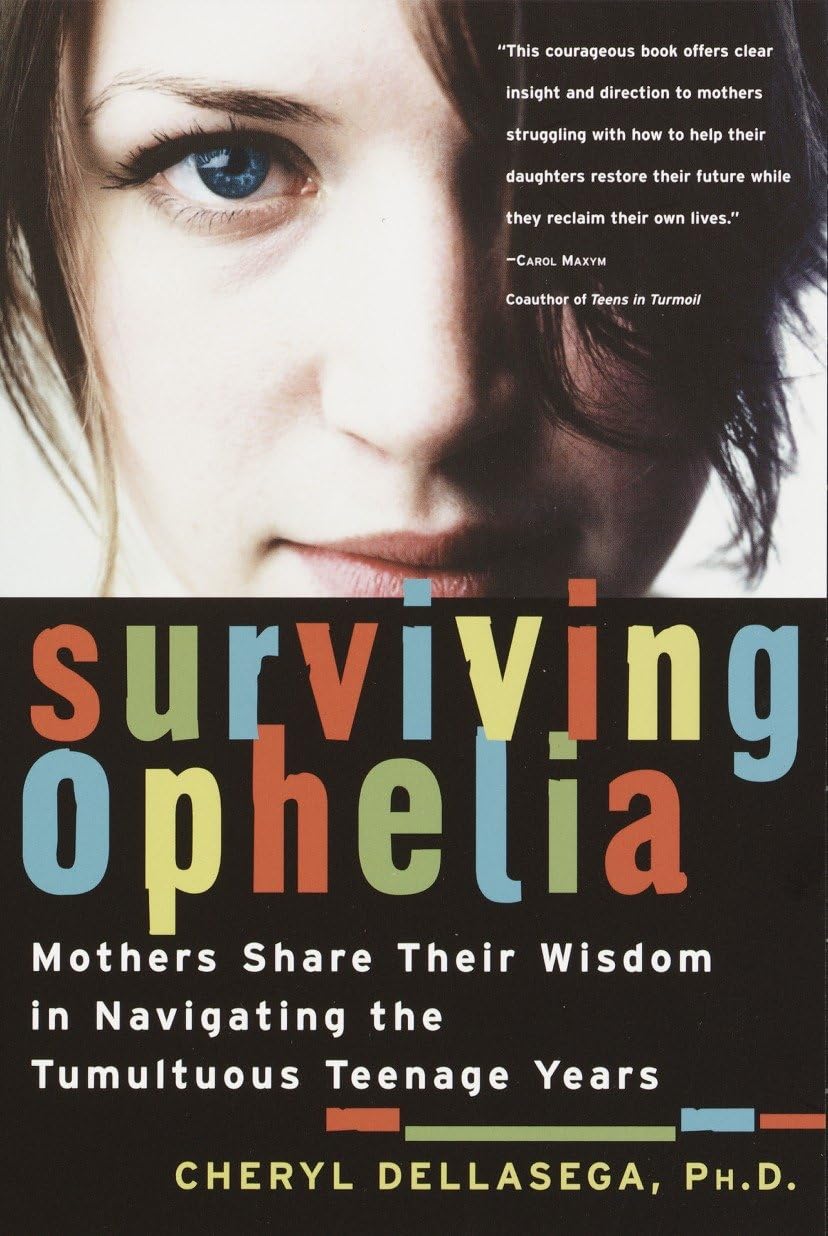
Surviving Ophelia: Mothers Share Their Wisdom in Navigating the Tumultuous Teenage Years
$11.09
by Cheryl Dellasega



Why are the teen years fraught with crisis for so many girls? Why do so many mother-daughter relationships deteriorate drastically at this time? When her own teenage daughter began to spiral out of control, therapist Cheryl Dellasega, Ph.D., launched a nationwide search to find answers— and hope. In this inspiring, compassionate book, Dellasega shares the strength and the wisdom of mothers who have seen their daughters through the tumult of adolescence. Drawing on the experiences of scores of mothers and daughters, Dellasega takes a hard look at the lives of girls in crisis—once happy, carefree children who are now struggling with eating disorders, unplanned pregnancies, substance abuse, and severe mental problems. These are stories of girls on the edge, and mothers who are trying everything to save them. Yet even in the most desperate situations, Dellasega hears the same clear message: the key to survival is the support and the understanding of others going through the same thing. Surviving Ophelia is a book that provides the community that mothers of troubled teenage girls need more than anything. Powerful and heartfelt, this book captures both the pain and the strength of mothers who are living with the daily challenge of raising teenage daughters today. teen years fraught with crisis for so many girls? Why do so many mother-daughter relationships deteriorate drastically at this time? When her own teenage daughter began to spiral out of control, therapist Cheryl Dellasega, Ph.D., launched a nationwide search to find answers and hope. In this inspiring, compassionate book, Dellasega shares the strength and the wisdom of mothers who have seen their daughters through the tumult of adolescence. Drawing on the experiences of scores of mothers and daughters, Dellasega takes a hard look at the lives of girls in crisis once happy, carefree children who are now struggling with eating disorders, unplanned pregnancies, substance abuse, and severe mental problems. These are stories of girls on the edge, and mothers who are trying everything to save them. Yet even in the most desperate situations, Dellasega hears the same clear message: the key to survival is the support and the understanding of others going through the same thing. teen years fraught with crisis for so many girls? Why do so many mother-daughter relationships deteriorate drastically at this time? When her own teenage daughter began to spiral out of control, therapist Cheryl Dellasega, Ph.D., launched a nationwide search to find answers— and hope. In this inspiring, compassionate book, Dellasega shares the strength and the wisdom of mothers who have seen their daughters through the tumult of adolescence. Drawing on the experiences of scores of mothers and daughters, Dellasega takes a hard look at the lives of girls in crisis—once happy, carefree children who are now struggling with eating disorders, unplanned pregnancies, substance abuse, and severe mental problems. These are stories of girls on the edge, and mothers who are trying everything to save them. Yet even in the most desperate situations, Dellasega hears the same clear message: the key to survival is the support and the understanding of others going through the same thing. “This courageous book offers clear insight and direction to mothers struggling with how to help their daughters restore their future while they reclaim their own lives.” —CAROL MAXYM Co-author of Teens in Turmoil “Thank you [Cheryl Dellasega] for showing mothers everywhere that we are not alone in our struggle to help our daughters. . . . Surviving Ophelia is mesmerizing and the truth of its stories resonates.” —SUE WELLMAN, President The Ophelia Project There are no pictures of me cuddling Ellen to my heart for the first time in the delivery room, but it doesn’t matter. Every detail is clear in my mind: her perfect, round face, the fuzz of soft gold hair crowning the very top of her head, and her dazed dark eyes, squinting against the glare of the bright, sterile lights. “You are the daughter I have always dreamed of,” I whispered, resting my cheek against the smooth skin of her forehead. Lying there with her on my chest, I had a vision of the future and all the things she would accomplish. Like a movie on fast-forward, I saw her doing well in school, having loyal friends, and being a kind person. She would go to a good college and would someday make a positive difference in this world. Mostly, I pictured all the good times we would have together. The year after her birth, 1984, was probably the happiest one of my life. I had a five-year-old son, Matt, from my first marriage, who readily adapted to his role as “big brother,” a great second husband, a job teaching at a small university that I liked, and Ellen. When our youngest son, Joe, was born eighteen months after her, I rejoiced again, thrilled she would have a sibling close to her age. “What a pleasant baby!” was the most frequent comment I heard