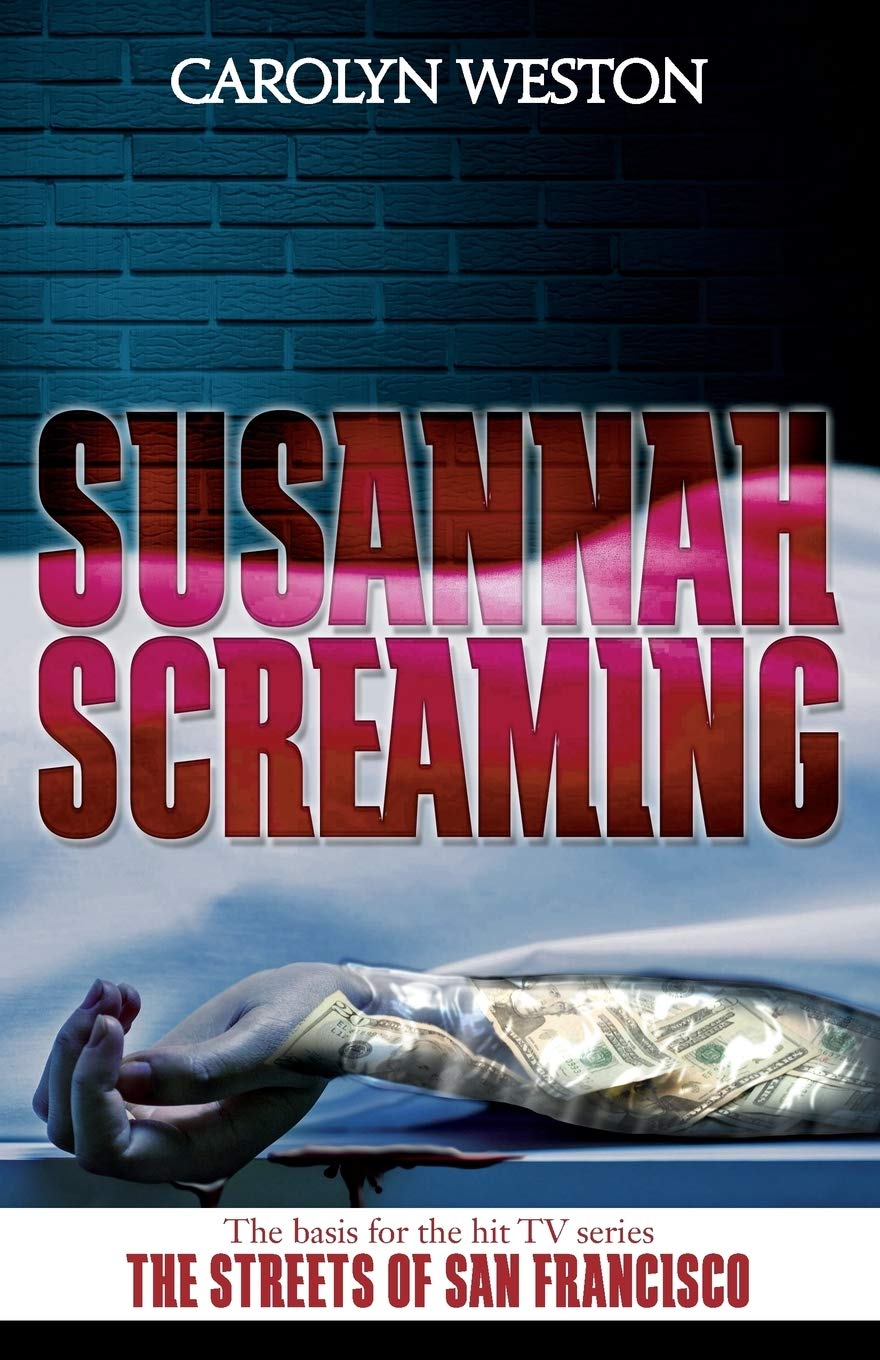
Susannah Screaming: A Krug and Kellog Thriller (The Krug and Kellog Thriller Series)
$13.99
by Carolyn Weston



The second blockbuster thriller in the Krug & Kellog series…which became the hit TV show “The Streets of San Francisco” It’s the turbulent 1970s, a time of social upheaval. University-educated ex-surfer Casey Kellog is the youngest homicide detective on the force. He’s teamed up with Al Krug, an older, tougher, street-wise cop resistant to change. Their latest case involves a vicious hit-and-run death: a driver in a Mercedes chases a motorcyclist, hits him, and then backs up over him again, making certain that he’s road kill. The investigation takes a bizarre turn when the victim is undressed in the morgue and the two cops discover that his corpse is plastic-wrapped in twenty-dollar bills… Carolyn Weston grew up in Hollywood during the Depression. She played hooky from school in movie theaters and libraries, honing the craft that would make her books so remarkable. During World War II, she worked in an aircraft plant and then did odd jobs around the country before writing Poor Poor Ophelia, the first Al Krug / Casey Kellog police procedural... which became the hit TV series The Streets of San Francisco. Two more books in the series, every bit as good as Ed McBain's 87th Precinct and just as memorable, followed and all three are proudly being published by Brash Books. Susannah Screaming A Krug & Kellog Thriller By Carolyn Weston Brash Books, LLC Copyright © 2015 Brash Books LLC All rights reserved. ISBN: 978-1-941298-50-3 CHAPTER 1 "This is KCOP," announced the gentle disembodied FM voice. "Kay-cop, your Santa Monica station." Bringing the best in music. And five minutes of news. Every hour on the hour. What sounded like theme music floated from the hidden speakers. Yawning, leaning back against the pink-enameled Maytag which spun his meager wash, Rees tried to identify the melody, but he could not. The washer pulsed warmly against his buttocks. Felt good, he decided. My friend, the machine. Lovable laundromats for lonely hearts. "Four o'clock," the radio was telling him portentously. Weather would be fi ne in Southern California this Monday morning, but with low coastal fog night and morning. The news was the usual collection of catastrophes. Then the music continued, bland as Muzak, almost as comforting as sleep. Insomniacs' delight, Rees thought. Anything was better than silence at four in the morning, even this mindless burble of electronic sound which probably ran night and day here, along with the gas dryers, the rows of washers, the water heaters hissing and humming like benign monsters behind a pink-painted partition. His laundry had five minutes more on its cycle. Lighting a cigarette, he wandered down the long, narrow washing-machine-lined storefront and looked out the plate-glass display window at the dark street. Montana Avenue. He had noticed the name and this twenty-four-hour laundromat when he had passed by yesterday. At this hour the street was dark and deserted, a ghost-town thoroughfare. Across the way was a garden and florist shop. On this side, across the alley beside the laundromat, was the liquor store and market where he had shopped yesterday for the scotch and soda, the cheese and crackers, which were his version of a spinster's tea and toast. On the dark pane, his own reflection peered back at him, dim and transparent, like a photo negative held up to bad light. No mistaking that image, he thought bleakly. The loner. Behind his eyes throbbed the slow ache of constant fatigue which had become chronic in the last eighteen months, for he had lost the habit of sleep. Even his bones were tired. Self-pity had become a fearful problem. But the face which looked back at him was not pitying. A sallow, dark-browed Celtic visage — the face of a fanatic, Ellen had once said. He had laughed at the time. But he'd been happy then. The washing machine clicked offbehind him. Simultaneously the rumble of the hidden water heaters lessened, and as Rees dug his steamy heap of clothing out of the washer, he could hear a droning far off. A summer sound. Like bees in a garden. It grew louder and louder while he tossed his laundry into one of the dryers standing open like a flimsy old-fashioned safe, the somnolent hum becoming a mechanical roar — a motorcycle approaching at high speed. And now he could hear a car also, perhaps a block behind. A chase? he wondered. Cops and robbers. Diverted, Rees slammed the dryer shut. But he forgot the nickels which made it go. For sudden light flared across the front window of the laundromat. He caught a fleeting glimpse of the lunatic shadow crouched behind the single headlamp as the motorcycle screeched into the alley, booming by the building so violently that the front panes shivered. Christ, at that speed, the fool had to skid. Idiot, idiot. He heard the cycle reeling out of control and rushed for the back door of the laundromat which let into a parking area beside the alley. But he wasn't quick enough. The clang and clatter of ripping metal and br