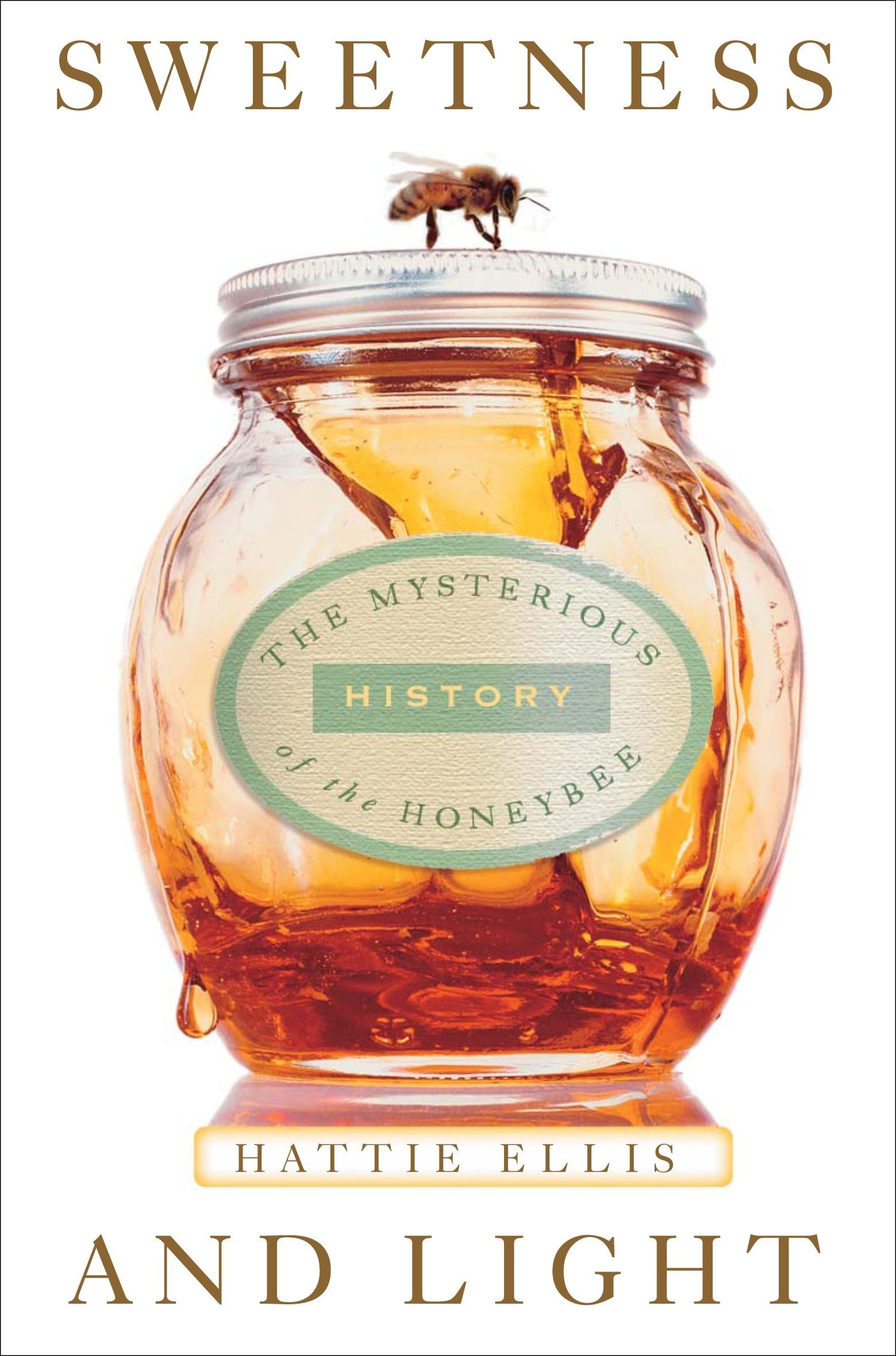



Did you know that Abraham Lincoln and Muhammad Ali both consumed bee pollen to boost energy, or that beekeepers in nineteenth-century Europe viewed their bees as part of the family? Or that after man, the honeybee, Apis mellifera, is the most studied creature on the planet? And that throughout history, honey has been highly valued by the ancient Egyptians (the first known beekeepers), the Greeks, and European monarchs, as well as Winnie the Pooh? In Sweetness and Light , Hattie Ellis leads us into the hive, revealing the fascinating story of bees and honey from the Stone Age to the present, from Nepalese honey hunters to urban hives on the rooftops of New York City. Uncovering the secrets of the honeybee one by one, Ellis shows how this small insect, with a collective significance so much greater than its individual size, can carry us through past and present to tell us more about ourselves than any other living creature. “Deftly blending natural history, human history, literature, biography, and biology, Ellis provides a graceful survey as entertaining as it is enlightening.” — Los Angeles Times "We have chosen to ?ll our hives with honey and wax; thus furnishing mankind with the two noblest of things, which are sweetness and light." --Jonathan Swift (1667-1745) "Sweetness and Light is the fascinating story of bees and honey from the Stone Age to the contemporary cutting edge; from Nepalese honey hunters to urban hives on the rooftops of New York City. Honey is nature in a pot, gathered in by bees from many different environments--Zambian rain forests, Midwestern prairies, Scottish moors, and thyme-covered Sicilian mountainsides, to name a few. But honey is much more than just a food, and bees are more than mere insects. The bee is the most studied creature on the planet next to man, and it and its products have been harnessed by doctors, philosophers, scientists, politicians, artists, writers, and architects throughout the ages as both metaphor and material. In colorful, mellifluous language that delights and excites on every page, Hattie Ellis interweaves social history, popular science, and traveler's tales into a buzzing chronological narrative. She explores the mysterious ways of bees, such as how they can make up to twenty-four thousand journeys to produce a single pound of honey, and she takes the lid off the hive to reveal as many as a hundred thousand bees living and working together in total discipline. Great thinkers throughout the centuries have been inspired by bees, from Aristotle to Shakespeare to Charles Darwin to Frank Lloyd Wright, echoing, at every stage, the wider scienti?c discoveries and philosophical movements that have changed our understanding of the world. The unfolding story of bees also transports us into broader areas of historicalexperience: from the Egyptian pharaohs' elaborate burial chambers in the pyramids, the medieval guilds, the berserk drunken rituals of mead drinking, and the Mormons' epic journey west to candlelight in churches, sealing wax, and feast and famine. The bee existed long before man; without bees, the planet and its inhabitants would soon begin to die. This small insect, with a collective significance so much greater than its individual size, can carry us through past and present to tell us more about ourselves than any other living creature. Hattie Ellis is an award-winning columnist and author who specializes in writing about food. To tell the story of bees and honey in all of its wondrous particulars, she traversed the globe from Sicilian mountainsides to Parisian parks, from Scottish moorlands to London streets, from the New Zealand bush to the California coast. She lives in East Sussex, England. CHAPTER ONE IN THE BEGINNING: EVOLUTION Honey. It starts in the spring. With the brightening air comes a quickening of the world. All over the planet, plants plug into the energy of daylight. Systems are switched on; leaves feed on light; sap circulates. As spring spreads to summer, flowers in uncountable quantities open out. Within the plants lie small, secret pockets of nectaries, and within these glands swell droplets of sweet liquid. This sugary substance is a symbol of all that is desirable in nature: nectar. The female worker honeybee hovers, lands, and bends into the center of a flower, head down for a feed. She sucks up the nectar, then she’s off to another one—accelerating so fast your eyes are left behind. She collects the nectar in a transparent, pear-shaped bag called a honey sack that lies at the front of her abdomen as part of the gut. When this sack bulges full, she flies back to her colony. In the dark of the hive, this forager bee passes the nectar on to the house bees. The nectar will be passed from bee to bee, becoming progressively more concentrated as it goes. The bees push the nectar into flat drops on the underside of the proboscis, and exposure to air helps evaporate some of the liquid. A drop will be pumped in and out many