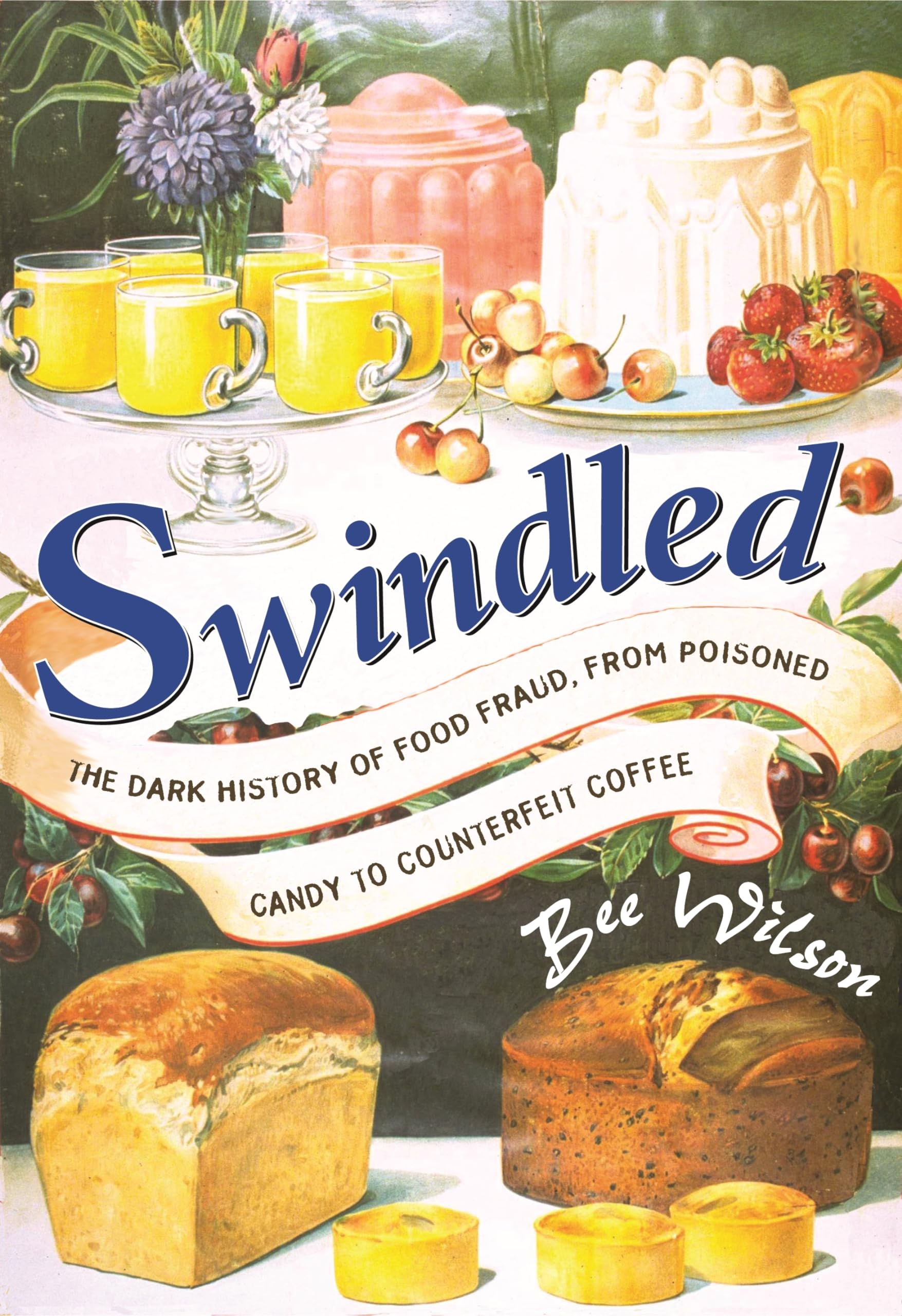
Swindled: The Dark History of Food Fraud, from Poisoned Candy to Counterfeit Coffee
$21.53
by Bee Wilson



Bad food has a history. Swindled tells it. Through a fascinating mixture of cultural and scientific history, food politics, and culinary detective work, Bee Wilson uncovers the many ways swindlers have cheapened, falsified, and even poisoned our food throughout history. In the hands of people and corporations who have prized profits above the health of consumers, food and drink have been tampered with in often horrifying ways--padded, diluted, contaminated, substituted, mislabeled, misnamed, or otherwise faked. Swindled gives a panoramic view of this history, from the leaded wine of the ancient Romans to today's food frauds--such as fake organics and the scandal of Chinese babies being fed bogus milk powder. Wilson pays special attention to nineteenth- and twentieth-century America and England and their roles in developing both industrial-scale food adulteration and the scientific ability to combat it. As Swindled reveals, modern science has both helped and hindered food fraudsters--increasing the sophistication of scams but also the means to detect them. The big breakthrough came in Victorian England when a scientist first put food under the microscope and found that much of what was sold as "genuine coffee" was anything but--and that you couldn't buy pure mustard in all of London. Arguing that industrialization, laissez-faire politics, and globalization have all hurt the quality of food, but also that food swindlers have always been helped by consumer ignorance, Swindled ultimately calls for both governments and individuals to be more vigilant. In fact, Wilson suggests, one of our best protections is simply to reeducate ourselves about the joys of food and cooking. With the revelations in recent months of tainted food�salmonella-infected jalape�os, melamine-laced milk�Wilson�s latest treatise, on contaminated, adulterated, and fake foods in the modern era, feels almost prophetic. If there�s a whiff of pedantry to the enterprise, Wilson overwhelms it with sheer detail: the flavor of lead salts, so delicious that they were used to sweeten wine; the fad for mock food in wartime Britain (mock chops made of flour, potato, and onion); the fact that Campbell�s concealed marbles in the soup photographed for advertisements, to make it look thicker; Donald Rumsfeld�s role as a champion of aspartame. No government intervention can solve the problem, Wilson concludes, without consumer re�ducation in how real food tastes. �Buy food fresh, in whole form,� she writes. �Cook it yourself and familiarize yourself with the ingredients that go into proper food, so that when you are served a fake you will know the difference, and have the confidence to complain.� Copyright ©2008 Click here to subscribe to The New Yorker "One of Choice's Outstanding Academic Titles for 2009" "Shortlisted for the 2008 André Simon Book Awards" "British food writer Bee Wilson's new book Swindled could not have been published at a more timely moment. Subtitled The Dark History of Food Fraud From Poisoned Candy To Counterfeit Coffee , it's a masterwork of Apocalypse Chow Anthropology, and examines the intentionally adulterated foods foisted on American and British eaters from Victorian times to the present. Swindled reads like an often-funny detective story with crazy characters perpetrating incredible foodie crimes--except that each case Ms. Wilson presents is true. Along the way, Ms. Wilson carefully points out how government policies that have liberalised free trade and encouraged globalization have served to increase profits for foodie crims, while exposing innocent eaters to grave harm." ― Haphazard Gourmet Girls blog "Wilson's latest treatise, on contaminated, adulterated, and fake foods in the modern era, feels almost prophetic. If there's a whiff of pedantry to the enterprise, Wilson overwhelms it with sheer detail: the flavor of lead salts, so delicious that they were used to sweeten wine; the fad for mock food in wartime Britain (mock chops made of flour, potato, and onion); the fact that Campbell's concealed marbles in the soup photographed for advertisements, to make it look thicker; Donald Rumsfeld's role as a champion of aspartame." ― The New Yorker "[L]ively and unsettling. . . . The blatant frauds of the nineteenth and early twentieth centuries are set alongside the more subtle (and mostly legal) tinkering with food in the modern world. . . . Wilson places contemporary concerns about what we are eating in an original and thought-provoking context." ---Paul Freedman, Times Literary Supplement "Timely, witty and purposeful, this thorough history should open a lot of eyes, and close some mouths." ― Publishers Weekly "[Wilson] wants to shake us awake, to make us look afresh at the food we eat. She does so triumphantly. . . . It is her considered and often humorous approach that makes this book so successful--and so alarming." ---Clare Clark, Times "Food producers, and whatever they can get away with