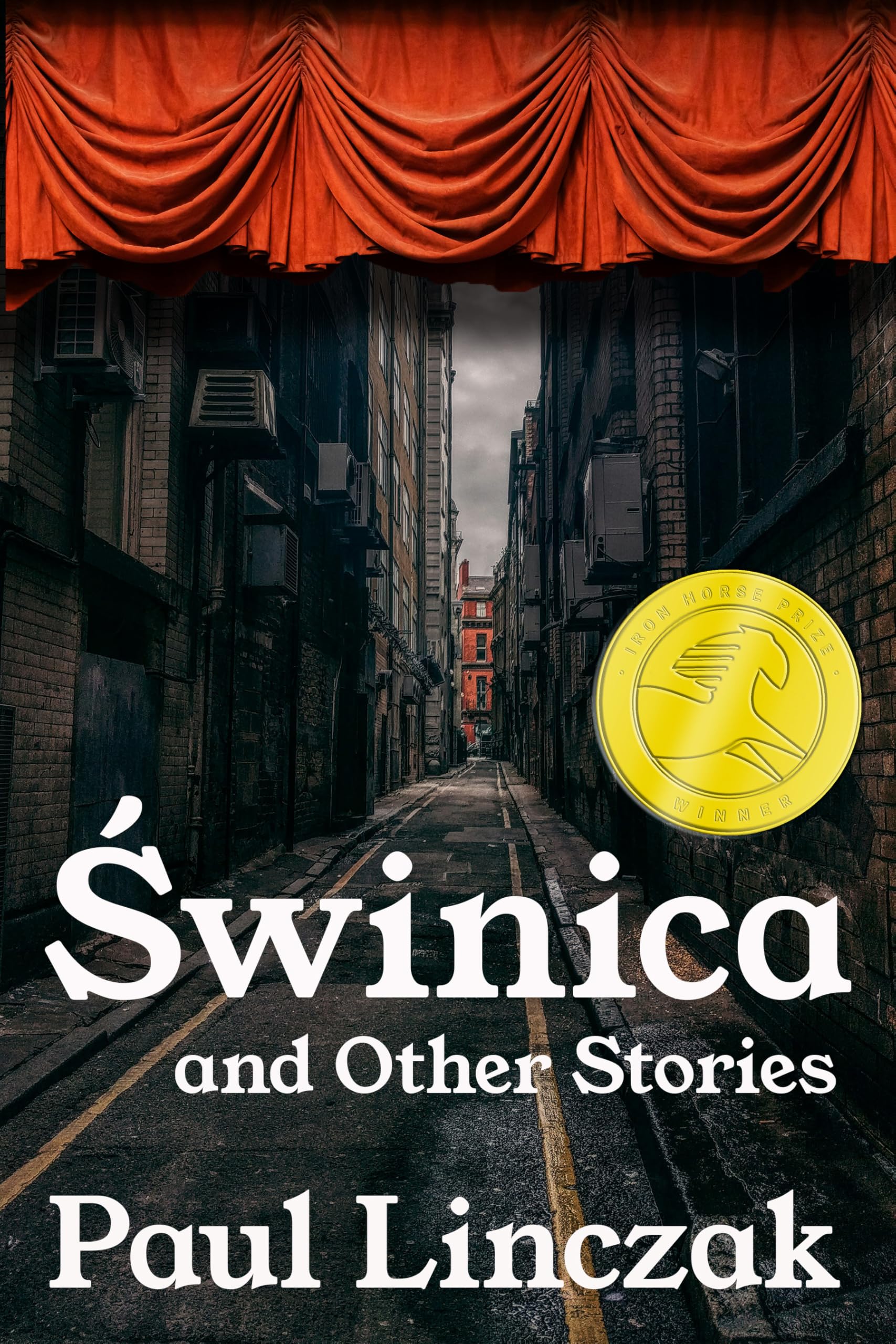



This debut collection takes readers to small-town Ohio, New York City, and beyond, presenting the unique voices of troubled characters―Polish and Ukrainian, young and old, rich and poor―as they face life-altering challenges and struggle with their faith in religion, family, society, and themselves. A Polish immigrant catches his son making porn and tries to punish the local video store for inspiring him; a Christian teenager keeps her rapist’s baby, only to be banned from her high school yearbook; a pastor shocks his congregation by using his sermon to confess to an old crime; a lawyer haunted by his sister’s murder is asked to witness the murderer’s execution; and a daughter of Russian immigrants, now successful on Wall Street, gets stuck in rapidly rising waters after ignoring warnings about Superstorm Sandy. In ten unforgettable stories that draw on a range of inspirations, from the Bible to recent headlines, Paul Linczak boldly probes the dark to ask about the ideals we believe in and illuminates the powerful human moments that spring from confrontations with an often merciless, and aggressively changing, world. Unsparing and tender, with a vision that ranges across borders without missing the small, telling detail, Świnica vividly presents a slice of American life, full of danger, bewilderment, determination, and hope. Paul Linczak was born in Ohio. He was educated at the University of Rochester, the Jagiellonian University, and Syracuse University, where he was a Cornelia Carhart Ward Fellow in the MFA program. His short fiction has appeared in The Carolina Quarterly , Evergreen Review , Fiction International , Meridian , and other publications. He lives in New York City. According to legend, the spirit of the Polish king Bolesław the Brave rests in a mountain massif near the country’s southern border, waiting until he’s needed to defend his people once again. The massif is called Giewont, and from a certain angle it really does look like the profile of someone at rest: Three peaks represent chin, nose, and brow. From the tallest, the nose, you can supposedly see all of Poland. Atop this rocky schnoz, nine hundred years after Bolesław’s reign, highlanders erected a giant iron cross, claiming the mountain―and Poland―for Christianity. Today, Giewont is a pilgrimage site, a Polish Mount Rushmore. Its peaks are perpetually crowded with proud Poles and selfie-taking tourists. But the mountain I’m attempting is taller, more difficult, and four miles east: Świnica. The name comes from the Polish word for pig. It’s not that I have no interest in stepping on a royal face, and, I’ll admit, I’m prone to tourist traps and harbor a deep-seated desire to do the popular thing. It’s just that Świnica is the mountain I have to climb, because, fifteen years ago, my first attempt failed. Back then, two guys came with me: Ken the Canadian and Klaus the German. We were in a summer language program in Kraków and decided to explore the Tatras one Saturday in late July. I was used to Midwestern plains; it was the first time I saw real mountains, and I was awed. Ancient, majestic rock, sunlight rolling down craggy green faces. In the cable car we took to the top of Kasprowy Wierch, my friends asked if my backpack contained a sweater or hiking shoes. I wore a T-shirt and shorts; all I carried was a ham sandwich and a copy of Nadine Gordimer’s The Conservationist . It was the first hint, to them and to me, of my woeful provinciality. I mean, who goes mountain climbing in a T-shirt and Keds? But the weather on Kasprowy was fine, warm with a breeze. I thought I’d be OK.