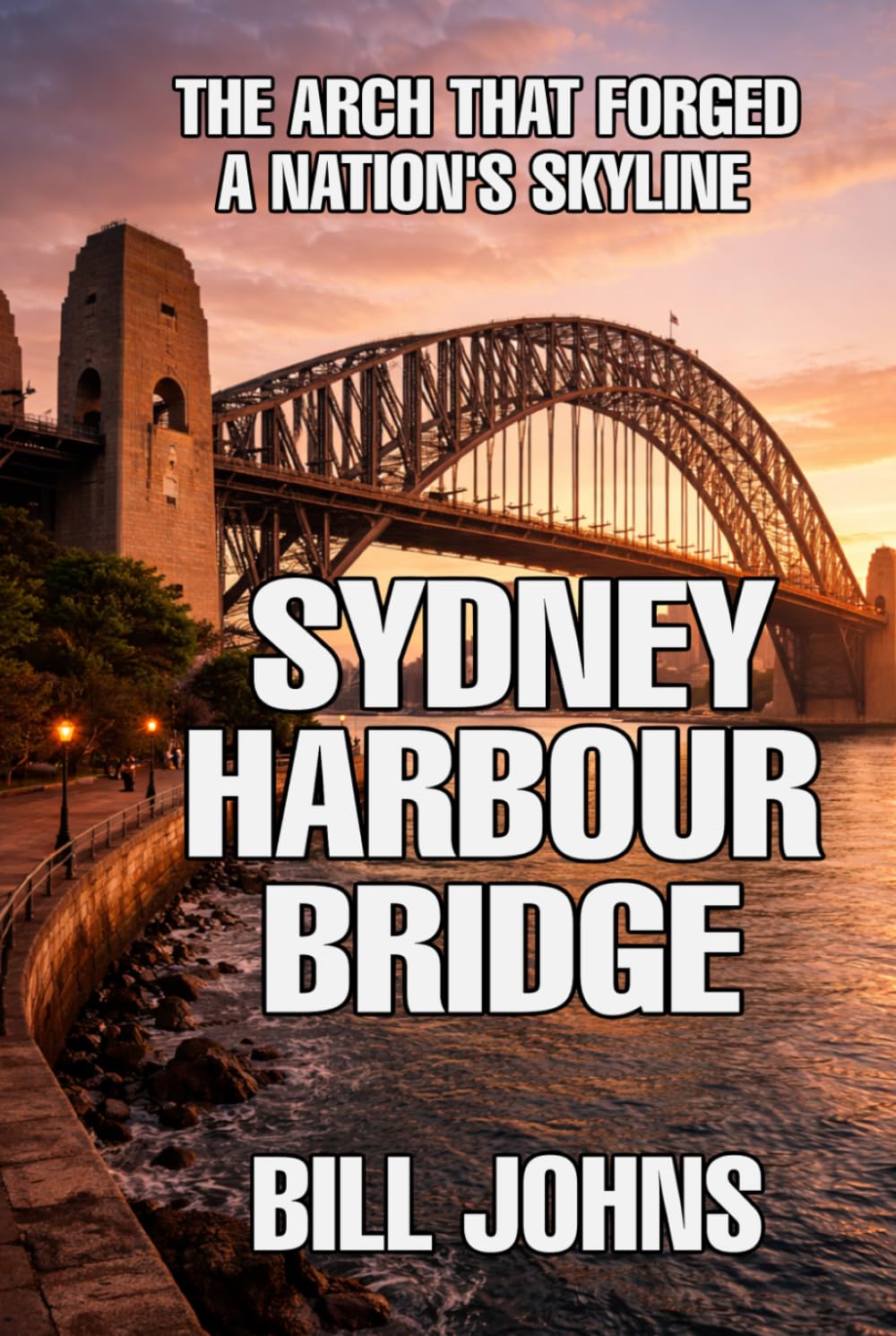
Sydney Harbour Bridge: The Arch That Forged a Nation’s Skyline (The Great Crossings)
$29.99
by Bill Johns



Sydney Harbour Bridge history, engineering, construction, and cultural meaning—an epic narrative of Australia’s most iconic landmark and the forces that shaped it. Discover the Sydney Harbour Bridge as never before: a sweeping literary nonfiction account of design, risk, labor, and national identity at the edge of water. Sydney Harbour Bridge: The Arch That Forged a Nation’s Skyline tells the story of one of the world’s most recognizable bridges not as static infrastructure, but as a living structure shaped by geography, ambition, and time. Rising above Sydney Harbour in 1932, the steel arch did more than connect two shores—it redefined how a city moved, how a nation saw itself, and how an image could travel beyond its place of origin. This book traces the bridge from its earliest pressures: a fragmented harbor where ferries carried the burden of daily life, and where distance imposed limits on labor, commerce, and expansion. It follows the emergence of John Bradfield’s vision for an integrated transport system and the decision to build a massive steel through-arch capable of carrying rail, road, and pedestrian traffic across open water. The narrative moves through the industrial networks that fabricated over 50,000 tonnes of steel, the high-risk labor of workers suspended above the harbor, and the precise engineering required to bring two advancing halves of an arch into alignment in August 1930. But the Sydney Harbour Bridge is not confined to its construction. As traffic expanded in the postwar decades, the bridge absorbed new pressures—automobile growth, urban sprawl, and the continuous reordering of movement across its span. Engineering adaptations, maintenance cycles, and structural monitoring reveal a bridge that is never finished, sustained through constant attention to corrosion, load, and time. The book explores how infrastructure becomes process, not object. At the same time, the bridge entered global consciousness. Through photography, broadcast media, and international tourism, its image became inseparable from Sydney itself, often paired with the Sydney Opera House to define a skyline recognized worldwide. Cultural practices—from New Year’s Eve fireworks to the ascent of the BridgeClimb—transformed the structure into a site of ritual, spectacle, and personal encounter, even as it continued to function as a working transport artery. Drawing on engineering records, historical archives, and cultural analysis, this book presents the Sydney Harbour Bridge as both achievement and condition—a structure that carries not only vehicles, but the accumulated decisions, risks, and identities of those who built and use it. It is a story of steel and water, of permanence sustained through change, and of a crossing that reshaped the meaning of distance. For readers of engineering history, cultural history, and landmark architecture, this is a narrative that moves beyond the familiar image to reveal the forces that hold it in place. Step onto the span, look beneath the arch, and consider what remains in the structures we inherit—and what it asks of us to remember.