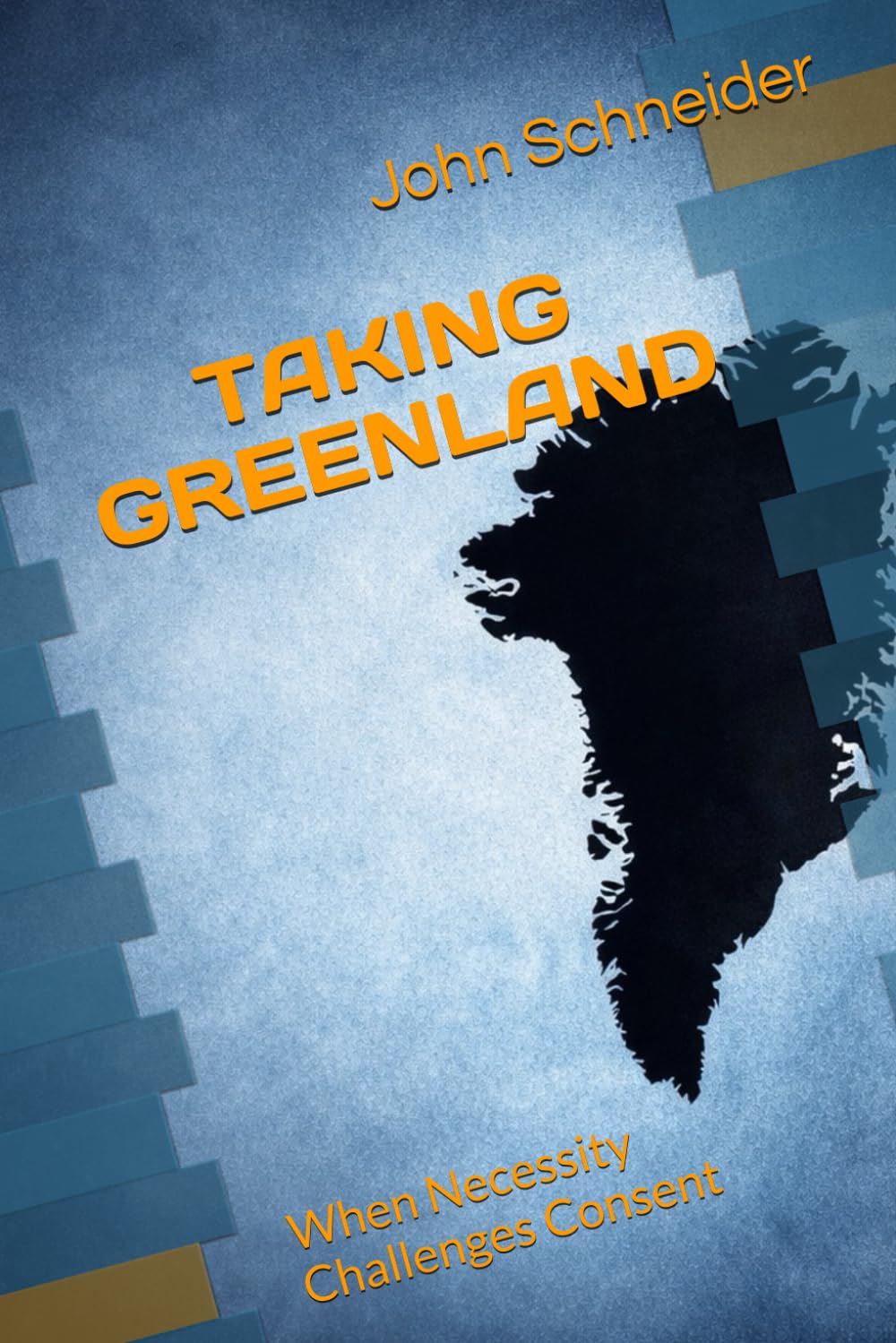



What if Greenland is no longer optional? For centuries, Greenland existed at the margins of global attention—too cold, too distant, too difficult to matter. That era is over. In Taking Greenland , historian John R. Schneider examines how the world’s largest island has moved from obscurity to the center of modern geopolitics, climate science, and strategic competition. As ice melts, shipping routes shift, and resources once locked beneath glaciers become accessible, Greenland is no longer a frozen afterthought. It is a keystone. This book is not about conquest fantasies or political theater. It is about systems—how climate accelerates power, how geography reshapes strategy, and how law, legitimacy, and restraint determine whether global order holds or fractures. Schneider traces Greenland’s story from deep geological time through Indigenous life, colonial miscalculation, Cold War surveillance, and into a present moment where nations quietly recalculate what the Arctic now means. Along the way, Taking Greenland confronts uncomfortable questions: What happens when strategic necessity collides with self-determination? Can alliances survive when geography becomes too valuable to ignore? And what does it mean for the United States—and the world—when places once protected by ice become exposed by water? Written with the precision of a historian and the urgency of a system under stress, Taking Greenland reveals why the future of the Arctic is not a regional issue, but a global one—and why decisions made there will echo far beyond the ice. Greenland is changing. The world is arriving. And the rules we thought were settled may not survive the thaw.