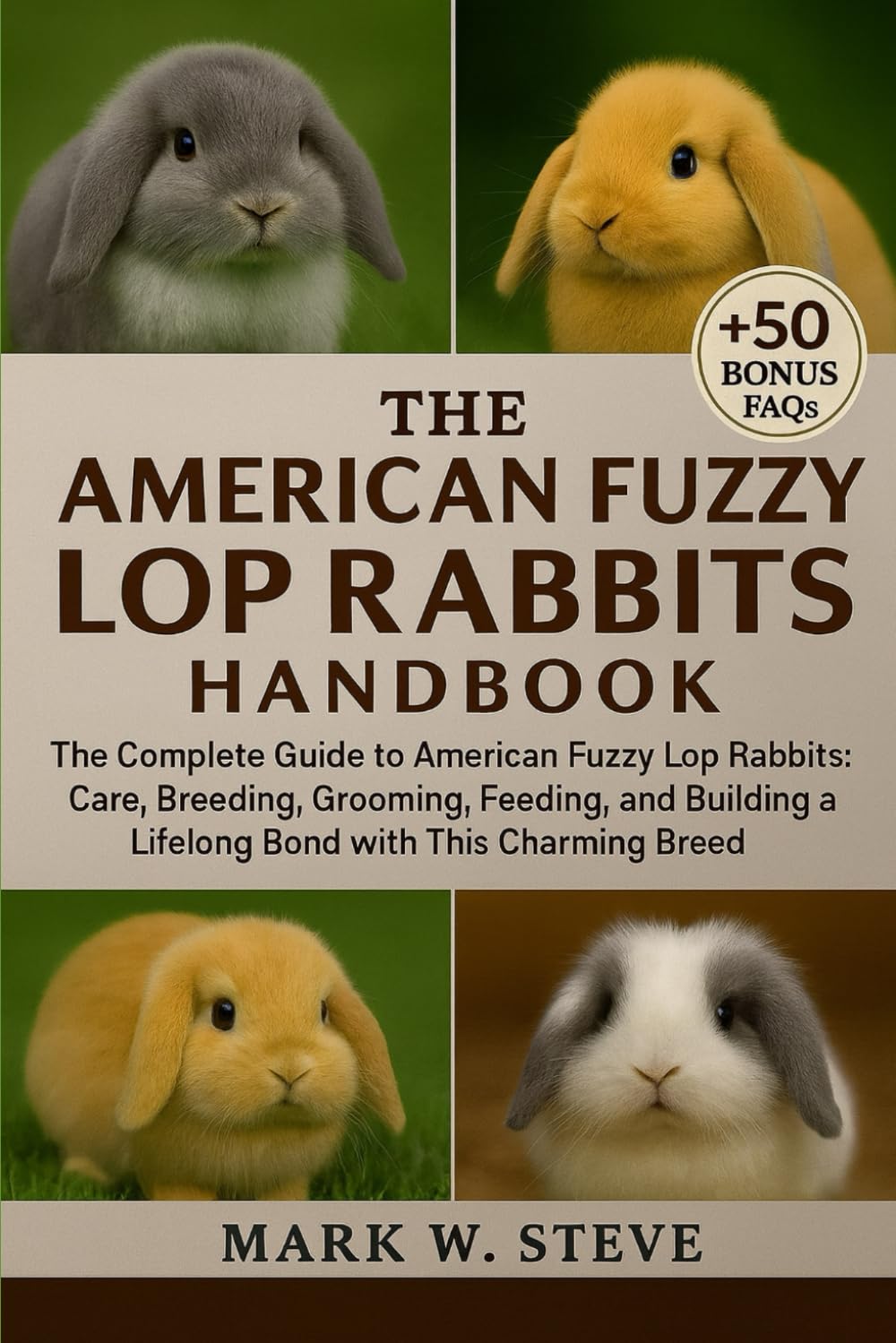
THE AMERICAN FUZZY LOP RABBITS HANDBOOK: The Complete Guide to American Fuzzy Lop Rabbits: Care, Breeding, Grooming, Feeding, and Building a Lifelong
$14.99
by MARK W STEVE



Introduction to American Fuzzy Lop Rabbits The American Fuzzy Lop is one of the most charming, distinctive, and captivating breeds in the domestic rabbit world. Known for its compact body, bold personality, and a coat of wool that gives it a “miniature Angora-like” appearance, the American Fuzzy Lop, often shortened to “AFL,” has developed a reputation both as an affectionate pet and as a highly competitive show rabbit. To understand and appreciate this breed fully, it is important to look at its history of development, the role of recognition by organizations such as ARBA and specialty clubs, and its rise in popularity among rabbit enthusiasts across North America and beyond. The history of the breed’s development is a fascinating story of intentional breeding efforts and accidental discoveries that eventually led to the creation of a new breed standard. The roots of the American Fuzzy Lop can be traced back to the breeding of Holland Lops in the United States during the 1970s and 1980s. Holland Lops were being developed in various colors and patterns, including the broken pattern variety. Breeders were eager to achieve broken-pattern Holland Lops with the compact body and lopped ears that define the breed. To introduce the broken pattern into Holland Lops, breeders crossed them with English Spots, a breed already established for its broken coat pattern. This cross achieved the goal of adding broken markings but also introduced an unintended genetic surprise: the wool gene. The wool gene, recessive in nature, occasionally produced offspring with coats that were longer and woolier than standard Holland Lops. At first, these wooly Hollands were considered mismarked or undesirable for the show table, but some breeders noticed the charm of these rabbits and began to consider whether they might represent something new. During the early 1980s, breeders such as Patty Greene-Karl of Pennsylvania took particular interest in these wooly Hollands. Rather than discarding them as “faults,” she began developing them into a consistent type with their own identity. She carefully selected for the wool coat while maintaining the compact Holland Lop body and distinct lop ears. Over generations of selective breeding, what began as an accidental byproduct transformed into a small, wool-coated lop rabbit with a stable appearance and a personality as delightful as its looks. This marked the true beginning of the American Fuzzy Lop as a recognized breed. The “Fuzzy” in its name directly references its coat, which resembles Angora wool but in a smaller, denser form that requires regular but not overwhelming grooming. The path to recognition by ARBA and breed clubs was not immediate. Gaining recognition from the American Rabbit Breeders Association is a rigorous process requiring consistency in type, weight, color varieties, and overall breed standard. The initial attempts at presentation to ARBA faced setbacks because the early American Fuzzy Lops lacked consistency. Some retained too much Holland Lop influence, others displayed wool that was not uniform, and body types varied too widely. However, dedicated breeders refined their programs, working tirelessly to bring uniformity in both structure and coat. By 1989, the American Fuzzy Lop was officially recognized by ARBA as a distinct breed, cementing its place in the rabbit world. This recognition was a milestone, as it meant AFLs could now be shown in ARBA-sanctioned competitions, compete for national awards, and have their standards preserved in the ARBA Standard of Perfection. Alongside ARBA recognition, specialty clubs emerged, such as the American Fuzzy Lop Rabbit Club (AFLRC), which today plays a crucial role in promoting the breed, educating breeders, and supporting the growth of AFLs in shows and pet homes.