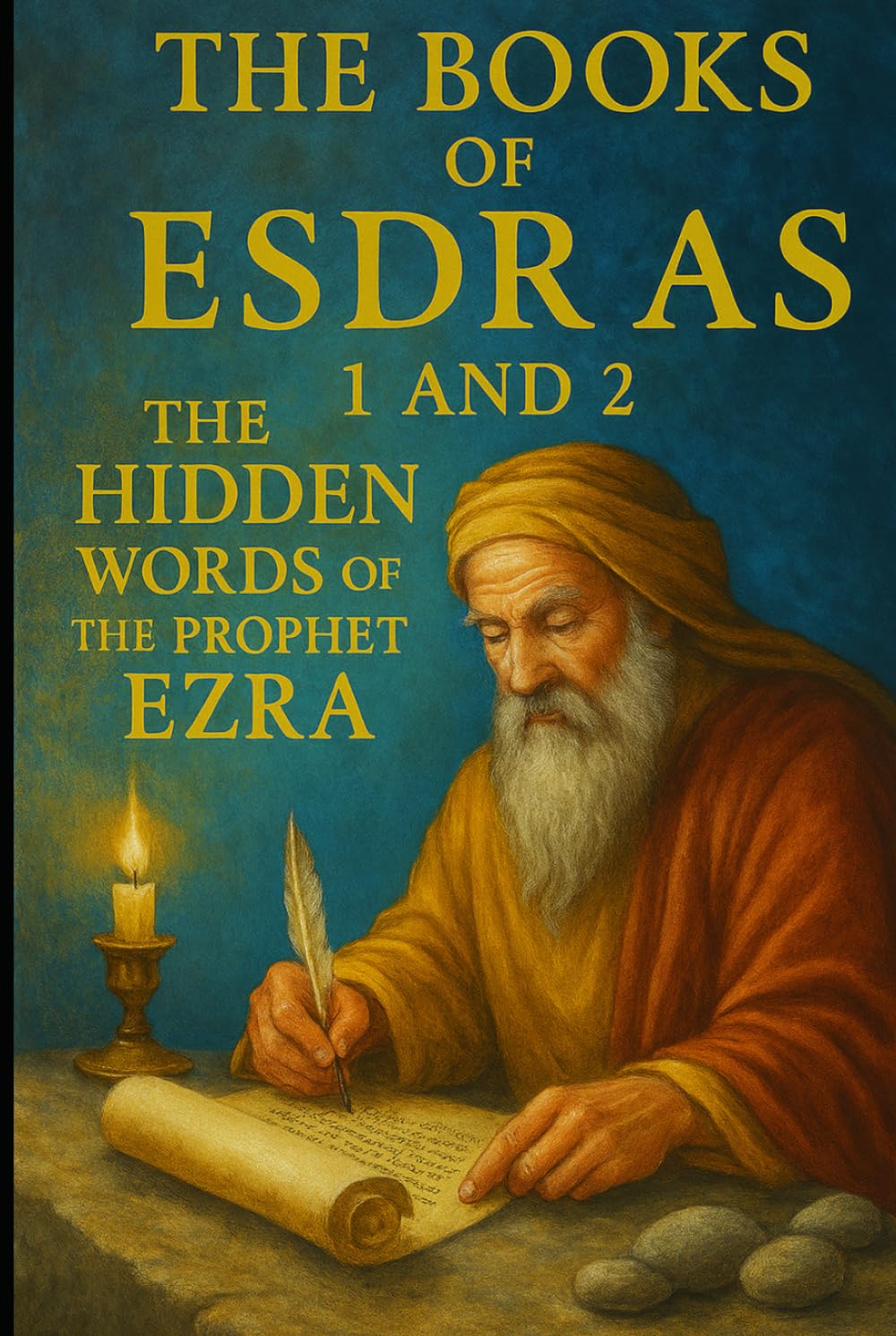
THE BOOKS OF ESDRAS 1 AND 2 in LARGE PRINT: THE HIDDEN WORDS OF THE PROPHET EZRA
$37.90
by George Herbert Box



THE HIDDEN BOOKS OF ESDRAS in LARGE PRINT 1 Esdras (Greek Esdras): A Retelling of Exile and Return This text provides a compelling alternative history of a critical period in Israel's history, covering the fall of Jerusalem, the Babylonian Exile, and the triumphant return to Zion. While it parallels the events in the canonical books of Ezra, Nehemiah, and 2 Chronicles , 2 Esdras (4 Ezra): An Apocalyptic Masterpiece of Theodicy Composed in the traumatic aftermath of the Roman destruction of the Second Temple in 70 CE, 2 Esdras is a foundational text of Jewish apocalyptic literature . The book is structured around seven profound and complex visions granted to the scribe-prophet Ezra. In these dialogues, Ezra engages in a passionate and often despairing debate with the angel Uriel, grappling with the core problem of theodicy : how a just and omnipotent God can permit the profound suffering of His chosen people. This theological crisis leads to sweeping revelations about the nature of sin, the coming judgment, and the ultimate restoration of Israel. The text features detailed apocalyptic prophecies , Historical Discovery, Transmission, and Canonical Status: The survival histories of 1 and 2 Esdras are testaments to the complex process of canonical formation. It is a critical point of study that these texts were not discovered among the Dead Sea Scrolls at Qumran , unlike other pseudepigraphal works like the Book of Enoch. Instead, their paths to preservation were distinct. 1 Esdras was originally composed in a Semitic language but survived antiquity through its inclusion and primary preservation in the ancient Greek Septuagint , the scripture of the Hellenistic Jewish diaspora and the early Christian church. The core of 2 Esdras (chapters 3-14) is a Jewish work originally written in Hebrew or Aramaic, which was then lost. It survived only through translation into Greek and, most importantly, into Latin, where it was included as a pivotal appendix in Jerome's Latin Vulgate . Its presence in this authoritative Latin version guaranteed its transmission through the Middle Ages and its enduring status within Western theological thought, even as it was sidelined from the Protestant canon during the Reformation. The Critical Reason to Read It – Unparalleled Historical and Theological Importance: Possessing this volume is essential for anyone seeking a comprehensive grasp of the intellectual and spiritual ferment that gave rise to modern Judaism and Christianity. These books fill the "400-year silence" between the Old and New Testaments, revealing the dynamic development of key doctrines including angelology , demonology , resurrection , and final judgment . They are indispensable primary sources for academic fields such as biblical archaeology , comparative religion , and the history of the biblical canon . For students of apocalypticism , 2 Esdras is as crucial as the Book of Daniel, providing the essential link between earlier Hebrew prophecy and the Gnostic texts and apocalyptic visions of the Nag Hammadi Library and the New Testament. This book offers the raw, unmediated text, allowing the powerful voice of a community in crisis and the sophisticated narratives of a diaspora culture to speak for themselves, directly from the ancient world to the modern reader. 10 Keyword Terms Apocrypha - Second Temple Judaism - Deuterocanonical - Septuagint - Jewish Apocalyptic Literature - 4 Ezra - Biblical Canon - Latin Vulgate - Non-Canonical Scripture - Pseudepigrapha