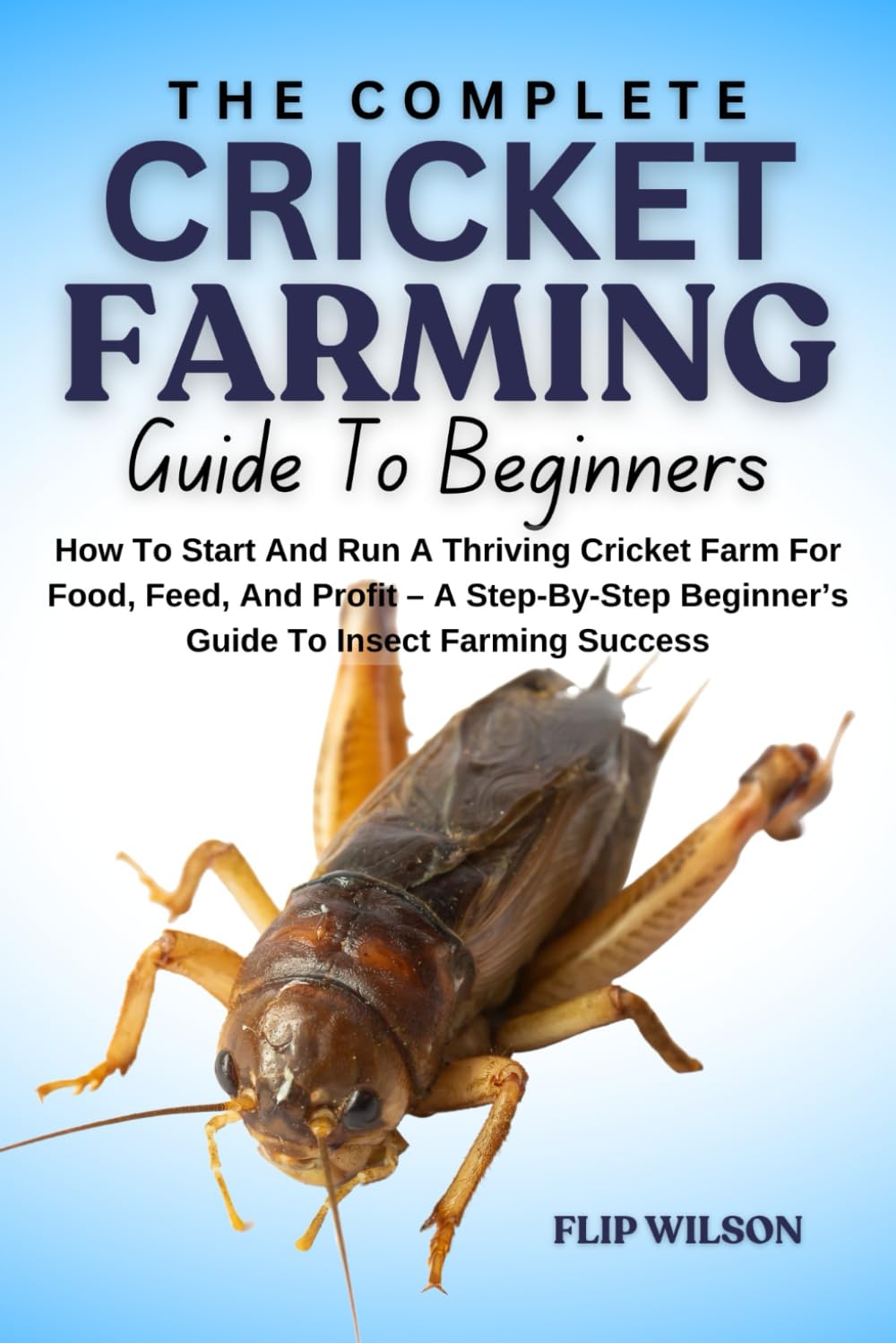
THE COMPLETE CRICKET FARMING GUIDE FOR BEGINNERS: How To Start And Run A Thriving Cricket Farm For Food, Feed, And Profit – A Step-By-Step Beginner’s
$14.98
by FLIP WILSON



Why Farm Crickets? A New Frontier in Sustainable Protein As global populations surge and traditional livestock farming faces environmental, economic, and ethical scrutiny, the need for alternative protein sources has never been more pressing. Crickets, small orthopteran insects long consumed in parts of Asia, Africa, and Latin America, are now gaining global attention as a revolutionary solution to these challenges. Cricket farming offers a sustainable, affordable, and environmentally friendly method of producing protein-rich food for both humans and animals. Crickets require a fraction of the land, water, and feed that traditional livestock such as cattle, pigs, and chickens need. For instance, it takes approximately 2,000 gallons of water to produce a pound of beef, but less than 1 gallon to raise the same weight in crickets. Additionally, crickets emit significantly lower greenhouse gases and can thrive on organic waste and by-products, converting them into valuable protein. For small-scale farmers and entrepreneurs, cricket farming is also an accessible entry point into agribusiness. Unlike larger livestock operations, cricket farms do not demand high start-up capital, vast land areas, or complex infrastructure. With a few plastic bins, a steady feed source, and controlled environmental conditions, anyone can begin farming crickets, making it an ideal livelihood option for rural and urban communities alike. High Reproductive Rate and Fast Growth Crickets multiply rapidly and mature in just 6 to 8 weeks, allowing for multiple harvests per year. A single female cricket can lay hundreds of eggs during her lifetime. This means that a modest initial breeding stock can quickly expand into a sizable farm. Their high reproductive rate and quick turnaround allow farmers to start earning profits in just a few months, unlike cattle or goats, which may take years. Low Environmental Impact Crickets are cold-blooded and require far less energy than mammals to survive. They convert feed into protein with great efficiency—crickets need just 1.7 kg of feed to produce 1 kg of body weight, whereas cattle need around 8 kg of feed for the same gain. Moreover, crickets produce minimal waste, and their frass (droppings) is a nutrient-rich organic fertilizer that can be used in crop farming, creating a zero-waste system when properly managed. Crickets for Food and Feed Crickets are highly nutritious, containing around 60–70% protein, along with essential amino acids, vitamins (especially B12), minerals (like iron, calcium, and zinc), and healthy fats. They can be processed into powder, snacks, protein bars, or used whole. For animal feed, cricket meal serves as an excellent alternative to fish meal or soybean meal, which are often expensive or environmentally taxing to produce. This dual utility—as food and feed—makes cricket farming a flexible venture. Whether supplying poultry farms, fish hatcheries, pet food companies, or human health-food markets, cricket farmers can cater to various industries with consistent demand. Global Demand and Market Opportunities Rising Demand for Insect Protein The global edible insect market is booming. According to industry forecasts, it is projected to exceed $8 billion USD by 2030, driven by increasing awareness of sustainable living, the need for alternative proteins, and growing interest in health and wellness foods. Crickets are at the forefront of this trend, thanks to their palatability, high protein content, and ease of farming. Countries like Thailand, Vietnam, Kenya, and Uganda have long practiced cricket farming, both traditionally and commercially. In the West, companies in the United States, Canada, and Europe are now embracing cricket-based products in the form of cricket flour, energy bars, chips, pasta, and even beer.