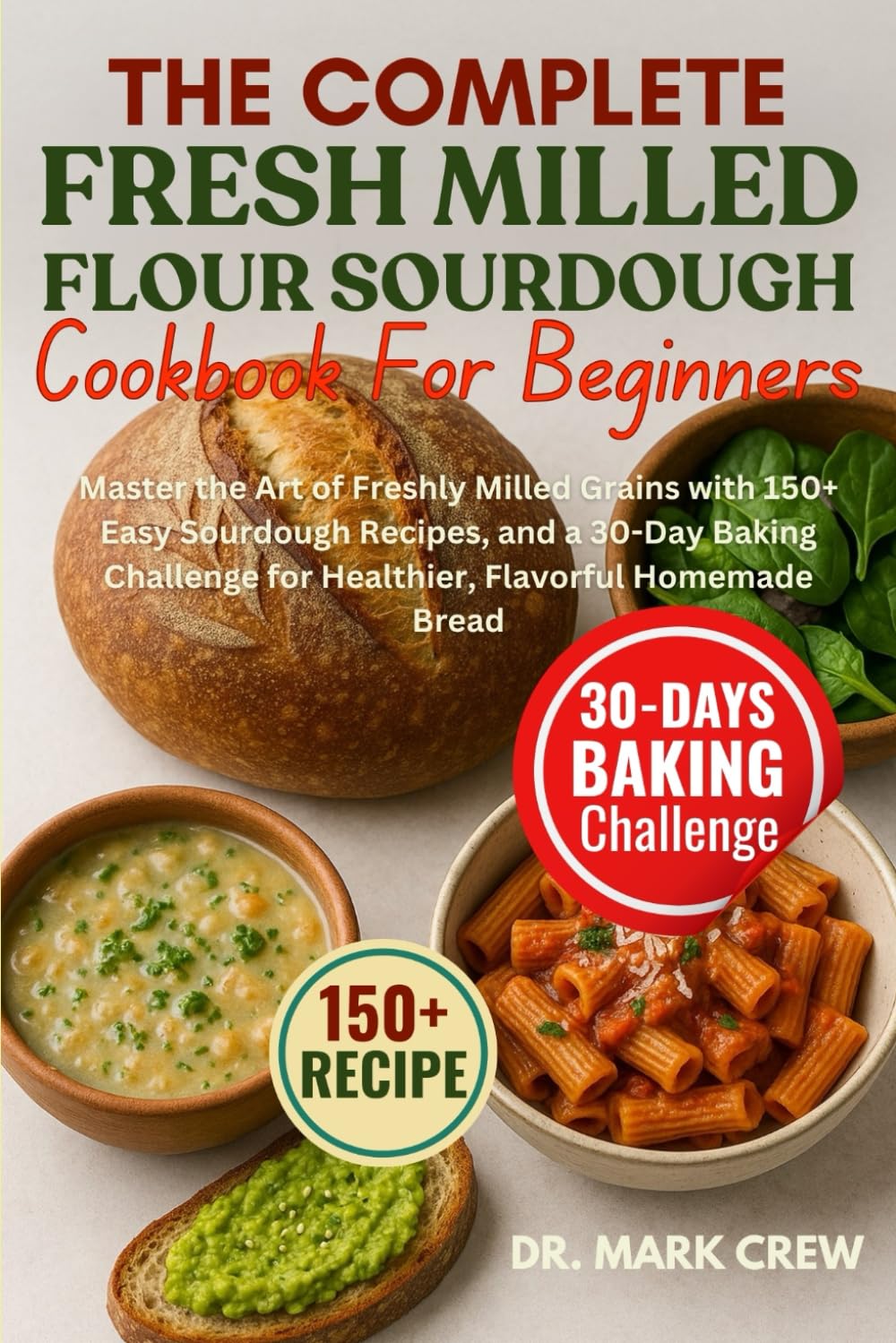
THE COMPLETE FRESH MILLED FLOUR SOURDOUGH COOKBOOK FOR BEGINNERS: Master the Art of Freshly Milled Grains with 150+ Easy Sourdough Recipes, and a ...
$20.99
by DR. MARK CREW



Introduction to Fresh Milled Flour and Sourdough Freshly milled flour and sourdough baking together form a union that is both ancient and modern, traditional yet innovative, and deeply nourishing to the body and spirit. To begin a journey into sourdough breadmaking with fresh milled grains is to connect with the roots of civilization itself, when early humans first discovered that fermenting ground grains with wild yeasts created food that was flavorful, sustaining, and unlike anything else. This introduction sets the stage for why fresh milled flour and sourdough are not just baking choices but a lifestyle, a philosophy of food, and a pathway to better health. The Essence of Fresh Milled Flour Flour is the foundation of bread, but not all flour is created equal. The flour that is available on supermarket shelves has often been stripped of its vitality through industrial processing. In contrast, fresh milled flour comes directly from whole grains that are ground at home or in small batches just before baking. This flour is “alive” in a sense—bursting with natural oils, vitamins, and enzymes that begin to lose their potency the moment the grain is milled. When flour is freshly milled: The bran (outer layer of the grain) contributes fiber, minerals, and earthy flavor. - The germ (nutrient-rich core) adds essential fatty acids, B vitamins, and antioxidants. - The endosperm provides starches and proteins that feed fermentation and create structure. In commercial flours, especially white flour, the bran and germ are usually removed to increase shelf life, leaving only the starchy endosperm. This results in bread that may be convenient but lacks the complexity, nutrition, and soul of bread made from whole, freshly milled grains. Why Sourdough Complements Fresh Milled Flour Sourdough is more than just a method of leavening bread—it is a living, symbiotic culture of wild yeasts and lactic acid bacteria that transforms simple flour and water into a rich and nourishing food. The natural fermentation process works in harmony with the complexity of fresh milled flour, unlocking its full potential in ways that commercial yeast cannot. Here’s why sourdough is the perfect partner: Improved digestibility : The long fermentation of sourdough breaks down complex carbohydrates and gluten, making the bread gentler on the digestive system. - Enhanced nutrient absorption : Phytic acid in grains, which can block the absorption of minerals like iron and zinc, is neutralized during sourdough fermentation, unlocking nutrients. - Rich, complex flavor : The lactic acid bacteria in sourdough create depth of flavor—tangy, nutty, and earthy—that pairs beautifully with the robust taste of whole grains. - Natural preservation : The acids produced during fermentation help bread stay fresher longer without artificial additives. When sourdough meets fresh milled flour, the result is bread that is deeply flavorful, highly nourishing, and a true reflection of the grain’s natural character.