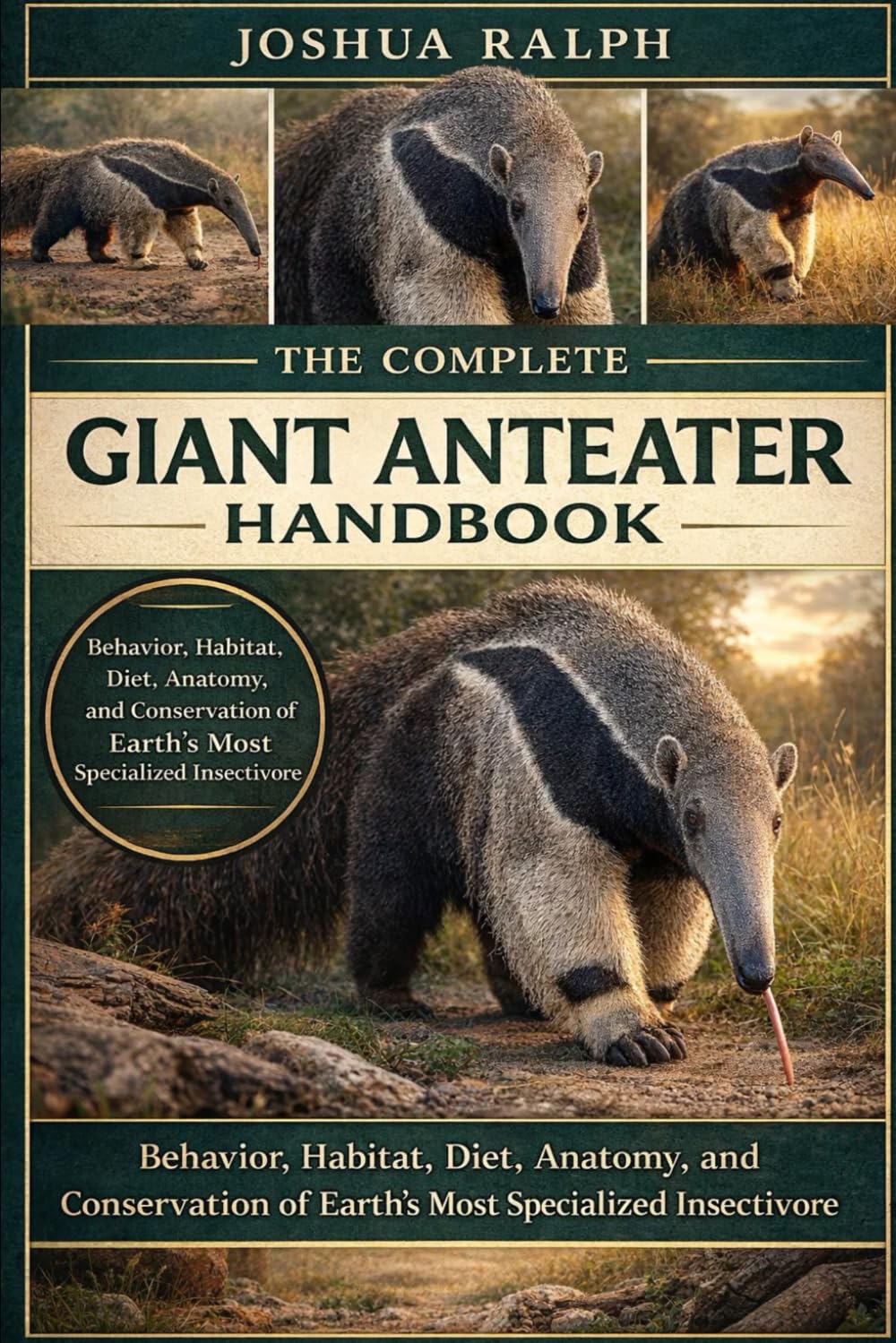
THE COMPLETE GIANT ANTEATER HANDBOOK: Behavior, Habitat, Diet, Anatomy, and Conservation of Earth’s Most Specialized Insectivore
$12.99
by JOSHUA RALPH



Discover one of the most extraordinary mammals on Earth—an animal engineered by evolution for a single purpose: mastering ants and termites. The Giant Anteater ( Myrmecophaga tridactyla ) is a living biological marvel, famous for its elongated snout, lightning-fast tongue, powerful digging claws, and unique survival tactics. Yet beyond its unusual appearance lies a deeper story of specialization, intelligence, ecological importance, and increasing conservation urgency. GIANT ANTEATER’S HANDBOOK is a professional, educational, and deeply researched guide designed for wildlife lovers, students, educators, conservation supporters, and curious readers who want reliable, science-based knowledge. This book takes you far beyond simple facts, offering a detailed exploration of the giant anteater’s anatomy, behavior, habitat needs, feeding ecology, reproduction, health challenges, and survival strategies—while also revealing the modern threats pushing this species into decline. Inside this complete handbook, you will learn: The giant anteater’s taxonomy, evolutionary history, and xenarthran relationships with sloths and armadillos - How its skull, snout, claws, and extraordinary tongue anatomy make it one of the most specialized insect-feeders in nature - Where giant anteaters live across Central and South America , including savannas, wetlands, grasslands, and forest-edge ecosystems - Daily routines, solitary behavior, territorial patterns, scent-marking communication, and predator avoidance strategies - Feeding techniques, termite mound exploitation, digestion without teeth, and the energy economics of insect-based survival - Reproduction and maternal care, including the famous baby-riding behavior and early-life challenges - Wild health risks such as parasites, dehydration, injuries, bacterial infections, and wildfire impacts - Conservation threats including habitat loss, fragmentation, road mortality, hunting pressure, and domestic dog attacks - How scientists study giant anteaters using GPS collars, telemetry, camera traps, drones, genetics, eDNA, AI monitoring, and habitat modeling - Rescue and rehabilitation methods, orphan care, rewilding preparation, and ethical welfare standards - Real conservation solutions, and how readers can support habitat protection, road safety, fire prevention, and wildlife monitoring Whether you are a naturalist, a student, a conservation-minded traveler, or simply fascinated by rare wildlife, this handbook delivers a clear, structured, and compelling journey into the life of the giant anteater—combining biology, ecology, modern research, and conservation action into one authoritative resource. If you want a complete understanding of the giant anteater—and a powerful guide to protecting its future—this book is your essential companion.