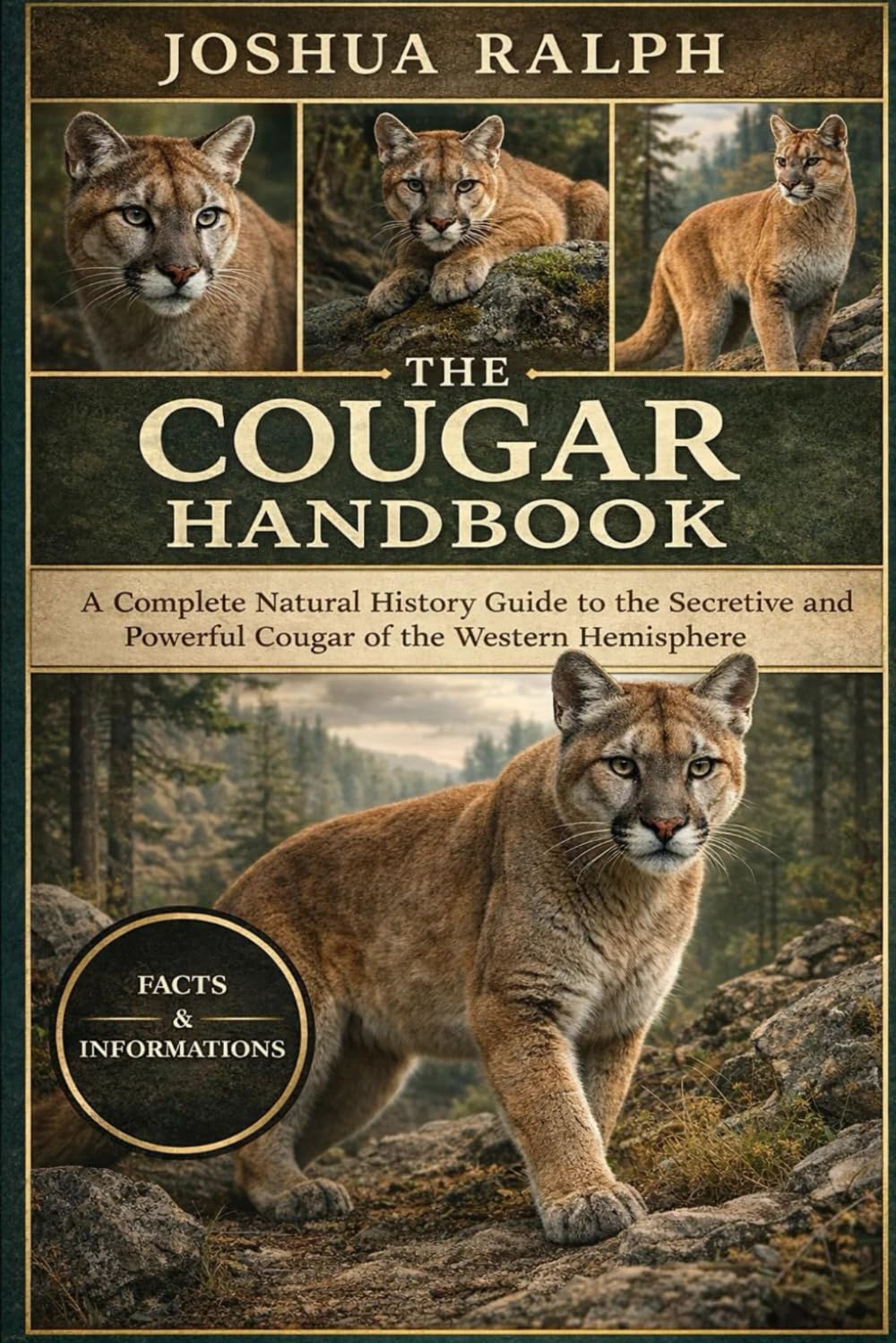
THE COUGAR HANDBOOK: A Complete Natural History Guide to the Secretive and Powerful Cougar of the Western Hemisphere
$11.77
by JOSHUA RALPH



The cougar, also known as the mountain lion or puma, is one of the most powerful and adaptable predators in the Western Hemisphere. Silent, elusive, and remarkably resilient, this solitary cat ranges from the forests of Canada to the mountains of Patagonia. Yet despite its wide distribution, much of the cougar’s life remains hidden from view. This comprehensive handbook brings together modern wildlife science, field research, and conservation knowledge to reveal the true story of Puma concolor . This book offers an in-depth exploration of cougar biology, anatomy, and evolutionary history, explaining how millions of years of adaptation have shaped an elite ambush predator built for stealth, strength, and explosive speed. Readers will gain a detailed understanding of physical adaptations, hunting strategies, communication methods, and the solitary social structure that defines the species. Beyond individual behavior, the book examines the cougar’s essential ecological role as a keystone predator. It explains how cougars regulate herbivore populations, influence vegetation patterns, and support biodiversity through complex trophic cascades. By shaping entire ecosystems, cougars help maintain the health and balance of the landscapes they inhabit. The handbook also provides a clear and balanced discussion of human–cougar interactions. Topics include livestock conflict, urban expansion into cougar habitat, and practical strategies for coexistence. Modern conservation tools such as wildlife corridors, non-lethal deterrents, and community education programs are explored in detail, showing how science and policy can reduce conflict while protecting both people and predators. A dedicated section on research methods introduces readers to the technologies scientists use to study these elusive cats, including GPS tracking, camera traps, genetic analysis, and remote sensing. These tools are transforming our understanding of cougar movement, survival, and population dynamics in a rapidly changing world. Cultural history and symbolism are also woven into the narrative, highlighting how Indigenous traditions, folklore, and modern media have portrayed the cougar as a symbol of power, independence, and wilderness. This broader perspective reminds readers that cougars are not only biological organisms but also enduring figures in the human story. Finally, the book looks toward the future. Climate change, habitat fragmentation, and expanding human development present serious challenges, but informed conservation planning offers hope. By protecting connected landscapes and promoting coexistence, we can ensure that cougars continue to roam the mountains, forests, and plains of the Americas. Written in a clear, professional, and educational style, this handbook is ideal for wildlife enthusiasts, students, researchers, conservationists, and anyone fascinated by large predators. It is both a scientific guide and a call to appreciate and safeguard one of the most remarkable wild cats on Earth.